The hypercar pulls out of the pit lane and the first thing you notice is not the engine. It is the way the car seems to read the road a fraction of a second before the driver does — darting into a corner, settling instantly, never floating, never hesitating. Some of that is suspension, some of it is aerodynamics, and some of it is hiding in plain sight at the four corners of the car.
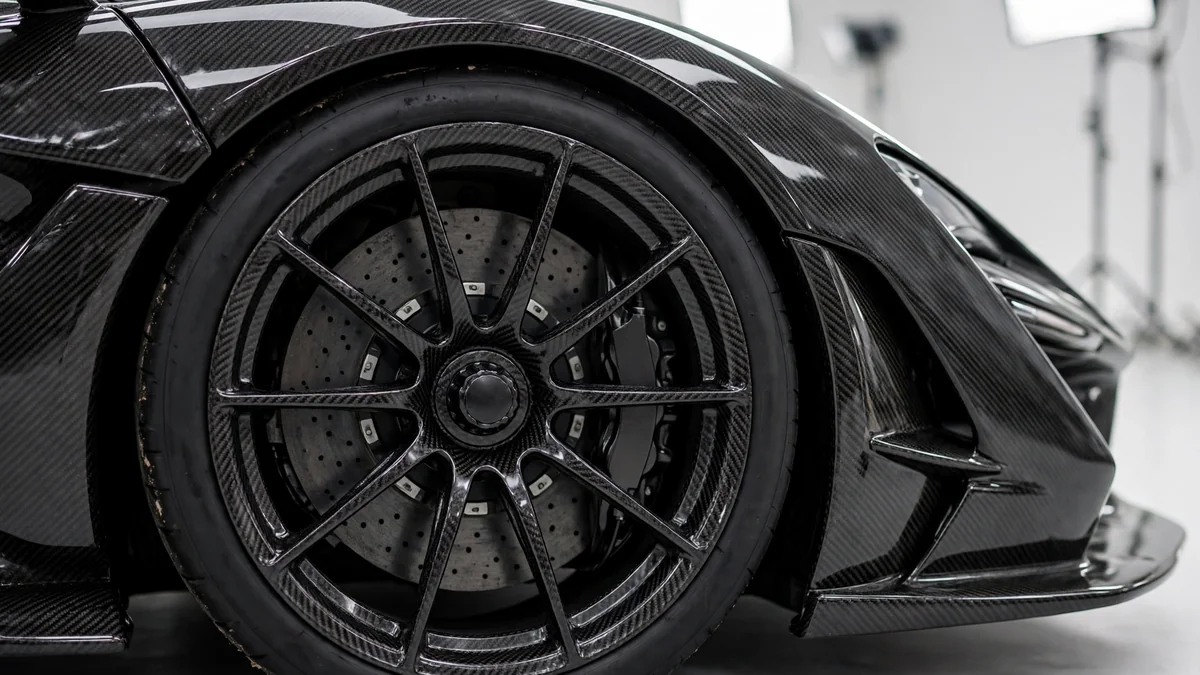
Those are carbon wheels. Where a normal alloy wheel is a heavy ring of cast or forged metal, a carbon wheel is woven from carbon fibre and cured in an autoclave into a single rigid structure. A set of four can weigh less than a single spare tyre from a family car, and that missing weight sits exactly where it matters most — spinning at the ends of the suspension, where every gram is felt twice over.
Carbon wheels cost more than some entire cars, and they are not just a flex. They change how the car accelerates, brakes, and turns, because they cut the weight the suspension has to control and the spinning mass the engine has to accelerate. Here is what the numbers on their spec sheet actually mean.
How It Works
Step 1: Cutting unsprung weight
The first thing a carbon wheel does is simple: it weighs less. A typical forged alloy hypercar wheel weighs 10 to 12 kilograms; a carbon wheel of the same size weighs 6 to 8. That weight is unsprung — it sits below the suspension, so the springs and dampers have to control it directly. Lighter wheels let the suspension react faster to bumps, keeping the tyre pressed against the road instead of bouncing off it. The result is grip that feels almost unfair, especially on rough surfaces.
Step 2: Cutting rotating mass
The second benefit is subtler and bigger. A wheel is not just heavy — it spins, and spinning weight costs far more energy to accelerate than weight that simply moves forward. Engineers reckon a kilogram saved at the wheel is worth roughly four kilograms saved from the body when it comes to acceleration. A carbon wheel set can cut rotating mass by 15 kilograms or more, which the engine feels as if the whole car had lost 60 kilograms. That is free performance with no extra power at all. The structure that makes it possible is the same material science behind carbon monocoque production, where woven fibre replaces metal entirely.
Step 3: Staying stiff under load
Light is useless if the wheel flexes. Under hard cornering, a wheel can see sideways loads of more than a tonne, and any flex changes the tyre’s contact patch and dulls the steering. Carbon fibre’s stiffness-to-weight ratio is far higher than aluminium’s, so a carbon wheel can be both lighter and stiffer than the alloy wheel it replaces. The steering feels sharper because the wheel is not bending under the load — what the driver asks for is what the tyre does.
Step 4: Laying up the fibre
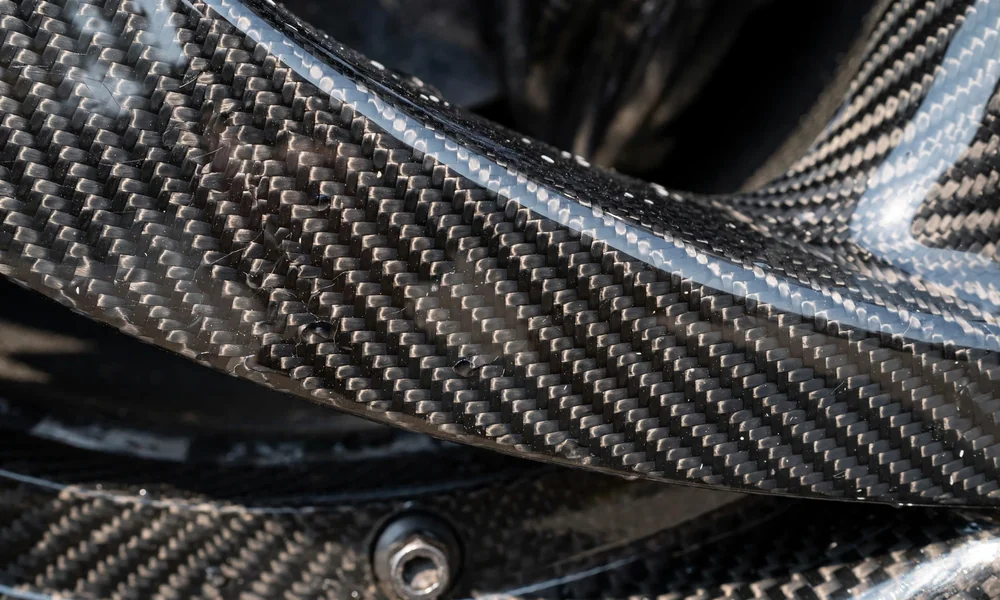
A carbon wheel is not cast or machined — it is laid up by hand. Sheets of carbon fibre prepreg, cloth already soaked in resin, are cut into shapes and layered into a mould in a precise sequence, with the fibre direction changed layer by layer so the finished wheel is strong in every direction. The rim barrel, the spokes, and the centre are built up separately, then joined and cured together in an autoclave under heat and pressure. A single wheel can take many hours of skilled hand work, which is a large part of why it costs what it does.
Step 5: Surviving heat and impacts
Wheels live a hard life. Brake discs beside them can reach 700 degrees Celsius, kerbs and potholes strike without warning, and a track session loads them thousands of times a minute. Carbon wheels are designed with heat-resistant resins near the brakes and with impact-tolerant layups that spread a blow across the structure instead of cracking at one point. They are tested to destruction in the lab — dropped, spun, and overloaded — before any set is allowed on a road car. The brakes they work alongside are explained in our guide to how carbon-ceramic brakes are made, where heat is the enemy and the material is the answer.
Step 6: Balancing and finishing
Once cured, each wheel is machined to its final dimensions, checked for voids with ultrasound or X-ray, and balanced to a tolerance tighter than a normal road wheel. The clear coat that gives carbon its deep woven look is not just cosmetic — it protects the resin from ultraviolet light, which degrades it over time. The finished wheel is weighed, stamped, and matched into sets, because a hypercar owner expects all four corners to behave identically. That precision is what lets the aerodynamics do their job, as explained in our guide to active aerodynamics, where every surface depends on the wheels staying exactly where they belong.
Hypercar Carbon Wheel Specs
| Specification | Typical range |
|---|---|
| Weight per wheel | 6 to 8 kilograms (20-inch) |
| Diameter | 19 to 21 inches |
| Width | 9 to 13 inches |
| Material | Carbon fibre with epoxy resin |
| Weight saving vs forged alloy | 30 to 45 percent |
| Load rating | 600 to 900 kilograms per wheel |
| Maximum speed rating | 350 kilometres per hour and above |
| Temperature resistance | Up to 200 degrees Celsius continuous |
| Finish | Clear-coated woven carbon, gloss or matte |
What Do Carbon Wheels Cost?
A set of four carbon wheels for a hypercar is one of the most expensive options on the car, and the price reflects the hand labour and the testing behind them. A full set is estimated at $20,000 to $40,000, with a single replacement wheel estimated at $5,000 to $12,000. Prices are estimates only and vary by maker, size, and whether the wheels are a factory option or an aftermarket set. They are also fragile in one specific way: a hard kerb strike that would only scuff an alloy wheel can crack a carbon one beyond repair, so owners tend to treat them with respect.
A Rare Fact
The first road car to offer carbon fibre wheels as a factory option was not a hypercar at all — it was the Ford Mustang Shelby GT350R, a muscle car, in 2015. Ford’s engineers fitted carbon wheels made by an Australian company called Carbon Revolution, and the car lapped tracks measurably faster on them. Until then, carbon wheels were a racing secret, used in Formula 1 and top-level sports cars. The Mustang proved the idea worked on a production car, and within a few years every hypercar maker was offering them.

Carbon wheels look like jewellery and behave like engineering — lighter, stiffer, and faster to react than anything metal can offer at the same weight. Learn to read their numbers, and the way a hypercar seems to anticipate the road stops being a mystery.