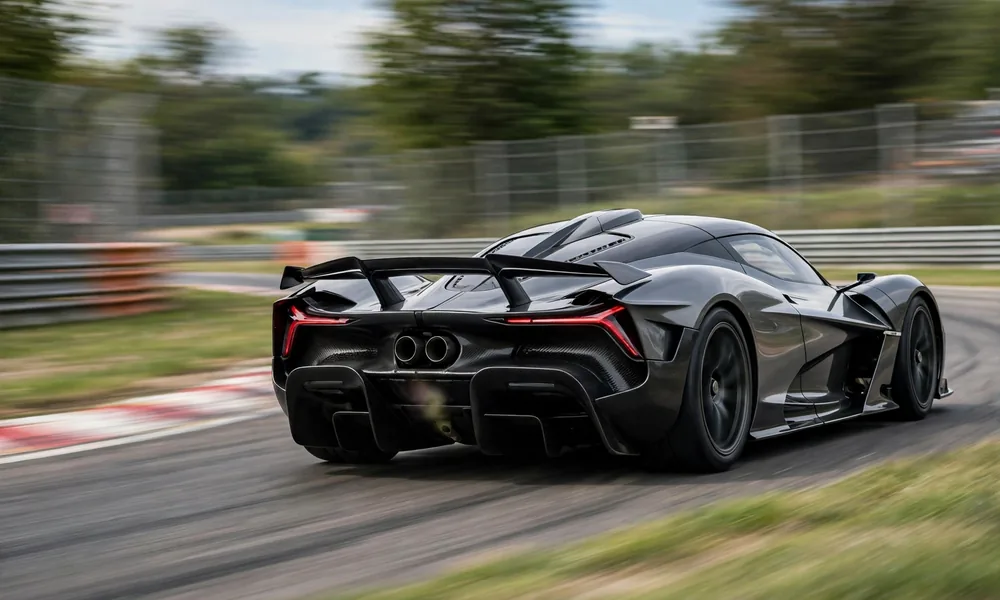
The driver lifts off the throttle at the end of a straight, the car doing well over 300 kilometres per hour, and in the time it takes to blink, the gearbox has done something extraordinary. It has dropped two gears, matched the engine speed to the wheels, and done it without a jolt, without a missed shift and without breaking. Inside the gearbox, steel gears spinning at thousands of revolutions per minute have meshed and unmeshed in a choreography timed to the millisecond.
A hypercar gearbox lives in the harshest environment of any component on the car. It must transmit more than 1,000 horsepower through gears no bigger than a saucer, shift in under a tenth of a second, and survive temperatures, shocks and vibrations that would destroy a normal transmission. Every gear, shaft, bearing and casing is made from a material chosen for one specific job, and the combination is what lets a hypercar accelerate, brake and corner at the edge of what physics allows.

The Materials Behind the Gearbox
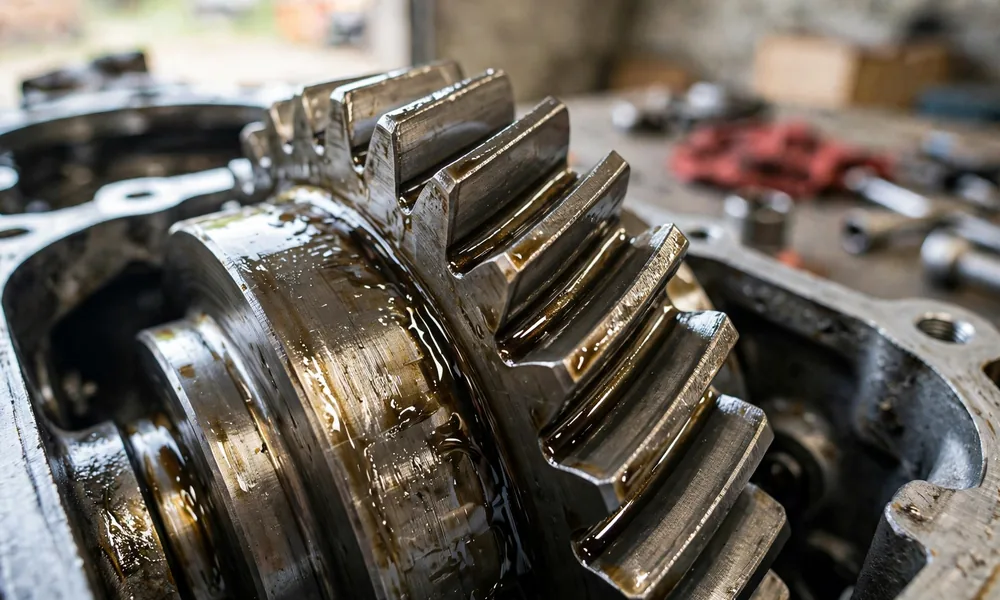
The gears themselves are the heart of the matter, and they are made from carburised alloy steels, typically grades such as 8620 or 9310, steels alloyed with nickel, chromium and molybdenum. Carburising is a heat treatment that soaks carbon into the surface of the gear, making the teeth hard enough to resist wear while the core stays tough enough to absorb shock. The carburised gear gets both properties at once, a hard skin over a tough heart, and it is the reason hypercar gears can survive thousands of full-power launches.
The shafts that carry the gears are made from similar alloy steels, forged rather than cast, so the grain of the metal flows along the shaft and resists twisting. The casing is a different problem entirely: it must be stiff enough to hold the shafts in perfect alignment under load, light enough not to burden the car, and able to shed heat. Most hypercar gearboxes use cast aluminium or magnesium casings, sometimes with carbon fibre reinforcement, and the choice is a trade-off between weight and stiffness that engineers argue over for every new car. Bearings are made from high-carbon chromium steel, polished to a mirror finish, and the synchroniser rings that match gear speeds during a shift are often brass or a sintered bronze, soft enough to grip without grinding.
The clutch packs in a dual-clutch gearbox deserve a mention of their own. They are made from sintered friction materials, a mix of metals and ceramics pressed into plates that must grip instantly under enormous torque and release just as cleanly, thousands of times, without fading.
Step 1: Forging the gear blanks
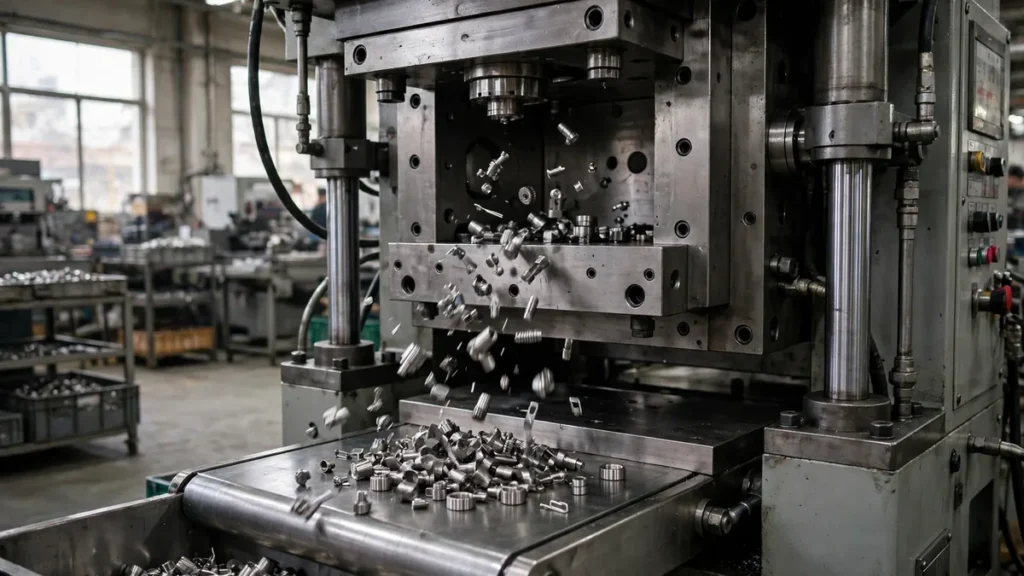
Each gear starts as a billet of alloy steel, heated until it glows and forged under a press into a rough disc called a blank. Forging aligns the grain of the metal and removes the internal flaws that casting would leave behind, giving the gear the toughness it will need. The blanks are then normalised, heated and cooled slowly to relieve the stresses of forging, before any cutting begins.
Step 2: Cutting the gear teeth
The teeth are cut on a gear hobbing or grinding machine, where a rotating cutter shapes each tooth to a profile accurate to a few microns. Hypercar gears are usually ground after cutting, a slower process that produces a smoother, quieter tooth surface and removes the tiny imperfections that would otherwise become crack starters. The profile of the teeth matters enormously: a tooth shaped for a racing gearbox is designed to share the load across several teeth at once, spreading forces that would otherwise concentrate on a single point.
Step 3: Carburising and heat treatment
The cut gears are packed in a furnace with a carbon-rich atmosphere and heated to around 900 degrees Celsius, where carbon diffuses into the surface of the steel. After several hours, the gears are quenched in oil, freezing the carbon-rich surface into a hard martensitic layer while the core stays tough. The gears are then tempered at a lower temperature to relieve brittleness, and the teeth are ground once more to restore the perfect profile that heat treatment distorted.
Step 4: Assembling the gearbox
Assembly is done by hand, in a clean room, by technicians who build one gearbox at a time. The gears are pressed onto their shafts, the bearings are heated and slipped into place, and the clutch packs are stacked plate by plate. The assembled gearbox is then sealed into its casing, filled with synthetic oil, and spun on a test rig that checks for noise, vibration and leaks before it ever meets an engine.
Step 5: Testing under load
Before a gearbox is fitted to a car, it is run on a dynamometer that simulates full-power launches, high-speed shifts and hard braking, with sensors watching the temperature of every bearing and the vibration of every shaft. The test programme runs the gearbox through thousands of shifts, more than it will ever see in a single race, and any sign of wear sends it back for inspection.
Specifications
| Gear material | Carburised alloy steel, typically 8620 or 9310 grade |
| Gear surface hardness | Over 60 on the Rockwell C scale |
| Shaft material | Forged alloy steel, nickel-chromium-molybdenum |
| Casing material | Cast aluminium or magnesium alloy |
| Clutch material | Sintered metal and ceramic friction plates |
| Shift time | Under 100 milliseconds in a dual-clutch gearbox |
| Power handled | Over 1,000 horsepower in top hypercars |
| Lubricant | Synthetic transmission oil, actively cooled |
Price
A hypercar gearbox is one of the most expensive single components on the car. A complete dual-clutch gearbox for a top hypercar typically costs from around $50,000 to over $150,000 (estimate), and a replacement after a major failure can cost as much as a family car. The price reflects the materials, the hand assembly and the testing, not the size: the whole unit weighs around 100 kilograms, yet it costs more per kilogram than almost anything else on the vehicle.
Rare Fact
The gears in a hypercar gearbox are so precisely made that they are matched in sets, and a single gear cannot simply be swapped for another from a different gearbox. Each set is lapped together, run in as a pair, and marked so the two gears that have worn in together stay together for life. It is a level of craftsmanship closer to watchmaking than to car manufacturing, and it is why a hypercar gearbox is assembled by hand rather than on a production line.
The next time you watch a hypercar change gear in the blink of an eye, remember what is happening inside that aluminium casing: carburised steel teeth, harder than a file, meshing at thousands of revolutions per minute, held in alignment by a casing machined to microns and bathed in synthetic oil. From the hypercar differential to the carbon wheels that put the power on the road, every part of a hypercar is a study in choosing the right material for the hardest job imaginable.