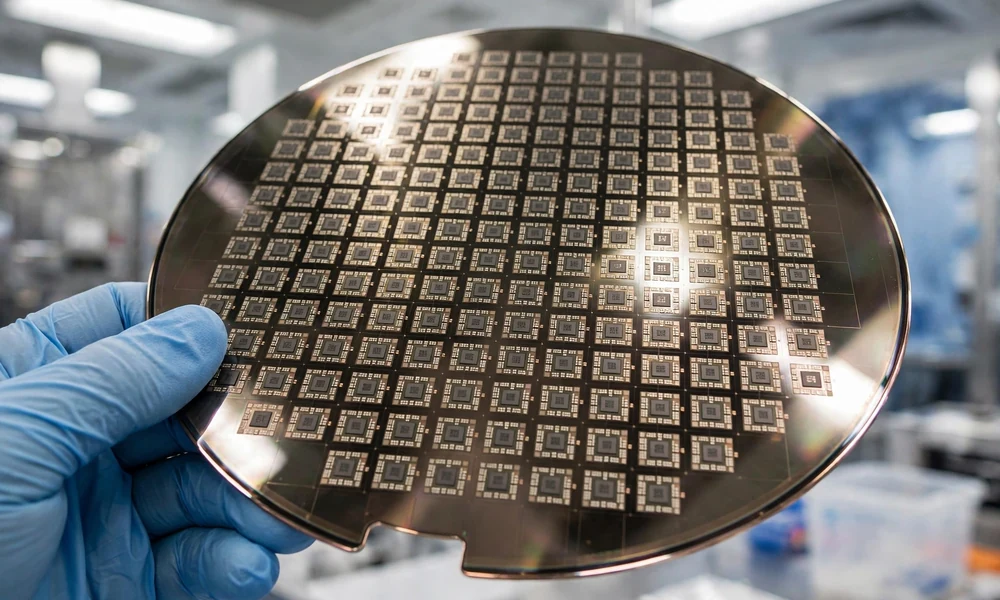
Somewhere in a spotless factory in Taiwan, a silicon wafer the size of a dinner plate is about to become the most powerful piece of hardware in a gaming computer. It holds hundreds of tiny squares, each one a graphics processor, and each one contains tens of billions of transistors — switches so small that a human hair could cover thousands of them. In a few weeks, one of those squares will sit inside a graphics card, rendering entire virtual worlds sixty times a second. The journey from sand to that moment is one of the most demanding manufacturing processes on Earth.
A gaming GPU is not really one chip. It is a small city of specialised processors, memory controllers, and high-speed connections, all packed onto a piece of silicon no bigger than a postage stamp. It has to survive heat, vibration, and years of punishing use, all while drawing more power than some household appliances. Building it takes months, dozens of factories, and machines that cost more than a private jet. Here is how it is made.
How It’s Made
Step 1: Growing the silicon wafer
Every GPU starts as sand — ordinary silicon dioxide, purified until it is almost perfectly pure silicon. The purified silicon is melted and a single crystal is slowly pulled from the melt, forming a long cylinder called an ingot. That ingot is sliced into wafers less than a millimetre thick and polished until the surface is flatter than a mirror. A single speck of dust on a wafer can ruin a chip, so from this point on, the silicon lives in a cleanroom where the air is filtered thousands of times cleaner than the air in a hospital operating theatre.
Step 2: Printing the circuits
The wafer is coated with a light-sensitive chemical, then exposed to ultraviolet light shining through a mask — a stencil of the chip’s design. This process, called photolithography, is repeated dozens of times, each layer adding transistors, wires, and connections. The most advanced GPUs are built on processes measured in just a few nanometres, so the machines that print them use mirrors polished to atomic smoothness and light with a wavelength shorter than visible light. A single wafer can take two or three months to pass through every layer, and a mistake in any one of them can scrap the whole wafer.
Step 3: Cutting and testing the dies
Once the circuits are printed, the wafer is tested while it is still whole. Tiny probes touch each die and run electrical checks, and any die that fails is marked with a dot of ink — or, in modern factories, recorded in a digital map. The wafer is then cut into individual dies with a diamond saw so precise it barely disturbs the neighbouring chips. The best dies, the ones that pass every test at the highest speeds, are reserved for the flagship graphics cards. Dies that pass at slightly lower speeds are not wasted; they are sold as cheaper cards, a practice called binning that keeps the factory’s yield high.
Step 4: Packaging the chip
A bare die is far too fragile to use on its own, so it is mounted onto a package — a small green or black substrate with hundreds of tiny solder balls underneath. The die is flipped upside down and bonded to the substrate, then covered with a metal lid that spreads heat away from the silicon. This lid is the flat silver square gamers see when they open a card. Underneath it, a layer of thermal paste or liquid metal carries heat from the chip to the cooler. The packaged chip is tested again, this time at full speed, to make sure it can run a game without errors for hours on end.
Step 5: Building the graphics card
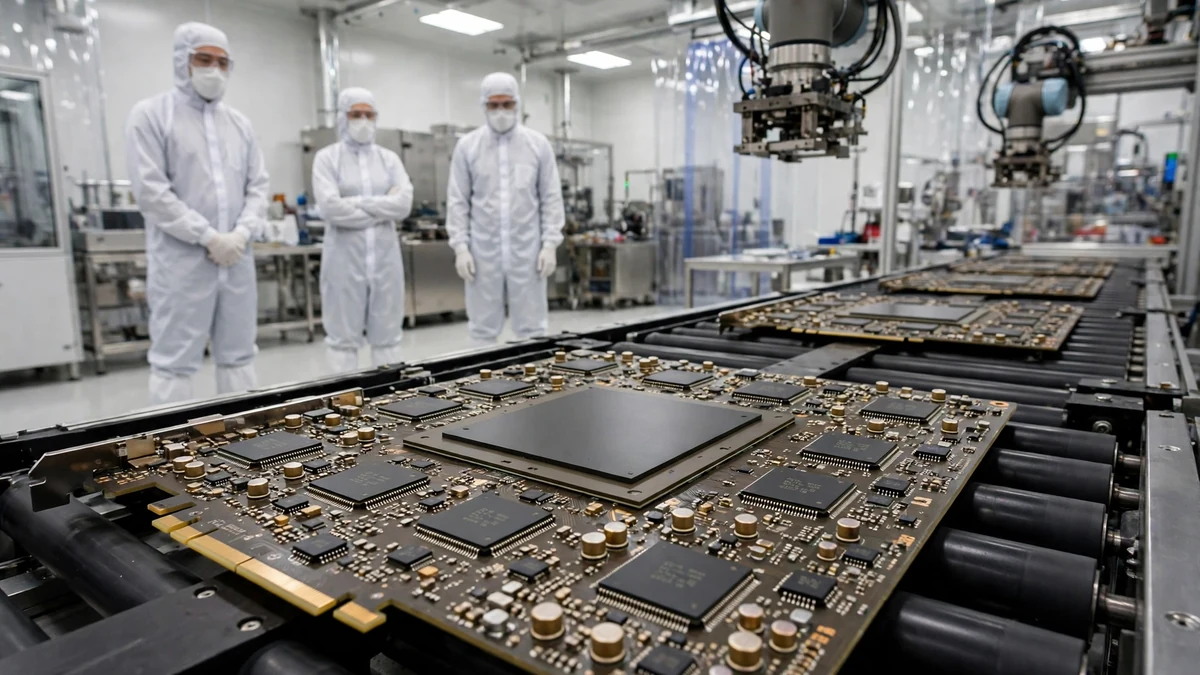
The packaged GPU is soldered onto a printed circuit board alongside memory chips, power regulators, and the connectors that plug into a computer. The memory on a modern card is almost as important as the GPU itself — it holds the textures, models, and frames the chip is working on, and it has to move data at astonishing speed. The same precision that goes into a smartphone titanium frame shows up here in miniature: every component is placed by machine to a fraction of a millimetre, and every solder joint is inspected by cameras. A single card can carry more than a thousand components, and the board is tested before the cooler ever goes on.
Step 6: Cooling, assembly, and final testing
Finally, the cooler is fitted — usually a large heatsink with copper heat pipes and two or three fans, plus a metal backplate that stiffens the card and protects it. The finished card is plugged into a test rig and run through real games and stress tests, with engineers watching temperatures, fan speeds, and power draw. Cards that pass are boxed with their drivers and documentation; cards that fail go back for repair or are stripped for parts. Only then does the GPU that began as a grain of sand reach a shop shelf, ready to render worlds its makers will never see.

Specs
| Specification | Typical figure |
|---|---|
| Transistors | 20–80 billion, depending on the model |
| Manufacturing process | 3–5 nanometres on flagship cards |
| Die size | Roughly 300–600 square millimetres |
| Memory | 8–24 GB of GDDR6 or GDDR7 |
| Power draw | 150–450 watts under load |
| Cooling | Heatsink, heat pipes, and two or three fans |
| Production time | Two to three months from wafer to finished card |
| Interface | PCI Express, plus HDMI and DisplayPort outputs |
Price
A flagship gaming graphics card typically sells for roughly $1,000 to $2,000, while mid-range cards cost around $300 to $600 — these are estimates, and the real price depends on the model, the memory, and the market at the time. The chip itself is only part of the cost: the memory, the cooler, the circuit board, and the months of factory time all add up, and the most advanced manufacturing processes are among the most expensive in the world. Even so, a single GPU can now do the work that once needed a room full of computers.
A Rare Fact
The machines that print the circuits on a GPU are so precise that they can place features smaller than a virus, and so expensive that a single one costs more than $150 million. They are also so sensitive to vibration that they are installed on foundations isolated from the rest of the building — a truck driving past the factory could, in theory, blur a pattern. Some fabs even monitor earthquakes on the other side of the world, because a tremor thousands of miles away can be felt by the machines.
The GPU is a reminder that the most spectacular thing in a gaming PC is also the smallest. Its display partner matters just as much — see how an OLED display panel’s specs turn those rendered frames into colour — and the same silicon craft powers everything from phones to self-driving cars. The next time a game world loads in a blink, remember the wafer, the ultraviolet light, and the months of patience that put billions of transistors into the palm of your hand. The sensor that maps the real world uses the same kind of precision, as how a LiDAR sensor works shows.


