The lights go out and the hypercar lunges forward, its engine screaming towards the redline. The driver does not lift, does not touch a clutch pedal, does not even think about the gearbox. He flicks a carbon paddle behind the steering wheel and the car simply keeps pulling, harder, as if the engine never paused for breath. In less time than it takes to blink, one gear has let go and the next has taken over, and the car is already accelerating again. There is no lurch, no dip in speed, no drama at all. That silence is the whole point.
A hypercar gearbox is not a bigger version of the gearbox in a family hatchback. It is a racing transmission dressed for the road, built to move around a thousand horsepower between an engine spinning at nine thousand revs and wheels that need to put every one of those horses on the tarmac. This is how it does all of that at once.
How a Hypercar Gearbox Works
Step 1: Two clutches share the work
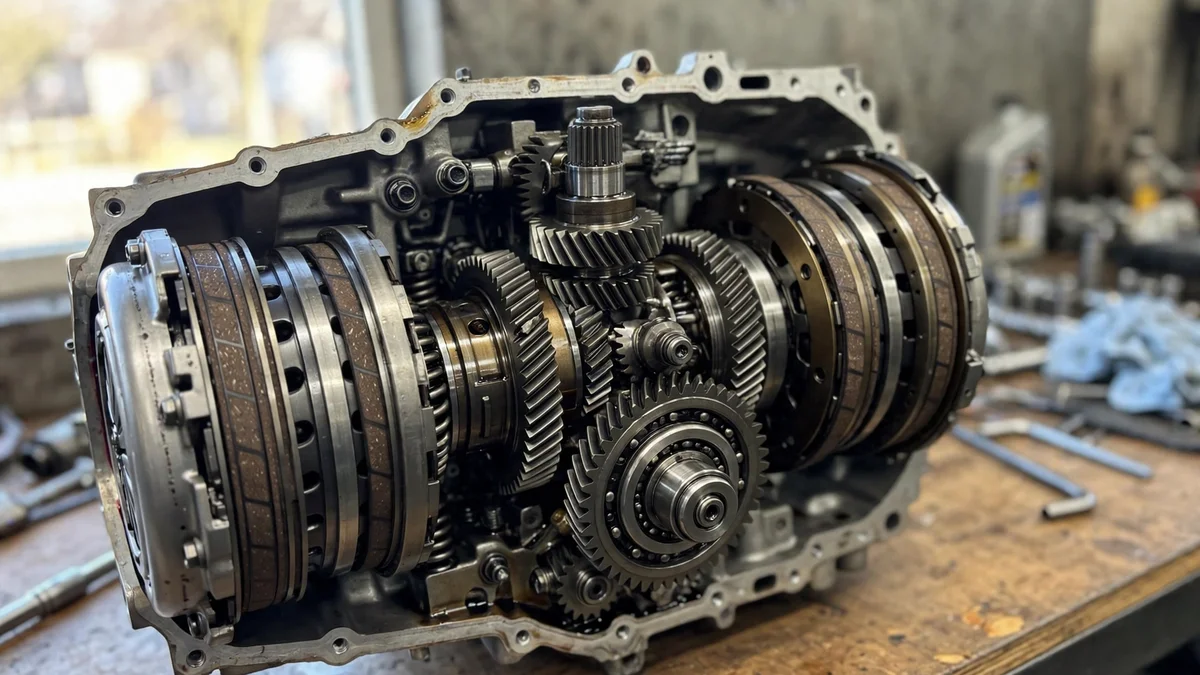
Most hypercar gearboxes are dual-clutch transmissions, and the trick is right there in the name. Instead of one clutch, there are two, each connected to its own input shaft. One shaft carries the odd gears — first, third, fifth and seventh — while the other carries the even gears. While the car is pulling hard in third gear on one clutch, the gearbox has already engaged fourth gear on the other clutch, waiting. Changing gear is then just a matter of handing over from one clutch to the other, and that handover is what makes the shift feel instant. The same idea, in a slightly different form, sits at the heart of every dual-clutch gearbox on the road.
Step 2: The paddle sends the order
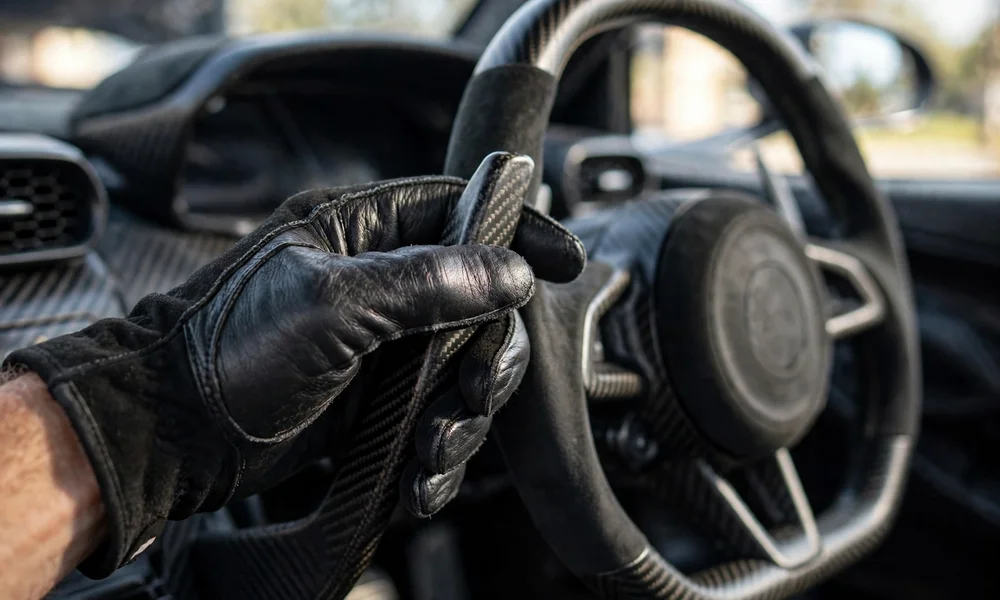
When the driver pulls a paddle, a signal travels to the transmission control unit, a dedicated computer that manages every shift. It checks the engine speed, the road speed, the throttle position, the temperature of the clutch oil and the driving mode the car is in, all in a fraction of a second. If the shift is safe, it gives the order. In automatic mode the same computer makes every decision itself, choosing gears from a map of the engine’s power and the driver’s demands.
Step 3: Hydraulic actuators do the moving
No human muscle moves anything inside a hypercar gearbox. A high-pressure hydraulic system, driven by an electric pump, pushes the clutch pistons and slides the shift forks that engage the gears. The hydraulics are controlled by solenoid valves, tiny electrically operated switches that open and close in milliseconds, metering oil with extraordinary precision. When a shift is finished, the pressure releases and the clutch locks up solid, with no slip at all.
Step 4: The clutches hand over in overlap
The moment of the shift itself is a carefully choreographed overlap. As the first clutch begins to release, the second clutch begins to bite, and for a few milliseconds both clutches are partly engaged at once. The engine’s torque is passed from one gear to the other without ever dropping to zero, which is why the car does not lurch. The clutches themselves are multi-plate packs of steel and friction material, bathed in oil, and they are the hardest-working parts in the whole car. Their design and the metals they are made from are covered in more detail in the guide to hypercar gearbox materials engineering.
Step 5: The gears turn the power around
Inside the casing, the power follows a simple path. The engine’s crankshaft drives the clutch assembly, the engaged clutch drives its input shaft, and the selected gear pair transfers the drive to the output shaft. Each gear pair is a different ratio: first gear multiplies the engine’s torque enormously for launch, while seventh gear is tall enough to let the car cruise at motorway speed with the engine barely ticking over.

Step 6: The differential splits the drive
From the output shaft, the drive reaches the differential, which splits it between the two rear wheels and lets them turn at different speeds through a corner. In a hypercar the differential is usually an electronically controlled limited-slip unit, which can send more torque to the wheel with grip and less to the one that is slipping. The gearbox and the differential share the same casing and the same oil in most hypercars, forming a single transaxle unit that sits at the back of the car for better weight distribution. The differential itself is a study in precision, as the guide to the hypercar differential explains.
Step 7: Cooling and control keep it alive
All of this work makes heat, and heat is the enemy. The gearbox oil is pumped through a cooler, often mounted in the airflow at the rear of the car, and its temperature is watched constantly. Sensors monitor shaft speeds, oil pressure and clutch slip on every shift, and the control unit learns as it goes, adjusting the clutch bite point as the friction plates wear over thousands of miles. When it works, the driver never notices any of it. The gearbox simply disappears, leaving only the acceleration.
Hypercar Gearbox at a Glance
| Specification | Detail |
|---|---|
| Common type | Seven or eight-speed dual-clutch transmission, transaxle layout |
| Shift time | Typically 50 to 150 milliseconds, depending on mode and load |
| Torque capacity | Roughly 800 to 1,200 Nm in current flagship hypercars |
| Clutches | Two multi-plate wet clutches, oil-cooled, hydraulically actuated |
| Gear material | Carburised and ground alloy steel, helical-cut gear teeth |
| Control | Dedicated transmission control unit with hydraulic solenoid valves |
| Cooling | Pumped oil circuit with an external oil cooler |
| Main uses | Flagship hypercars, track-focused supercars, racing-derived road cars |
What Does It Cost?
A hypercar gearbox is one of the most expensive single components in the car. As rough estimates, a replacement dual-clutch transaxle for a flagship hypercar typically runs from about $25,000 to $60,000 for the unit alone, before labour, while a full rebuild of the clutch packs and hydraulics can cost $8,000 to $20,000. Those figures are estimates, not quotes — the real number depends on the model, the parts needed and whether the work is done by a main dealer or an independent specialist.
A Rare Fact
Some hypercar gearboxes can change gear faster than the engine management can cut the ignition. The shift is so quick that the engine does not need to drop its revs at all, and the incoming gear is engaged while the outgoing one is still partly driving. In the fastest road cars, a full-throttle upshift is measured in tens of milliseconds, which is quicker than the time it takes a human nerve signal to travel from the brain to the hand.
The hypercar gearbox is easy to overlook because its greatest achievement is invisibility. It never asks the driver to think, never interrupts the acceleration, never makes itself felt at all. But behind that calm is a machine making hundreds of decisions a second, juggling two clutches, seven gears and a thousand horsepower — and doing it so well that all the driver feels is the road rushing towards them.


