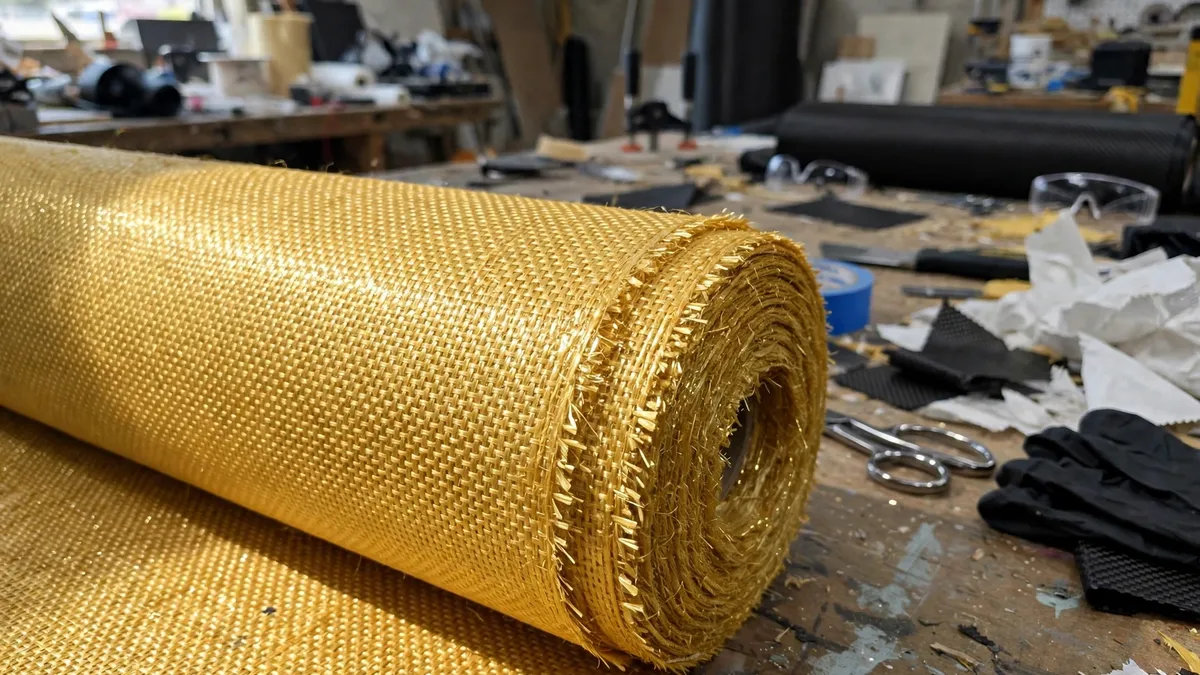
Pick up a sheet of Kevlar fabric and it feels like a trick. It is golden yellow, soft as cloth, light as a shirt, and you can cut it with shears — yet woven into layers and set in resin, it can stop a bullet, hold a boat together, and survive heat that would melt most plastics. It is one of the most famous materials of the modern age, and it began as a search for a lighter tyre cord.
Kevlar is an aramid fibre, a synthetic polymer whose molecules line up in stiff, straight chains, giving it extraordinary strength for its weight. It is five times stronger than steel by weight, yet it is a fibre you can weave on a loom. Its golden colour is instantly recognisable, and its name is a trademark of DuPont, the company that invented it, though the fibre itself is now made by several manufacturers under the generic name aramid.
The Materials Behind the Kevlar Composite
A Kevlar composite is a partnership between fibre and resin. The fibre carries the load; the resin holds the fibres in place, spreads the load between them, and protects them from damage. On its own, Kevlar cloth is flexible and drapes like fabric. Soaked in epoxy resin and cured hard, it becomes a rigid panel that is light, tough and remarkably resistant to impact.
Step 1: Spinning a fibre from liquid crystal
Kevlar starts as a polymer called poly-paraphenylene terephthalamide, dissolved in concentrated sulphuric acid to form a liquid crystal — a fluid in which the long polymer molecules already line up in order. That solution is forced through tiny holes in a spinneret, and as the fibres emerge, they are drawn and stretched, aligning the molecules further along the fibre’s length. That alignment is the source of its strength. The spinning is delicate work: the acid must be washed out completely, and the fibres are dried and heat-treated to lock in their strength before they are wound onto bobbins.
Step 2: Weaving the golden cloth
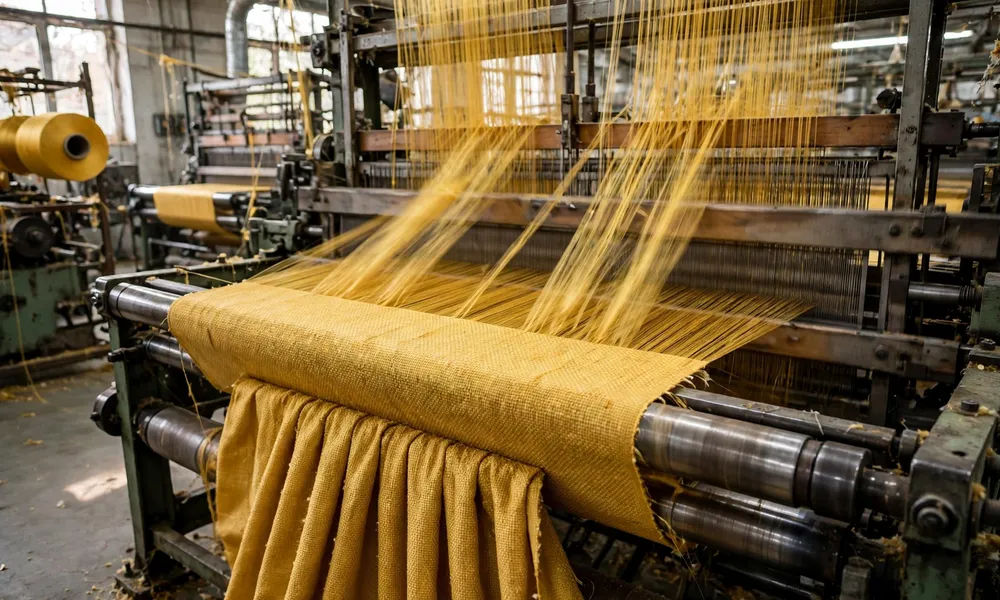
The filaments are gathered into yarns, and the yarns are woven into cloth on looms much like those that weave cotton. Plain weave gives a stable, tight fabric; twill and satin weaves drape better around curves. The golden colour is natural to the fibre, and the cloth is handled with care: Kevlar fibres are sensitive to ultraviolet light, which slowly weakens them, so the finished composite is usually painted or coated.
Step 3: Choosing the resin that holds it together
The resin in a Kevlar composite is usually an epoxy, chosen for its strength, its bond to the fibre, and its resistance to heat and chemicals. Other resins are used too: polyester for cheaper parts, vinyl ester where chemical resistance matters, and phenolic resins where fire resistance is the priority. The resin must wet the fibres completely, with no dry spots or air bubbles, because a dry patch is a weak patch. The same discipline governs the carbon fibre weave, where the cloth and the resin are matched as a pair before a single part is made.
Step 4: Layup, layer by layer
Making a Kevlar composite part starts with layup: sheets of cloth are cut to pattern and laid into a mould, ply by ply, each layer turned to a different angle so the finished part is strong in every direction. A bullet-resistant panel might have dozens of layers; a boat hull might have fewer, combined with other fibres. Workers wear gloves, because skin oils and dust weaken the bond between fibre and resin, and the layers are smoothed and rolled to push out trapped air.
Step 5: Curing under heat and pressure
Once laid up, the part is cured. In an autoclave — a large heated pressure vessel — heat and pressure force the resin to flow, wet every fibre, and then harden into a solid. The cure cycle is carefully controlled: too fast, and the resin overheats and cracks; too slow, and it never reaches full strength.
Step 6: Cutting, drilling and the fraying problem
Kevlar is famously hard to cut and drill. The fibres are so tough that ordinary drill bits push them aside instead of cutting them, leaving fuzzy holes and frayed edges. Special tools are used: sharp, high-speed cutters, diamond-coated drills, and water-jet cutters that slice the composite with a jet of water and abrasive at enormous pressure. Finished parts are sealed at the edges, and holes are drilled with backing plates to keep the exit side clean. The carbon nanotube composite world faces the same machining puzzle, though for different reasons, and the tooling keeps evolving to keep up.
Step 7: Where Kevlar earns its keep
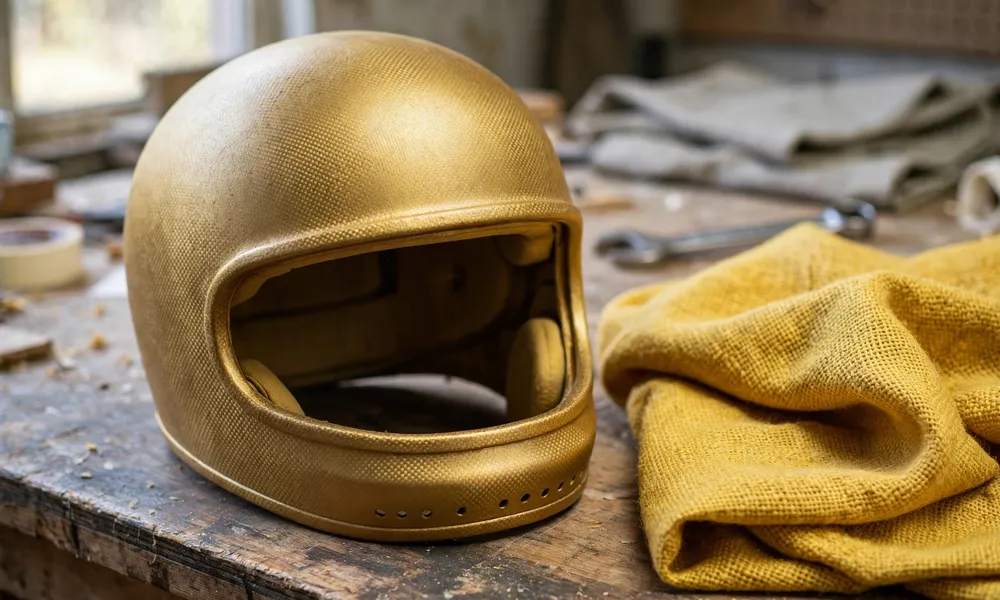
Kevlar composites show up where impact resistance matters most. They line boat hulls to resist puncture, reinforce aircraft parts that must survive bird strikes, and form the shells of protective helmets. In motorsport, Kevlar panels protect fuel tanks and driver cells, and Formula 1 monocoque, aramid layers are built into the carbon structure to stop it shattering in a crash. The fibre’s great gift is that it fails gracefully: where carbon fibre snaps, Kevlar stretches, frays and absorbs energy, holding together long after it should have broken. It is also used in ropes and cables, in the sails of racing yachts, and in the tyres of some high-performance vehicles, anywhere a light, strong fibre earns its place. That is why it is the material engineers reach for when the question is not how strong a part is, but how it behaves when things go wrong.
Kevlar Composite at a Glance
| Specification | Detail |
|---|---|
| Fibre | Aramid, poly-paraphenylene terephthalamide |
| Filament diameter | About 12 micrometres |
| Strength vs steel | About 5 times stronger by weight |
| Density | About 1.44 g/cm³ |
| Usual resin | Epoxy, also polyester, vinyl ester or phenolic |
| Weave types | Plain, twill and satin |
| Weakness | Degraded by ultraviolet light; hard to cut and drill |
| Key quality | Absorbs impact energy instead of shattering |
What Does It Cost?
Kevlar fabric typically costs between $20 and $60 per square metre (estimate) depending on weight and weave, with heavier ballistic grades costing more (estimate). A finished Kevlar composite part costs far more than its cloth: a protective helmet shell runs into hundreds of dollars (estimate), and a large moulded panel for a boat or vehicle can cost thousands (estimate). The price reflects the expensive polymer, the slow layup and the autoclave time, not just the golden cloth itself.
A Rare Fact
Kevlar was invented by accident, in a sense. In 1965, the chemist Stephanie Kwolek was working on a lighter fibre for tyres at DuPont when a batch of polymer solution came out cloudy and thin, instead of clear and thick as expected. Her colleagues wanted to throw it away, but she insisted on spinning it, and the fibres that came out were astonishingly strong and stiff. She had discovered a liquid-crystal polymer, a whole new class of material. The fibre she saved from the bin went on to protect soldiers, racing drivers, astronauts and sailors, and it all started because one chemist refused to discard a cloudy solution.


