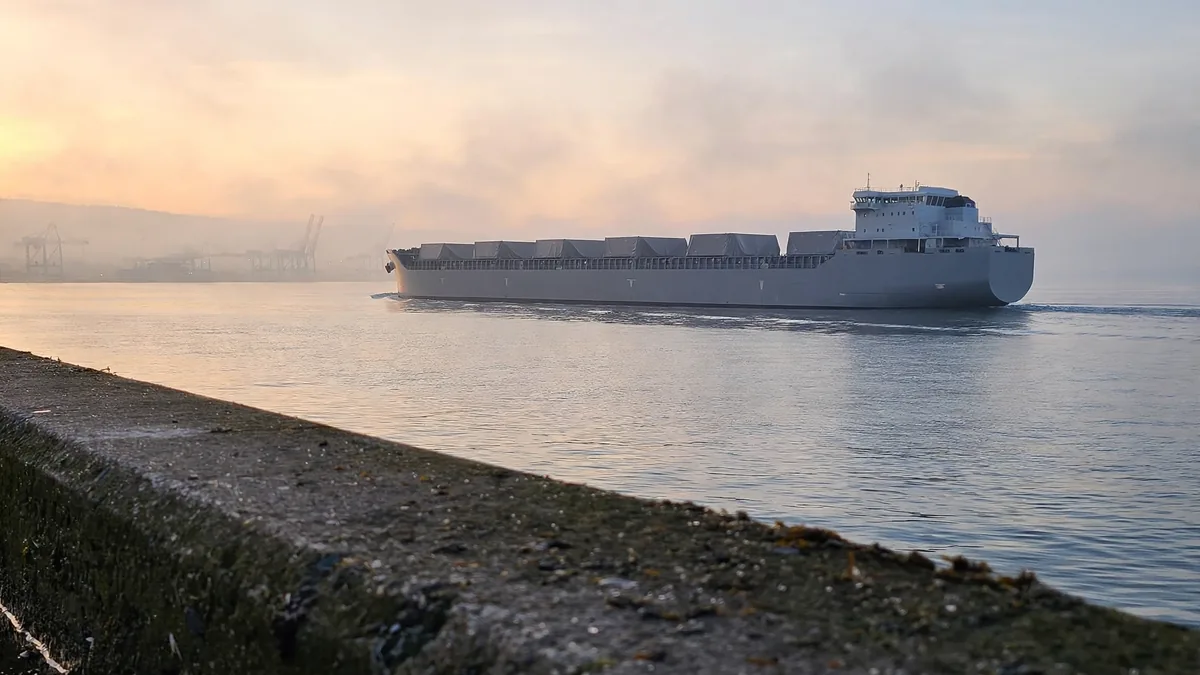
The bulk carrier slides out of the loading berth with no smoke, no rumble and no shudder, just a faint hum that fades as she gathers speed. Bulk carriers are the workhorses of world trade, the plain steel giants that haul iron ore, coal, grain and cement across the oceans, and they have always been powered by the largest diesel engines on earth. The electric bulk carrier changes the deal entirely: she replaces the roaring diesel with batteries, motors and software, and does the same job in near silence, with no exhaust at all.
That silence is not a gimmick. It is the sound of a different kind of machine, one built around a simple idea: electricity is easier to control, cheaper to maintain and cleaner to use than combustion, provided you can store enough of it.
How an Electric Bulk Carrier Works
Step 1: The battery bank, the ship’s fuel tank
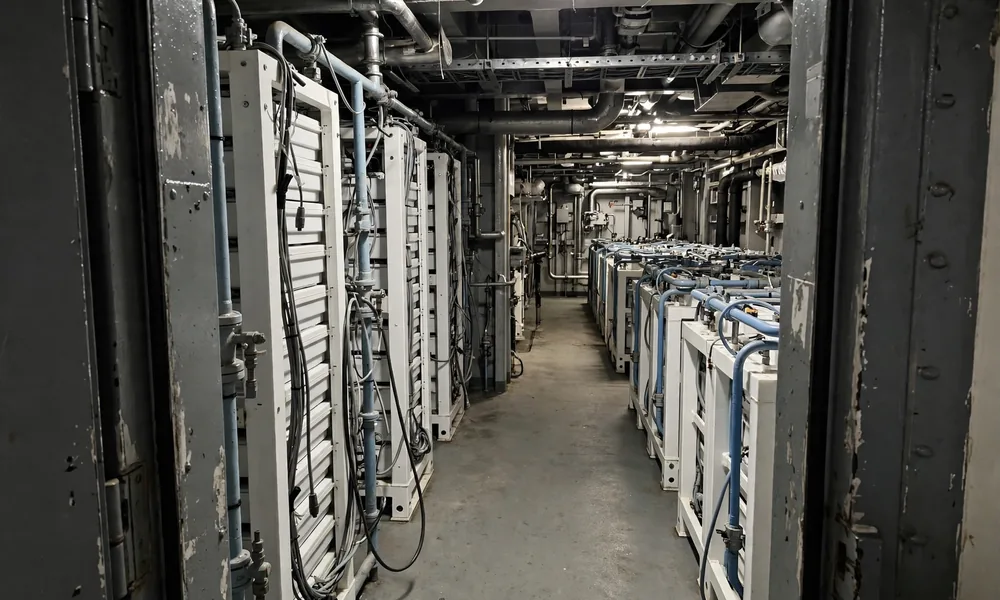
At the heart of the electric bulk carrier is her battery bank, lithium-ion modules arranged in racks inside fire-protected, climate-controlled compartments below deck. A coastal electric bulk carrier typically carries between 10 and 50 megawatt-hours of storage, enough energy to power thousands of homes for a day. Charging happens in port, through a high-power shore connection that can deliver several megawatts, refilling the ship in a few hours while cargo is loaded.
Step 2: Electric motors and the propeller
From the batteries, power flows through inverters that convert direct current into the alternating current the propulsion motors need. The motors are large permanent-magnet or induction machines, mounted low in the hull and connected to the propeller shaft, or in the newest designs built directly into steerable pods beneath the hull. The electric ferry propulsion system works on the same principles at a smaller scale, and the bulk carrier is essentially that technology grown up to cargo-ship size.
Step 3: Power management and the ship’s brain
Between the batteries and the motors sits the power management system, the software that decides where every kilowatt goes. It watches the voyage plan, the weather, the cargo load and the state of charge, and trims the propeller speed to the most efficient setting for the moment, sometimes by fractions of a knot that save enormous amounts of energy over a voyage. On the bridge, the crew sees all of this on a single energy display, a screen that shows range remaining the way a car’s dashboard shows fuel.
Step 4: Charging, shore power and the port connection
An electric bulk carrier is only as good as her charging, and the port connection is one of the most important parts of the design. In port, the ship plugs into a shore-side charging station through a heavy cable, and megawatts flow into the batteries while the holds are loaded or unloaded. Some designs add a small range-extender generator, a compact engine that can top up the batteries on longer legs, and the hybrid electric ferry shows how that combination works in practice, using its generator only when the batteries cannot do the job alone. The charging infrastructure is the part of the electric ship story that happens on land, and ports that invest in it early will be the ones the electric fleet calls at first.
Step 5: Sails, solar and squeezing out more range
Because batteries are heavy and range is precious, electric bulk carriers are designed to harvest every free source of energy available. Some carry rigid wing sails or spinning rotor sails that use the wind to push the ship along, cutting the load on the motors whenever the breeze is favourable. The rotor sail is one of the most elegant of these additions: a tall spinning cylinder that uses the wind to generate forward thrust, a piece of physics so old it feels like magic and so effective it is coming back to the largest ships on the sea. None of these systems replaces the battery. All of them make the battery go further.
Step 6: Safety, crew and the voyage itself
On a voyage, the electric bulk carrier feels different from any ship her crew has served on. The engine room is quiet enough to talk in, the bridge has fewer alarms and more information, and the chief engineer’s job shifts from maintaining a giant diesel to watching software and battery health. Cargo operations are unchanged, the holds and cranes work exactly as they always have, which is deliberate: the electric bulk carrier is meant to slot into the existing world of ports and cargoes, not to demand a new one. When she arrives in port, she does so silently, her batteries low and her holds full, and the port plugs her in to do it all again.
Electric Bulk Carrier Specifications
| Specification | Typical figure |
|---|---|
| Length overall | 100 to 200 metres |
| Deadweight | 10,000 to 40,000 tonnes |
| Battery capacity | 10 to 50 megawatt-hours |
| Propulsion motors | 2 to 4 electric motors |
| Total power | 3,000 to 10,000 kilowatts |
| Service speed | 10 to 13 knots |
| Range on batteries | 200 to 600 nautical miles |
| Charging power | 2 to 10 megawatts |
| Emissions at sea | Zero exhaust emissions |
| Crew | 12 to 18 people |
How Much Does an Electric Bulk Carrier Cost?
An electric bulk carrier costs more to build than a diesel sister ship, and less to run. A coastal electric bulk carrier of around 10,000 tonnes deadweight, with a 20 megawatt-hour battery and a full charging system, carries an estimated price of $25 million to $40 million. A larger vessel of 40,000 tonnes with a 50 megawatt-hour battery and rotor sails is estimated at $60 million to $90 million. Against that, the running costs are dramatically lower: electricity is cheaper than marine fuel, the motors need far less maintenance than a diesel, and the ship pays no carbon charges in ports that price emissions. Operators who run short, regular coastal routes find the numbers already work, and as battery prices fall and charging spreads, the routes where electric makes sense will only grow.
A Rare Fact About Electric Bulk Carriers
Here is a detail that catches even engineers by surprise: an electric bulk carrier can feed power back into the port. When the ship is berthed and her batteries are full, she can discharge electricity into the shore grid, acting as a giant floating battery that helps the port through peak demand or a power cut. The technology is called vehicle-to-grid on land, and on a ship it is ship-to-grid, and it turns the vessel from a consumer of port power into a partner of it. The bulk carrier, the plainest ship on the sea, may end up as part of the electricity grid itself.

The electric bulk carrier is not a curiosity or a demonstration project. She is the working answer to the hardest question in shipping: how to move the heavy, plain cargoes of the world without burning fuel to do it. Her batteries, motors and software do the same job the great diesels did, more quietly, more cleanly and with far fewer moving parts, and the ports and routes that suit her are growing every year. The future of bulk shipping is electric, and it arrives in silence. Her future is already arriving in ports around the world.