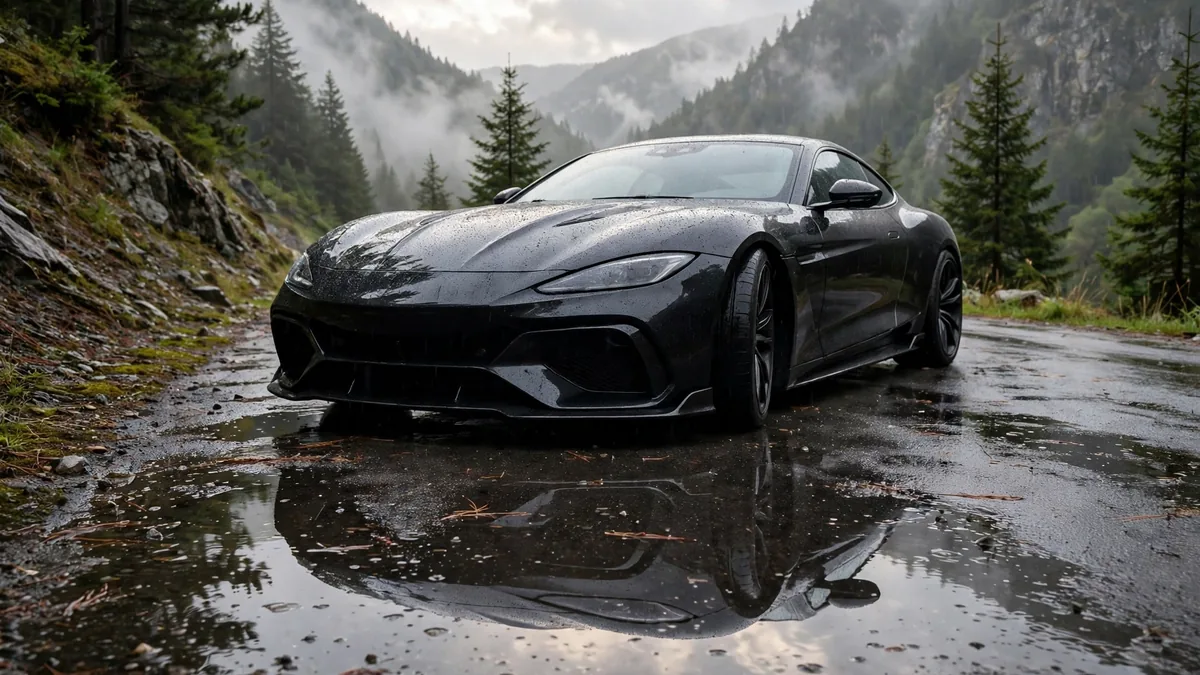
The coupe came down the mountain road just after the rain had stopped, its paint beaded with water and its engine note echoing off the rock on every downshift. It was not the fastest car on that road, nor the most expensive, but it was the one every other driver watched. A coupe does that: two doors, a long bonnet, a roofline falling away toward the tail, and a promise that the drive matters as much as the destination. Luxury coupes have made that promise for a century, and the spec sheet is the modern version of it, written in numbers instead of poetry.
Reading the sheet means looking past the headline horsepower and asking what the car actually does with it. A coupe is judged on weight, balance, torque, gearing, braking and body shape as much as on power, and a car with less power but better balance is often quicker and more satisfying on a real road. The figures below decode the sheet the way an engineer would, starting with the numbers that decide how the car feels, not how it photographs.
How a Luxury Coupe Is Built, Step by Step
A coupe is built around its proportions, and every step of the process protects them.
1. The platform sets the stance
Engineers start with a rear- or all-wheel-drive platform, the engine set low and as far back as the bonnet allows. The wheelbase is long, the overhangs short, and the seating position close to the centre, which gives the coupe its balanced handling and long-nose silhouette.
2. The body structure is made stiff and light
Aluminium, high-strength steel and carbon fibre form a shell that resists twisting, because a coupe has no B-pillar bracing from a four-door body to lean on. A stiff shell lets the suspension work precisely, keeps the doors shutting properly, and keeps the cabin quiet at speed.
3. The engine is tuned for the road, not the brochure
Luxury coupes typically use a twin-turbo V8, a turbocharged straight six or a hybrid-assisted V6, making roughly 450 to 650 horsepower. Tuning prioritises torque from low revs and a smooth delivery, so the car pulls hard without drama, and the exhaust is voiced to be heard without tiring on a long journey.
4. The gearbox and drivetrain are matched to the engine
An eight-speed automatic or dual-clutch gearbox, often with a limited-slip rear differential, puts the power down cleanly. The ratios keep the engine in its strongest range on a winding road while letting it loaf quietly at motorway speed, which is why a coupe can be both fast and relaxing.
5. The suspension is tuned in two personalities
Adaptive dampers, air springs or magnetic ride control give the car a comfortable touring mode and a firm sporting mode at a touch. Double-wishbone front suspension and a multi-link rear keep the tyres flat on the road, and the steering is quick without feeling nervous.
6. The cabin is fitted as a two-plus-two grand tourer
Leather, open-pore wood, machined aluminium and a quiet, insulated cabin turn the coupe into a car for crossing countries rather than towns. The rear seats are small, honest as occasional seats or extra luggage space, and the driving position is low with a clear view over the long bonnet.
7. The car is proven on road and track
Before delivery, prototypes are driven for hundreds of thousands of kilometres in heat, cold and rain, and tuned on a test track for braking, stability and emergency handling. The final sign-off is a full-speed run and a long-distance drive, because a luxury coupe must be as dependable at 250 kilometres per hour as at fifty.
The Spec Sheet, Decoded
The most important number is not horsepower but weight, and the power-to-weight ratio ties them together. A luxury coupe typically weighs 1,700 to 2,000 kilograms and makes 450 to 650 horsepower, enough for 100 kilometres per hour in about 3.5 to 4.5 seconds. Torque matters more than power day to day: 700 to 800 newton metres from low revs is what makes the car feel effortless. The 0–100 time is measured with a perfect launch on a prepared surface, so a real road is always a little slower, and the top speed, often limited to 250 kilometres per hour, is a gentleman’s agreement rather than a mechanical limit. Braking distance from 100 kilometres per hour, usually under 35 metres, and weight distribution near 50:50 complete the handling picture.
| Specification | Typical luxury coupe | What it means |
|---|---|---|
| Engine | Twin-turbo V8 or straight six | Low-rev torque |
| Power | About 450–650 hp | Half the story |
| Torque | About 700–800 Nm | Effortless daily pull |
| Weight | About 1,700–2,000 kg | Heavy for sports, light for luxury |
| 0–100 km/h | About 3.5–4.5 seconds | Perfect-launch figure |
| Top speed | About 250 km/h, limited | Electronically capped |
| Weight distribution | Near 50:50 | Balanced in corners |
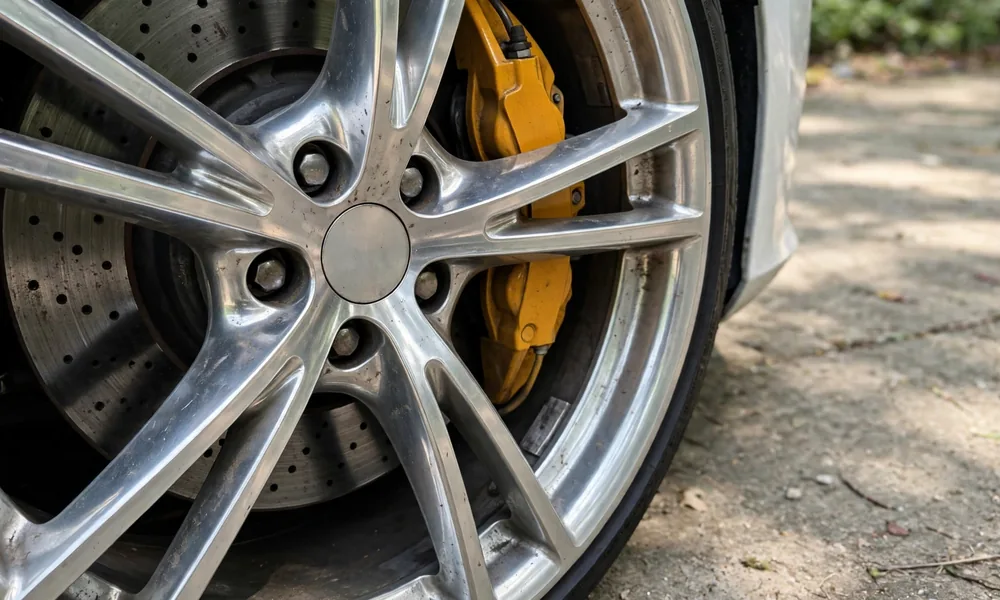
| Braking, 100–0 km/h | Under 35 m | Big brakes, good tyres |
| Body | Aluminium, steel and carbon fibre | Stiff, quiet, light |
| Fuel consumption | About 10–13 L/100 km combined | Higher driven hard |
Two figures on the sheet are often misunderstood. The first is the drag coefficient, usually around 0.29 to 0.33, which describes how cleanly the body slips through the air. A low figure helps top speed and fuel economy, but frontal area multiplied by that coefficient decides the real resistance, and a wide coupe has more frontal area than its sleek shape suggests. The second is fuel consumption, measured on a gentle laboratory cycle and rarely matching a car that is actually being enjoyed, so buyers should expect roughly a third more fuel in real driving than the brochure promises.
For the engines behind these figures, the best V12 engines ever built is a useful history of what came before the turbo era. The detail continues in the hypercar V12 engine spec sheet, which decodes the same numbers at the extreme end of the scale, while why the luxury convertible is so expensive explains what removing the roof does to structure and price.
What a Luxury Coupe Costs
A new luxury coupe typically costs an estimated $110,000 to $220,000, depending on engine, options and badge, while a well-kept used example can be found for an estimated $60,000 to $120,000. Annual running costs, including insurance, servicing, tyres and fuel, commonly reach an estimated $8,000 to $15,000 a year, and performance tyres can add an estimated $1,500 to $3,000 every 20,000 kilometres. The steepest cost is depreciation: a coupe can lose an estimated 40 to 50 percent of its value in three years, which is why smart buyers choose a two-year-old car and let the first owner take that hit. All prices here are estimates, and real figures vary with the model, the market and the specification.
What the estimates buy is the most versatile shape in luxury: a car fast enough for a track day, comfortable enough for a thousand-kilometre drive, beautiful enough to stop people in a car park. Few machines cover that much ground with so little compromise.

A Rare Fact
The frameless doors of a luxury coupe hide a small piece of engineering theatre: when the door opens, the window glass drops a few millimetres to clear the roof seal, and when it closes, the glass rises again to press airtight against the body. A sensor and motor control the movement, and must work perfectly for decades, because one failure lets in wind noise at speed and rain in a storm. It is one reason coupe doors feel so solid when they shut.
The spec sheet will never tell you whether you love a coupe, only whether the car underneath the shape is honest. The best coupes are the ones whose numbers and driving feel agree.


