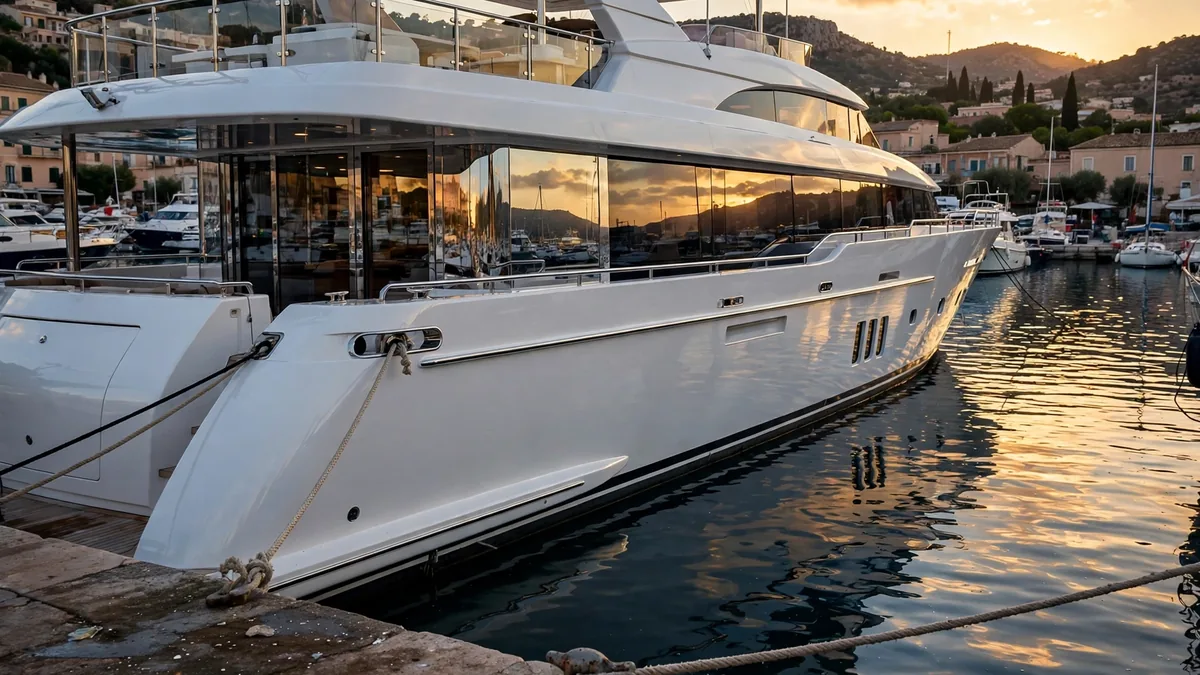
The yacht was not the biggest in the marina, but it was the one the dockhands watched as it came in. Fifty metres of white steel and glass, nine crew moving in quiet choreography, a helicopter pad folded away on the foredeck, and a tender garage in the side of the hull. The owner was flying in the next day; the boat had crossed an ocean to wait for him, and would cross another to take him home. That is the first thing to understand: the purchase price is not the cost of a boat, it is the cost of a private, floating hotel that must be ready to move anywhere, at any time, with no notice.
Ask why one costs so much and the answer is not one extravagance but a hundred, stacked on top of each other. The hull is a one-off build, the systems those of a small ship, the crew a full-time staff, and the running costs arrive every year whether the yacht moves or not. This article follows the money, from shipyard to fuel dock, and shows where each million goes.
How a Luxury Motor Yacht Is Built, Step by Step
The build is where the money goes first, and it takes years.
1. The design is drawn from scratch
A naval architect and an interior designer spend months on a design that will never be repeated. Hull lines are tested in a towing tank, the layout is argued over cabin by cabin, and the owner approves every detail, from window height to wood grain. Design and engineering fees alone can reach several million dollars before one plate is cut.
2. The hull is built like a small ship
Steel or aluminium plates are cut, welded and faired by hand into a fifty-metre hull, then painted to a mirror finish that takes weeks of sanding between coats. The hull must survive ocean crossings, so it is built to commercial classification rules, inspected at every stage and tested for watertightness compartment by compartment.
3. The engines and systems are installed
Two large diesel engines, generators, stabilisers, air conditioning, water makers, sewage treatment, fire suppression, navigation and communications are fitted in the hull. Each is marine-grade, built to run thousands of hours without failure, and costs several times its land-based equivalent because it must work at sea.
4. The interior is fitted like a hotel
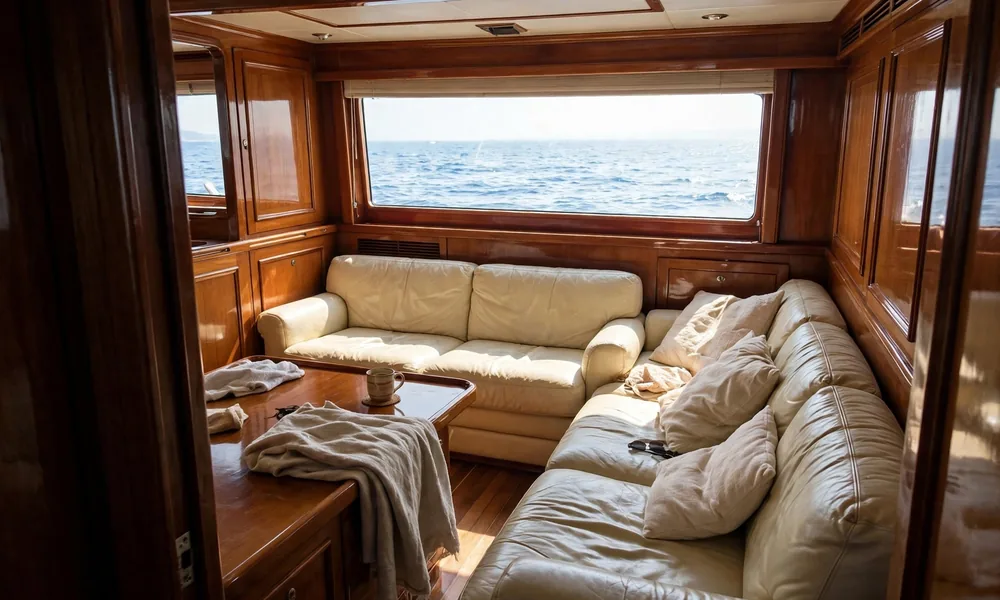
Master suite, guest cabins, crew quarters, saloon, dining room, galley, gym and cinema are fitted in stone, leather, exotic wood and custom glass. Much of it is handmade to the millimetre, because no two cabins are the same size, and the finish must survive vibration, humidity and salt air without cracking or fading.
5. The toys and tenders are loaded
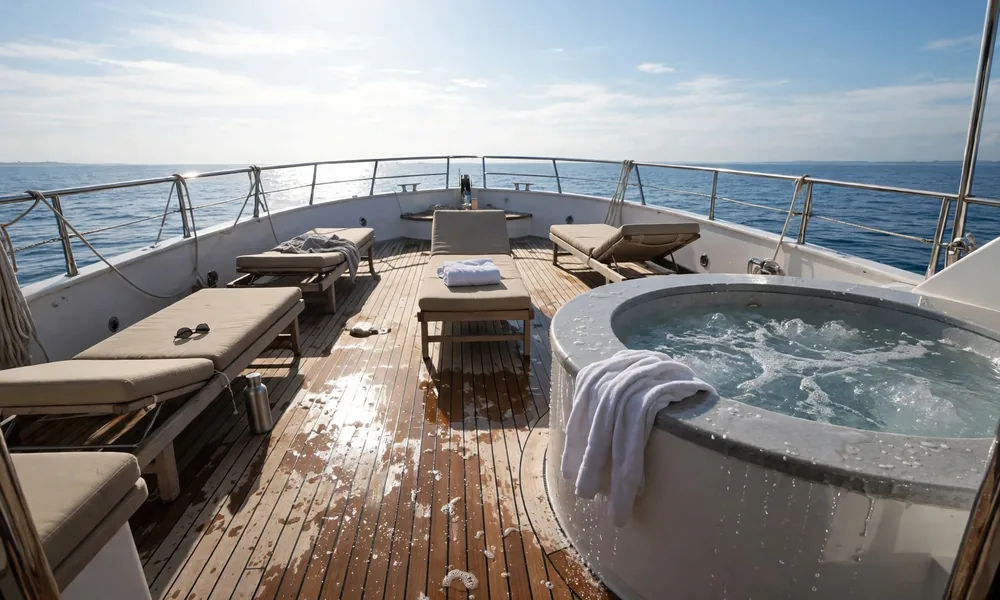
A large tender, jet skis, diving gear, water toys and sometimes a submersible are stored in hull garages, with cranes and davits to launch them. The toys alone can cost more than a house, and need their own maintenance, fuel and storage.
6. Sea trials prove the whole ship
The finished yacht spends weeks at sea on speed, turning, stabiliser and anchor trials, man-overboard drills and a full-speed run. Every defect found is fixed and the trials repeated, because a yacht that fails at sea is not just an embarrassment, it is a danger to everyone aboard.
7. The crew comes aboard and the meter starts
From delivery day, the yacht needs a captain, engineers, deckhands, a chef and stewards, whether cruising or sitting in the marina. The crew is the largest single running cost, beginning before the owner has spent a night aboard.
Where the Money Goes
The build cost is the headline, but the running costs are the story. A fifty-metre motor yacht typically costs an estimated $25 million to $50 million to build, and the annual running cost is commonly estimated at ten percent of that, or $2.5 million to $5 million a year. Crew wages are the largest slice, often an estimated $800,000 to $1.5 million a year for nine or ten people, including food, uniforms and training. Fuel is the most volatile cost: at full speed a yacht of this size burns an estimated 500 to 800 litres per hour, so one ocean crossing can cost an estimated $50,000 to $100,000 in fuel alone. Berthing in a prime Mediterranean marina costs an estimated $100,000 to $300,000 a year, insurance an estimated $200,000 to $500,000, and maintenance and refits an estimated $500,000 to $1 million, because every system must be serviced on schedule whether used or not. All prices here are estimates, and real figures vary with the size of the yacht, the region and the level of service.
The second driver is customisation: a production yacht shares its moulds, systems and interior across dozens of hulls, spreading the cost. A custom motor yacht shares almost nothing: hull, interior and engineering are unique, done once for one owner, who pays the full design price rather than a share of it. The third driver is regulation: a yacht over a certain size must meet the safety and environmental rules of a commercial ship, meaning certified systems, licensed crew, regular surveys and paperwork a smaller boat never sees. The fourth is the standard of finish: a superyacht interior is built to five-star hotel standard, but must survive at sea, and building hotel luxury into a moving, vibrating, salt-soaked steel box costs far more than building it on land.
| Cost area | Typical annual estimate | Why it costs so much |
|---|---|---|
| Crew wages and costs | $800,000–$1,500,000 | Staff of 9–10 |
| Fuel | $300,000–$800,000 | 500–800 litres per hour |
| Berthing | $100,000–$300,000 | Prime space is scarce |
| Insurance | $200,000–$500,000 | High value, ocean risk |
| Maintenance and refits | $500,000–$1,000,000 | Strict schedules |
| Build price, 50 m yacht | $25,000,000–$50,000,000 | One-off build |
| Typical length | About 50 m | Five decks, six cabins |
| Typical top speed | About 18–22 knots | Outruns weather |
| Typical range | About 4,000–5,000 nm | Ocean crossings |
| Typical crew | 9–10 people | Captain to stewards |
There is also a cost that never appears on an invoice: depreciation. A new yacht loses a large share of its value in the first years, because a second-hand buyer inherits someone else’s taste, layout and a hull already ageing in salt water. Refits can restore value, but a major refit is itself a multi-million-dollar project, and many owners find selling and building again simpler, which is why the brokerage market is full of yachts less than a decade old.
For the numbers, decoding motor yacht specs explains how length, tonnage and speed are measured. The support fleet is part of the bill too, and the support yacht spec sheet covers the shadow vessel carrying the toys and extra crew. The hybrid alternative, in how a hybrid yacht works, shows one technology trying to cut the fuel bill without cutting the luxury.
A Rare Fact
The stabilisers on a large motor yacht are fins the size of dining tables, extending from the hull underwater and tilting hundreds of times a minute to cancel the roll of the sea. Controlled by gyroscopes and computers, they can cost more than a luxury car on their own, and without them a yacht at anchor in a swell would roll enough to send plates off the dining table. They are the invisible luxury: nobody photographs them, but every guest who has slept soundly through a rough night owes them thanks.
A luxury motor yacht is expensive because it is four things at once: ship, hotel, workplace and status symbol, each expensive on its own. Put them together, make them float, and make them ready to leave at a day’s notice, and the price stops being surprising. It starts looking like the only price it could be.


