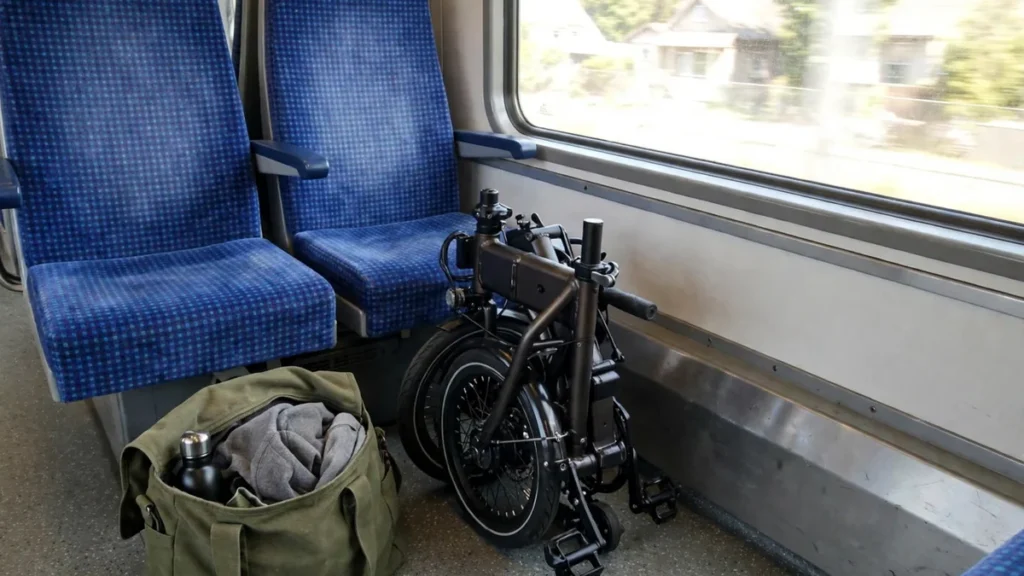
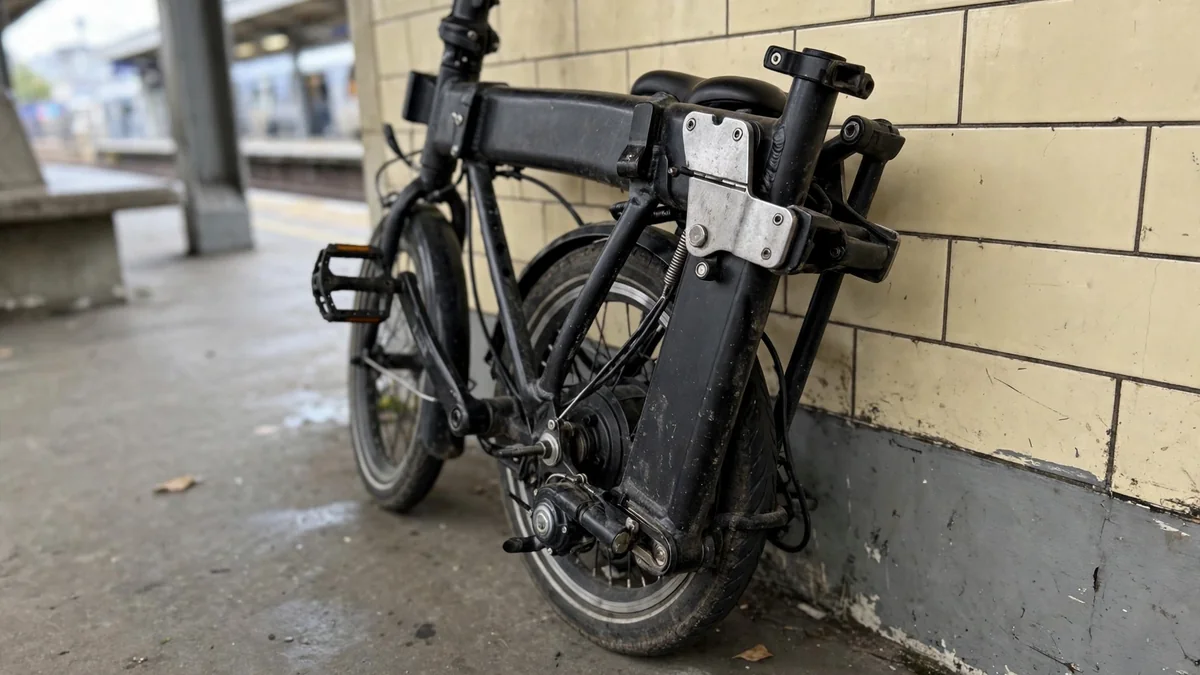
She unfolded the bike on the platform, clicked two levers, and rode away while the commuters around her were still wrestling with their umbrellas. The whole machine had been a flat package under her arm a minute earlier, and now it was a bicycle under her weight. That is the trick of a folding e-bike frame: it must fold small enough to carry onto a train, and still ride like a frame that never folds at all.
A folding frame is not a normal frame with a hinge bolted on. Every tube is shorter, every joint carries more load, and the places where it folds are where it is most likely to fail. Builders think in millimetres and in years of daily folding, because a commuter will fold the same hinge ten thousand times. This is how a folding e-bike frame is made, from raw aluminium tube to a machine that folds flat and still feels like a proper bike.
How It’s Made
Step 1: Tubes are chosen and cut to length
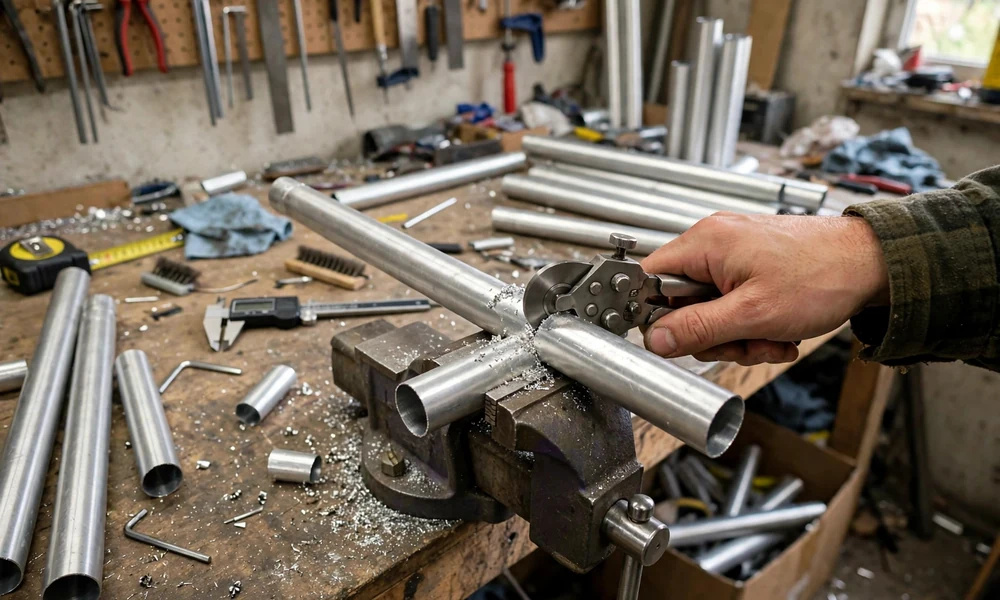
The frame starts as aluminium alloy tubing, usually 6061 or 7005, chosen because it is light, strong, and easy to weld. The tubes arrive in long lengths and are cut to size on a saw that leaves a clean, square end, because a crooked cut makes a weak weld later. The tubes for the folding sections are cut shorter than on a normal bike, since the frame breaks into two or three pieces, and the tubes near the hinge are thicker, because that is where the load concentrates. A tube a millimetre too short means the whole frame will not fold straight.
Step 2: The hinge and latch are machined
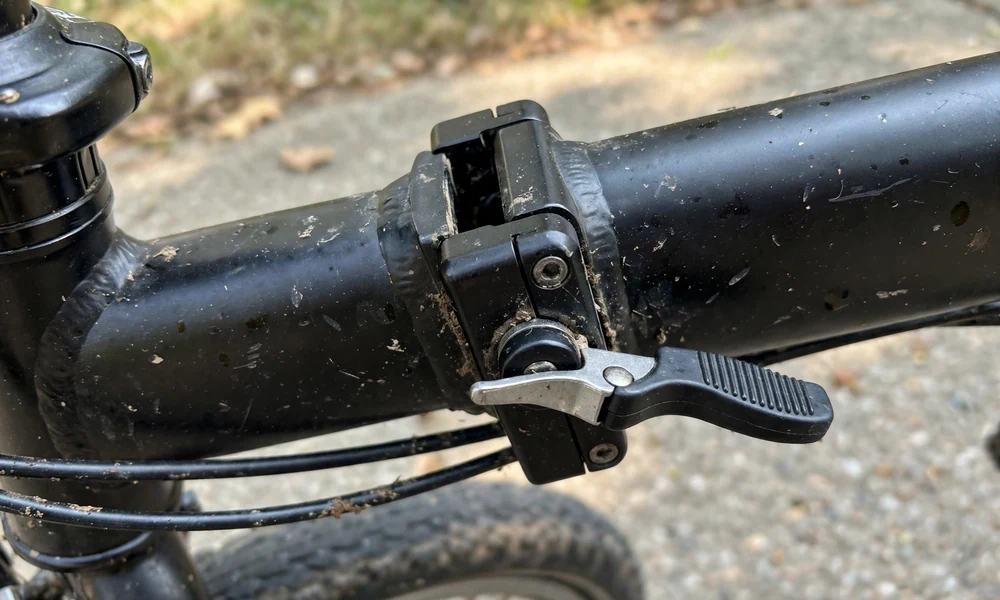
The hinge is the heart of the frame, machined from a solid block of aluminium or steel on a CNC mill. The two halves are cut so precisely that they close with no play at all, and the pivot pin is ground to a tolerance a human hair would hide inside. A quick-release latch, usually a cam lever, locks the frame rigid when it is open. The hinge faces are checked with a straight edge and a feeler gauge, because even a tiny gap lets the frame flex under pedalling, and a sloppy hinge makes a bike nobody trusts. The machining is done the way other precision parts are made, as described in how precision CNC machining is made.
Step 3: Tubes are bent, shaped, and fitted in a jig
The main tubes are bent to shape on a mandrel bender, which keeps the tube round inside the bend instead of letting it kink. The top tube, down tube, and seat tube are then laid into a steel jig that holds them in exactly the right position, with the hinge halves in their own pockets. The builder checks the alignment with a string line and a spirit level, because a frame a degree out of true will pull to one side. The folding joint is placed where the frame naturally wants to split, usually in the middle of the top tube or the down tube, and the tubes are trimmed so the hinge sits flush. A carbon frame is built very differently, as shown in how an e-bike carbon frame is made, but aluminium folding frames live or die by this jig.
Step 4: The frame is welded and the hinge is fitted
With the tubes clamped in the jig, a welder joins them with TIG welding, laying a neat bead around each joint and letting it cool slowly so the metal does not warp. The hinge halves are welded to their tubes in the same session, and the welder checks constantly that the hinge still closes flat, since heat can pull it out of line. Once the welds cool, the pivot pin is pressed in and the latch is bolted on, and the builder folds and unfolds the frame a dozen times to feel for stiffness or play. Any weld that looks porous is ground out and redone, because a folding frame cannot hide a weak joint behind paint.
Step 5: The frame is heat-treated, aligned, and painted
Aluminium loses strength when it is welded, so the finished frame goes into an oven for heat treatment, which restores the temper of the alloy. After it cools, the frame is checked on a flat table and cold-set back into alignment if any tube moved. The bearing surfaces for the headset and bottom bracket are faced and reamed so the parts sit square, and the hinge is greased and adjusted until it snaps shut with a solid click. Then the frame is powder-coated or painted, with the hinge faces masked off so paint never gets between the mating surfaces, since paint in the wrong place would stop the hinge closing properly.
Step 6: The frame is assembled and torture-tested
Finally the frame is built up with its motor, battery, wheels, and controls, and the complete bike goes through testing. The hinge is folded and unfolded thousands of times on a rig, the frame is loaded on a fatigue machine that simulates years of potholes, and a rider takes it over rough ground to check for creaks. If the latch loosens or the hinge develops play, the frame goes back to the bench, not out of the door. The gearbox that helps the rider climb is built separately, as described in how an e-bike gearbox is made, and the frame must carry it without flexing. Only when the folding mechanism still feels tight after all that testing is the bike boxed, with the frame folded flat for shipping.
Folding E-Bike Frame Specifications
| Specification | Typical figure |
|---|---|
| Frame material | Aluminium alloy 6061 or 7005 |
| Frame weight | Roughly 2.5 to 4 kilograms |
| Folded size | About 80 by 60 by 40 centimetres |
| Wheel size | Usually 16 or 20 inches |
| Hinge type | CNC-machined pivot with cam latch |
| Fold time | Around 10 to 20 seconds |
How Much Does a Folding E-Bike Frame Cost?
A folding e-bike frame costs more to make than a rigid frame of the same size, because the hinge alone can cost as much as a whole set of tubes. Industry estimates put a good aluminium folding frame at roughly $300 to $900 (estimate) as a standalone part, and a complete folding e-bike usually sells for $1,200 to $3,500 (estimate), depending on the motor, battery, and components. Cheaper folding bikes exist, but their hinges are often the first thing to wear, and a worn hinge turns a clever bike into a wobbly one.
A Rare Fact About Folding E-Bike Frames
Here is something few riders realise: the hinge on a folding e-bike is tested to survive more folds than the bike will ever see in normal use. Test rigs fold and unfold a frame ten thousand times or more, roughly twenty-seven years of folding every single day, and the hinge is expected to still lock tight at the end. A hinge that develops even a millimetre of play makes the whole bike feel broken, even though the tubes themselves are fine, so the hinge is overbuilt on purpose, far stronger than the loads of riding demand.
So the next time you watch someone fold a bike in seconds and carry it onto a train, remember what went into it: tubes cut and bent to the millimetre, a hinge machined from solid metal, welds laid in a jig, heat treatment in an oven, and thousands of test folds before it ever reached the platform.