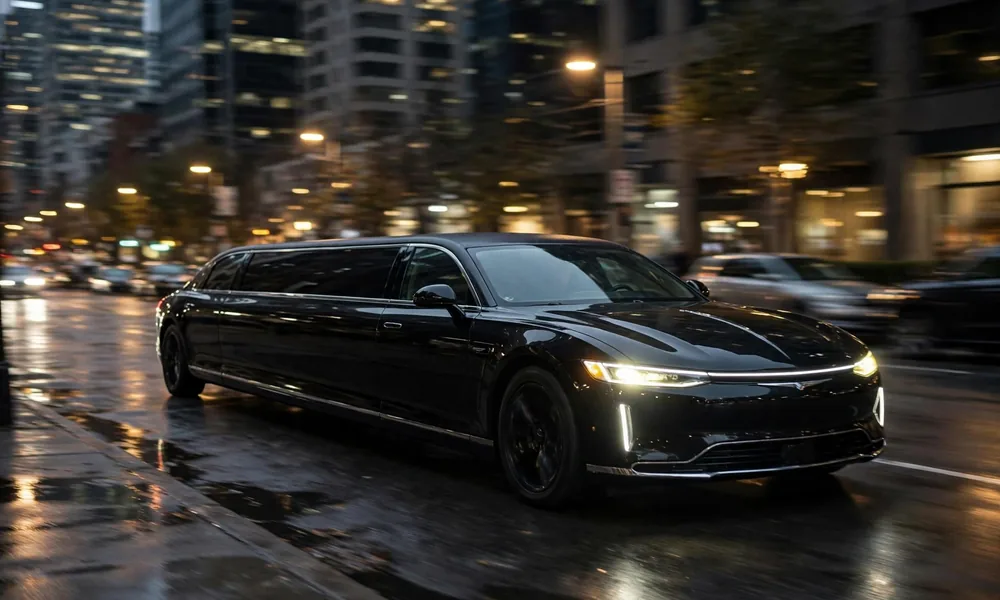
The chauffeur opened the rear door of the black limousine outside the hotel, and the guest stepped in without hearing a thing. No engine rumble, no vibration through the floor, just the soft click of the door and the hush of a cabin that felt more like a private lounge than a car. The guest had ridden in petrol limousines for years, and the silence felt strange at first, almost as if something were missing. By the time the car pulled away from the kerb, the strangeness had turned into the whole point.
That silence is the first clue on an electric limousine spec sheet, and it is also the reason the sheet is worth reading properly. The numbers look familiar — range, power, charging time — but they describe a very different machine from the petrol limousine they replace. A battery the size of a dining table sits under the floor, the motors are silent, and the weight of the car changes everything from the ride to the brakes. This guide translates every figure into plain English, so the next spec sheet you read tells you how the car actually feels.

Range: how far on one charge
Range is the first number most buyers look for, and on a luxury electric limousine it usually sits between 350 and 450 miles on a full charge. That figure comes from the official test cycle, which mixes city streets, country roads and motorways, and real driving will usually return a little less, especially in cold weather or at motorway speed. The important thing is not the headline number but the margin it leaves: a limousine that can cover 400 miles in testing will still manage a long airport run and a day of city work without a nervous glance at the battery gauge.
Range matters more in a limousine than in most cars because the car is a workplace. A chauffeur cannot ask a client to wait while the car charges, and a missed pickup is worse than a missed turning. That is why builders fit the biggest battery they can, even though it adds weight and cost, and why the range figure is the one the sales brochure prints largest. The guide to why a luxury electric limousine is so expensive explains how that huge battery is one of the biggest single costs in the whole car.
Battery size: the number behind the range
Battery size is measured in kilowatt-hours, written as kWh, and a luxury electric limousine usually carries between 100 and 120 kWh. Think of a kilowatt-hour as a bucket of energy: a bigger bucket holds more, and the car drinks from it as it drives. A 110 kWh battery holds roughly enough energy to run an average home for four days, and it sits low in the floor of the car, which keeps the centre of gravity down and the ride steady. The trade-off is weight, because a battery that big weighs more than half a tonne on its own.
Power and acceleration: quiet, not slow
Power on an electric limousine is usually quoted between 400 and 600 horsepower, and the car can reach 60 miles per hour in around four to five seconds. That sounds like a sports car figure, but the limousine uses its power differently. An electric motor delivers all of its pulling force the instant the driver presses the pedal, so the car moves off smoothly and silently, without the pause and the gear changes of a petrol engine. The guide to luxury electric roadster specs explained shows the same instant power used for speed, while the limousine spends it on effortless, silent progress.

Charging speed: minutes, not hours
Charging speed is quoted in kilowatts, and a luxury electric limousine can usually accept between 150 and 250 kW from a fast public charger. At that rate, the battery can go from ten per cent to eighty per cent in about half an hour, which is a coffee stop rather than an overnight wait. At home, on a wall charger, the same car fills at around 11 kW, which takes a full night, and that is why most owners charge at home and only use fast chargers on long journeys. The charging figure to check is the peak rate and how long the car can hold it, because a car that charges fast for five minutes and then slows down is less useful than one that holds its pace.
Space and silence: what the flat floor buys
An electric limousine has no engine, no gearbox tunnel and no exhaust running down the middle of the car, so the floor is flat and the cabin is wider than a petrol car of the same length. Rear passengers get proper legroom, a flat footwell, and a cabin so quiet that a conversation at normal volume carries easily from one end to the other. Engineers measure that quietness in decibels, and a good electric limousine cruises at around 60 decibels, which is quieter than a normal conversation. The guide to luxury electric minivan specs explained shows the same flat-floor trick used for family space, while the limousine spends it on calm.
The numbers at a glance
| Specification | Typical electric limousine | Top electric limousine |
|---|---|---|
| Battery size | 100 kWh | 120 kWh |
| Range | 350 miles | 450 miles |
| Power | 400 hp | 600 hp |
| 0 to 60 mph | 5.0 seconds | 4.0 seconds |
| Fast charging | 150 kW | 250 kW |
| 10 to 80 per cent charge | 35 minutes | 25 minutes |
| Weight | 2,600 kg | 2,900 kg |
| Cabin noise at cruise | 62 dB | 58 dB |
What a luxury electric limousine costs
A luxury electric limousine costs an estimated 120,000 to 180,000 dollars, with the most exclusive stretched and armoured versions reaching an estimated 250,000 dollars or more. The battery alone accounts for a large share of that price, and the hand-finished cabin, the air suspension and the chauffeur-grade soundproofing add the rest. Running costs are lower than a petrol limousine, because electricity is cheaper than fuel and the car has fewer moving parts to service, but the purchase price is the number that stops most buyers. It is a car bought for the journey it gives its passengers, not for the money it saves.
A rare fact
Some luxury electric limousines can power a house. The same battery that drives the car can send electricity back out through a home charger, and a fully charged limousine holds enough energy to run the lights, the fridge and the heating of an average home for three or four days. A few owners in storm-prone regions have used their limousine as a backup generator during a power cut, keeping the house lit while the neighbours sat in the dark. It is a strange second life for a chauffeur car, and it comes free with the battery the car already carries.
The next time an electric limousine spec sheet lists its numbers, read them as a description of a journey, not a list of parts. The range buys the working day, the battery buys the silence, the charging speed buys the schedule, and the flat floor buys the calm. A luxury electric limousine will never be a sensible purchase, but its spec sheet is a sensible document: it tells you, in plain numbers, exactly how quiet the luxury is going to be.