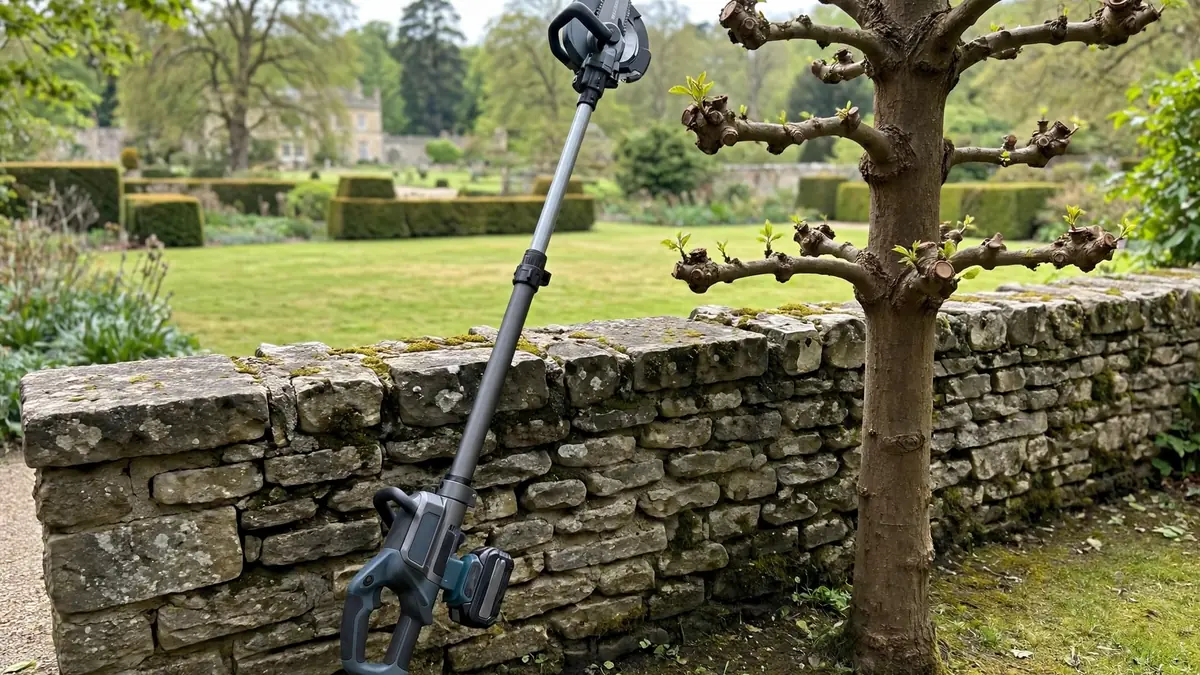
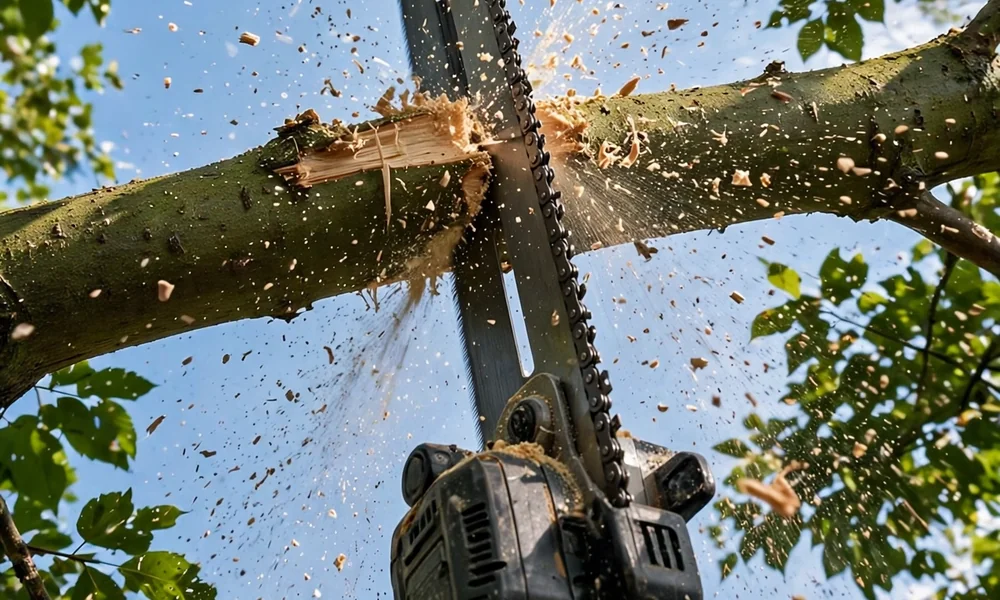
The branch was too high for a ladder, too thick for loppers, and too close to the glasshouse roof to ignore. The gardener on the big estate knew the only sensible way to take it down was from the ground, so he picked up a long, slim tool, switched it on, and raised the humming chain to the branch. A minute later the branch was on the lawn, the cut was clean, and nobody had climbed anything.
That tool was a luxury electric pole saw, and its spec sheet is shorter than a yacht engine manual but just as easy to misread. Read the sheet properly and you buy a tool that reaches the branches you actually have; read it badly and you end up with a saw that is either too weak for the job or too heavy to hold up.
Voltage and Battery: The Power Behind the Chain
Voltage is the first number on the sheet, and for a luxury cordless pole saw it usually sits between 40 and 80 volts. Higher voltage does not by itself mean a better saw, but it lets the motor draw more power without the current running so high that the battery and wiring run hot. The sheet also lists battery capacity in amp-hours, commonly 2.5 to 5, and multiplying voltage by amp-hours gives watt-hours, the real measure of how much work one charge holds.
Runtime is where the numbers get slippery, because a maker quotes it for light pruning, not for chewing through a dead oak limb. The electric chainsaw on the same estate shares this battery platform, which is one of the quiet advantages of buying into a single system: the same packs run the saw, the blower and the trimmer.
Bar Length and Chain Speed: What the Cut Feels Like
Bar length is measured in inches, and a luxury pole saw typically carries a bar of 8 to 12 inches. The bar sets the thickest branch the saw can cut in a single pass, roughly twice the bar length minus a little for safety, so a 10-inch bar handles branches up to about 18 inches across if you cut from both sides.
Chain speed is listed in metres per second, usually 12 to 20 on a good cordless saw, and it decides how cleanly the chain bites. The sheet also lists the chain pitch and gauge, small numbers that decide which replacement chains fit, and the oiling system. Luxury saws use automatic oiling, a small pump that keeps the bar and chain slick while you work, with a visible oil window so you can see the level.
Reach, Weight and Balance: The Numbers You Feel
Reach is the number that sells the saw, and it is usually given as a total length, commonly 2.5 to 4 metres, with a telescopic shaft that extends in stages. That length is measured from the handle to the tip of the bar, and it decides which branches you can cut while standing on the ground.
Weight is listed in kilograms, typically 3.5 to 6 with the battery fitted, and it is the number your arms will remember. A well-designed saw puts the heavy battery near the handle, so the pole acts as a counterweight to the cutting head, and the sheet sometimes lists the balance point. The grip is usually a soft rubberised handle with a trigger and a safety lock, and the best saws add a shoulder strap. If the saw feels nose-heavy in the shop, it will feel twice as heavy at the top of a tree.
Motor, Noise and Vibration: The Quiet Engineering
The motor on a luxury pole saw is almost always brushless, which means no carbon brushes to wear out and no sparking inside the housing. A brushless motor runs cooler, lasts longer, and delivers its torque more smoothly than the brushed motors on cheaper tools, and the sheet lists the motor type because it is the best predictor of how long the saw will live. Power is sometimes given in watts, commonly 800 to 1,500, and that figure is the electrical input, not the cutting power at the chain, so compare it only between saws of the same voltage and design.
Noise is measured in decibels, and a luxury electric pole saw typically runs at 85 to 95 decibels at the operator’s ear, noticeably quieter than a petrol saw, which can top 105. Vibration is the quieter enemy: a saw that shakes your hands numb after ten minutes will not be used, and the sheet lists vibration in metres per second squared, with the best saws keeping it under 3.
Safety, Build and the Small Print
Safety features take up a surprising amount of the spec sheet, and they are worth reading. A chain brake that stops the chain in a fraction of a second, a tip guard that limits kickback, and a two-stage trigger that cannot be squeezed by accident are standard on a luxury saw.
The small print holds the numbers that decide the running costs. The reasons a luxury electric chainsaw costs so much apply here too: the price buys better bearings, tighter tolerances and a motor that does not fade as the battery drains.
| Specification | Typical luxury range | What it decides |
|---|---|---|
| Voltage | 40 to 80 V | Power available to the motor |
| Battery capacity | 2.5 to 5 Ah | Runtime per charge |
| Bar length | 8 to 12 inches | Thickest branch in one pass |
| Chain speed | 12 to 20 m/s | Cleanliness of the cut |
| Reach | 2.5 to 4 metres | Branches reachable from the ground |
| Weight with battery | 3.5 to 6 kg | How long you can work overhead |
| Noise level | 85 to 95 dB | How early you can start work |
Price and a Rare Fact
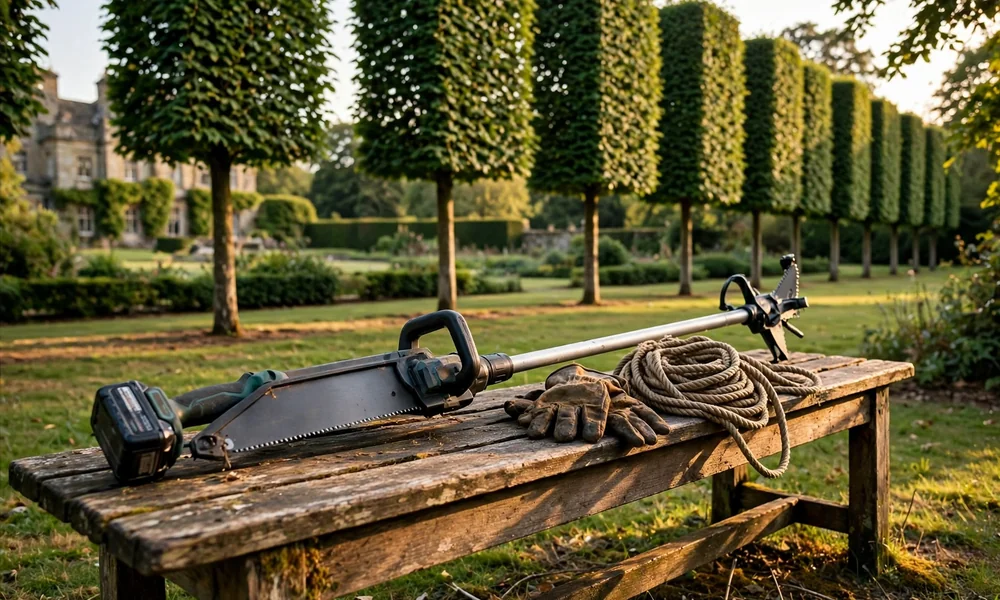
A luxury electric pole saw typically costs an estimated 400 to 1,200 dollars, depending on voltage, reach and whether it ships with one battery or two, with the top-end kits including a fast charger and a spare chain. That estimate covers the saw alone; the real cost of ownership includes replacement chains, bar oil and a new battery every few years, and those running costs are where a cheap saw quietly catches up with an expensive one. The price buys a brushless motor that holds its speed under load, a shaft that does not flex in the cut, and a balance that lets you work overhead without your arms giving up halfway through the job.
The rare fact is that the pole saw began life as a solution to a power-line problem, not a gardening one: early long-reach saws were built for utility crews trimming branches away from overhead lines, where climbing was dangerous and ladders were useless. The hedge trimmer on the same estate follows the same story, a professional tool made polite enough for a garden. The first garden pole saws were heavy petrol tools on fixed poles, and it took the arrival of light lithium batteries and brushless motors to turn them into something an estate gardener could use all morning without a break. Read the sheet in order, and it tells you everything that matters: power for the wood you have, reach for the branches you cannot climb to, and weight for the arms that have to hold it all up there.