In the workshop, the chainsaw sat on the bench beside a petrol saw that cost a tenth as much, and at first glance the two looked like the same tool.
A luxury electric chainsaw can cost as much as a used car, and the reason is not the chain or the bar, but everything around them: a motor built to run all day without a service, a battery that costs as much as a small appliance, and a body machined to survive a drop onto concrete. This guide takes the price apart, cost by cost, to show what a buyer is really paying for.
1. The motor, and the power it must hold all day
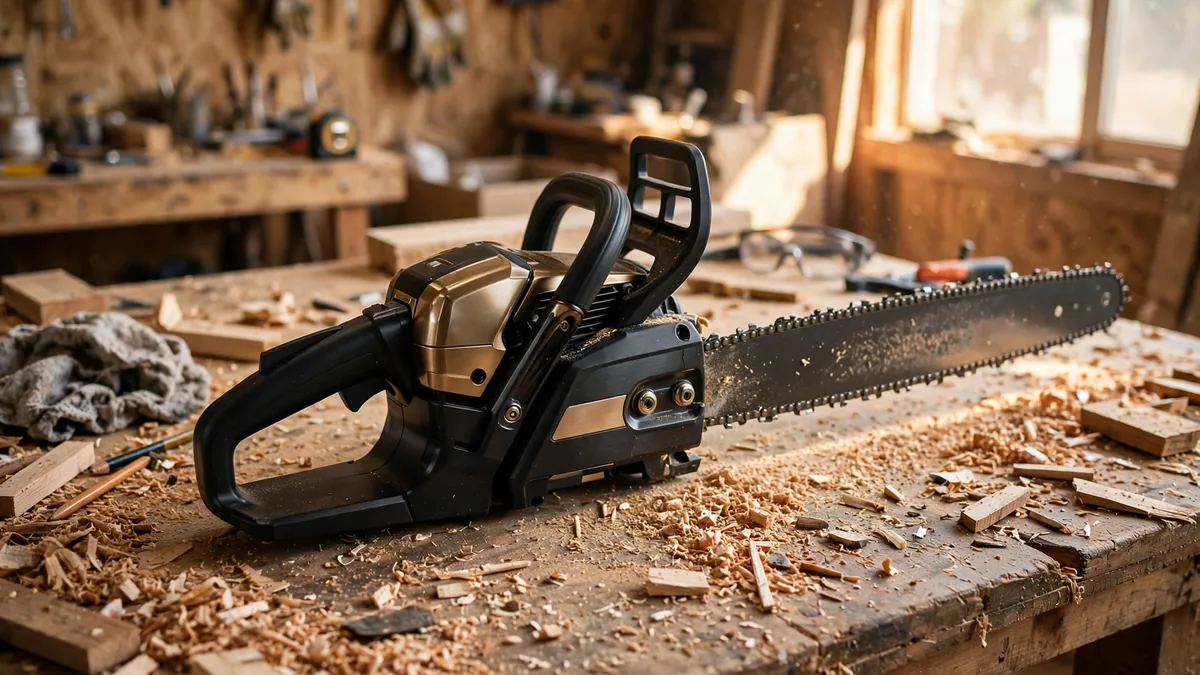
The first cost is the motor. A luxury electric chainsaw usually carries a brushless motor rated at about 2 to 4 kilowatts, built to hold its speed under load, run cool, and survive dust, rain, and vibration.
The motor is also sealed against the world it works in. Sawdust is fine enough to get into any gap, and a motor that breathes it in will wear out in months, so the housing is sealed, the bearings are shielded, and the cooling air is filtered before it reaches the windings. How the motor, the battery, and the chain work together is described in how a luxury electric chainsaw works, where the drive from battery to bar is taken apart.
2. The battery, and the most expensive part of the saw
The second cost is the battery, and it is usually the single most expensive part of the tool. A luxury chainsaw typically runs on a lithium pack of 36 to 80 volts, with a capacity of roughly 5 to 12 amp-hours, and a spare pack alone can cost several hundred dollars.
The battery is expensive because it must deliver a huge current in a short burst, again and again, without overheating. Each cell is watched by a management system that balances charge, limits temperature, and cuts power before a cell is damaged, and the pack is built to survive being dropped, rained on, and charged hundreds of times.
3. The bar and the chain, and the steel they are made from
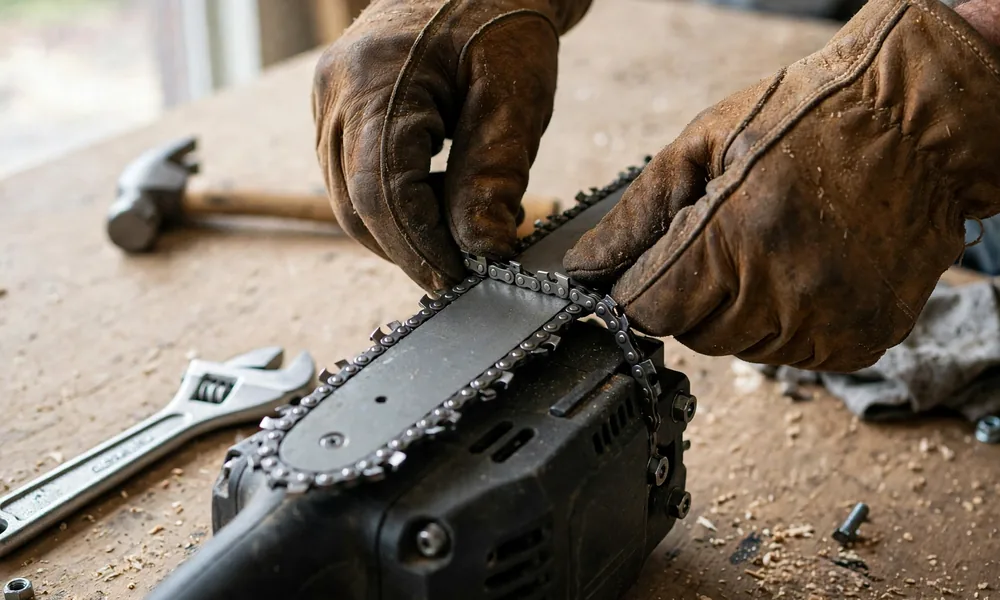
The third cost is the bar and the chain. A luxury saw usually carries a bar of 40 to 60 centimetres, machined from a single piece of steel, with a sprocket nose that lets the chain run smoothly around the tip. The bar must stay straight under load, because a bent bar makes the chain bind, and a binding chain is what throws a saw back at its user.
The chain itself is a precision part. Each cutter is ground to the same angle, hardened to hold an edge through hardwood, and riveted to links that must flex without stretching. How a bar and a chain are built to survive that work is described in how a luxury electric chainsaw is made, where the factory steps from steel to finished saw are laid out.
4. The body, and the engineering that keeps the user safe
The fourth cost is the body and the safety engineering inside it. A luxury chainsaw usually weighs between 5 and 8 kilograms with its battery, and the weight is balanced so the saw hangs level in the hand, because a saw that tips forward wears the user out in an hour.
Safety is where the money shows. A chain brake stops the chain in a fraction of a second if the bar kicks back, a hand guard shields the front hand, and the throttle is built so the saw cannot start by accident.
5. Small numbers, and why there is no cheap version
The fifth cost is scale. A luxury chainsaw is made in thousands, not millions, and every part is built to a tighter tolerance than a mass-market tool. The motor is wound by hand, the bar is ground on machines that also make parts for other precision tools, and each saw is tested before it leaves the factory, with a full cut through hardwood as part of the check.
That testing is part of the price, and so is the service behind it. A luxury saw comes with a warranty that covers the battery, a dealer who will sharpen and service the chain, and spare parts that are still available years later. The same care goes into the other tools in the range, and how a luxury electric hedge trimmer works shows how a smaller tool gets the same sealed motor and the same battery thinking.
6. The running costs, and what the saw costs to own
The price does not stop at the till. A luxury electric chainsaw needs chain oil, spare chains, and a charger, and the chain must be sharpened or replaced as it wears.
Against that, the saw costs almost nothing to run. There is no petrol to mix, no spark plug to change, and no exhaust to breathe, and the motor needs no service beyond cleaning. Over years of use, the running costs are far lower than a petrol saw, which is the quiet argument for paying more at the start.
The Specifications at a Glance
Here are the numbers behind the price of a luxury electric chainsaw, and what a good figure looks like for each one.
| Specification | Typical Luxury Range |
|---|---|
| Motor power | 2 to 4 kilowatts, brushless |
| Battery voltage | 36 to 80 volts, lithium |
| Battery capacity | 5 to 12 amp-hours |
| Bar length | 40 to 60 centimetres |
| Chain speed | 20 to 30 metres per second |
| Weight, with battery | 5 to 8 kilograms |
| Run time per charge | About 30 to 60 minutes of cutting |
| Charging time | About 1 to 2 hours |
| Chain brake | Stops the chain in under 0.1 seconds |
| Noise | About 90 to 100 decibels |
| Spare battery price | Roughly $300 to $700 |
What Does a Luxury Electric Chainsaw Cost?
A luxury electric chainsaw is typically priced at roughly $1,500 to $5,000. A smaller saw with a 40 centimetre bar and a 36 volt battery is typically priced at roughly $1,500 to $2,500, while a flagship with a 60 centimetre bar, an 80 volt battery, a 4 kilowatt motor, and a full set of spares is typically priced at roughly $3,500 to $5,000, before the spare battery and the charger are added.
A Rare Fact
The chainsaw was first built for surgery, not for trees. Early versions were used by doctors to cut bone, and the chain was driven by hand. It was only later that the tool was scaled up, fitted with an engine, and taken into the forest, where it replaced the axe and the two-man crosscut saw in a single generation.

The motor holds its speed, the battery delivers the current, the bar stays straight, the chain holds its edge, and the safety systems stop it in a fraction of a second. That is the price, and it is also the reason the saw costs as much as a used car.