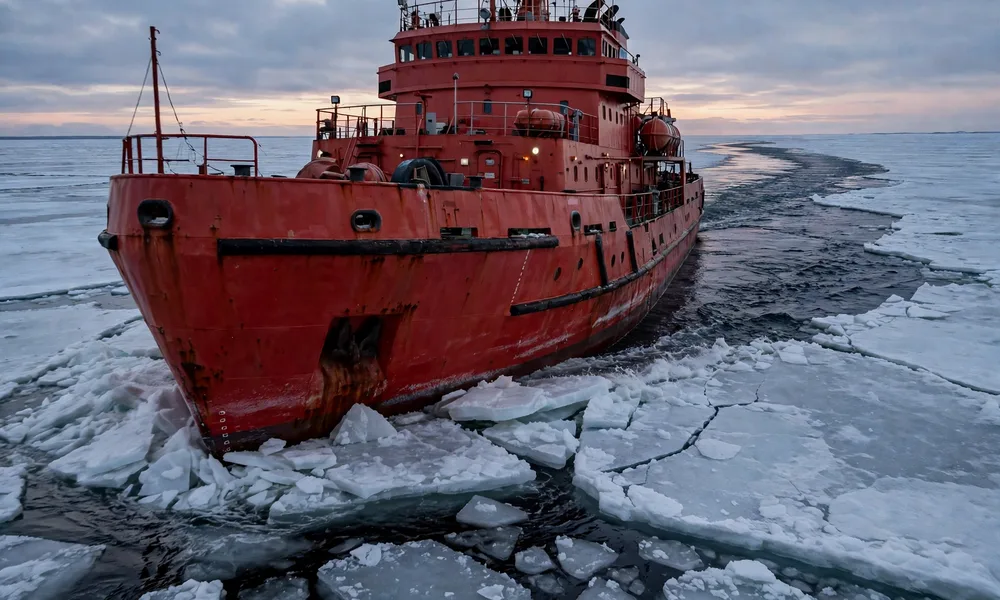
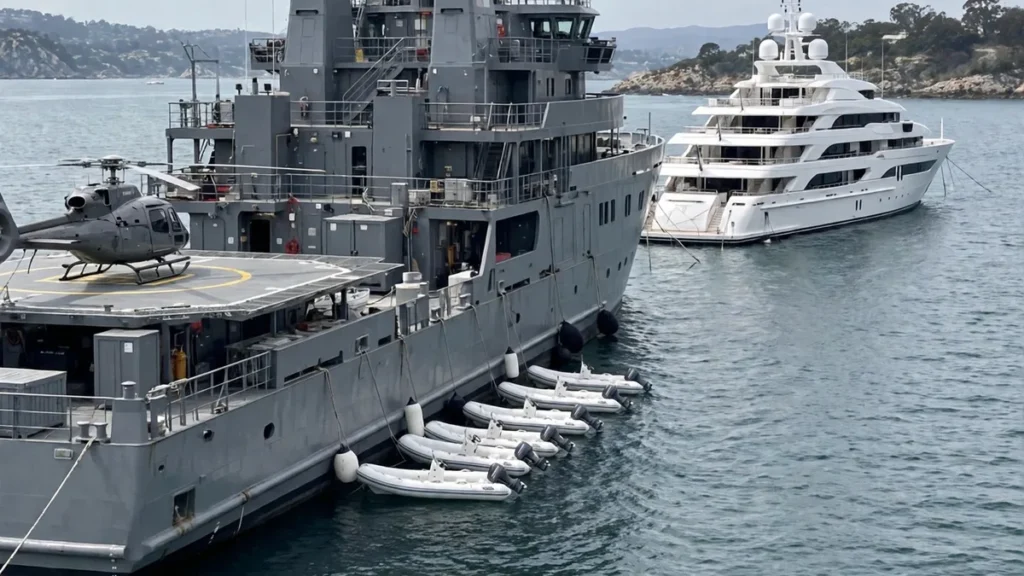
The first sound in the yard is not a hammer. It is the low groan of steel as a plate the size of a garage door is lifted, swung over a curved frame, and pressed into the shape of a bow that will one day push through ice a metre thick. A luxury icebreaker is the strangest kind of yacht: a floating hotel that must also be a battering ram, built to carry its guests in comfort to places where no ordinary ship can go.
Everything about the build is heavier, thicker and more careful than a normal yacht. The steel is special, the engines are enormous, and every weld is checked twice, because once the ship is among the ice, there is no roadside rescue. This is how a luxury icebreaker is made, from the first steel plate to the first crack of ice under its bow.
Step 1: The ice-strengthened hull is built from special steel
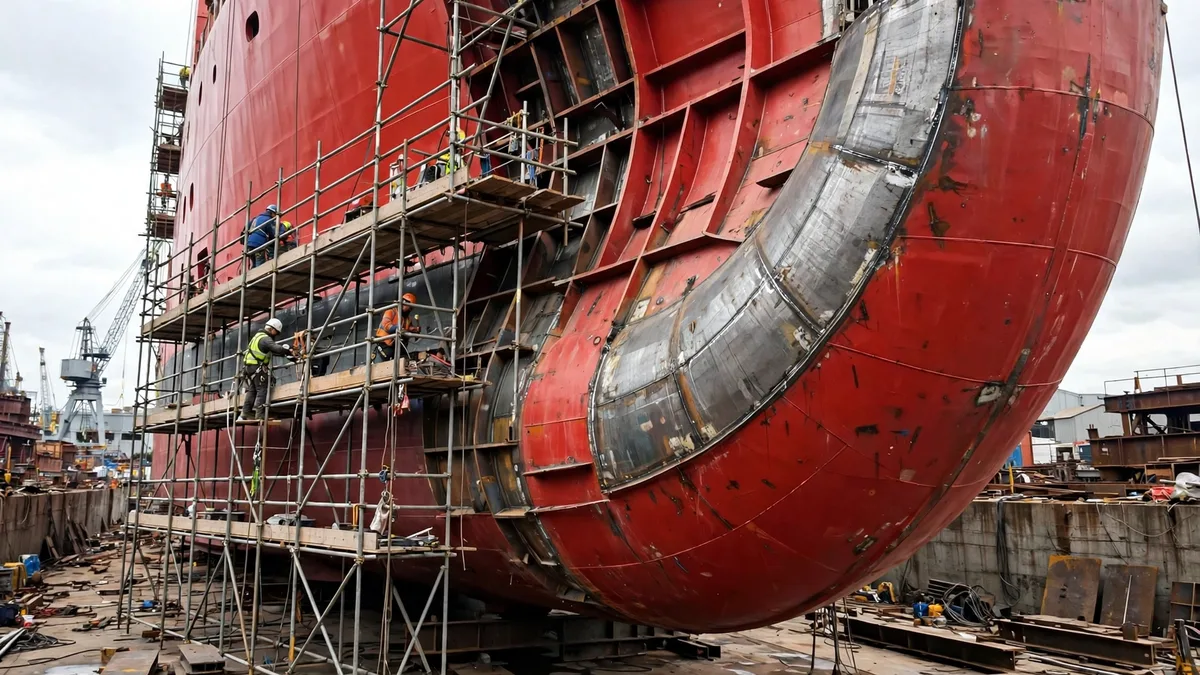
An icebreaker begins with steel that stays tough in the cold. Ordinary ship steel turns brittle in polar temperatures, so the yard uses high-strength steel with a low carbon content, rolled into plates up to twice as thick as those on a normal yacht. The plates are cut by computer-guided torches, bent in huge presses, and welded into sections called blocks, each one the size of a small house.
The bow is the most important part. It is shaped like a spoon, sloping gently so that the ship rides up onto the ice and breaks it with its own weight, instead of smashing into it head-on. Extra frames are packed close together behind the bow plating, and the whole forward section is reinforced until it can take blow after blow without denting. The cost of all that steel is one reason these ships are so dear, as the guide to why a luxury icebreaker is so expensive explains, and the build begins with that expense built into every plate.
Step 2: The blocks are joined and the hull is launched
Once the blocks are finished, cranes lift them into place on the slipway, and welders join them into a single hull. The work is slow and exact: every seam is checked with ultrasound, and any flaw is cut out and welded again. A ship this size can take more than a year to reach this point, with hundreds of workers fitting steel, pipes and cables as the hull grows around them.
When the hull is complete, it is painted with a tough ice-resistant coating and launched, sliding sideways or stern-first into the water while the yard watches.
Step 3: Engines and icebreaking propulsion are installed
A luxury icebreaker needs far more power than a yacht of the same size. Diesel-electric engines, often producing tens of thousands of horsepower, are lowered into the engine room and bolted to the hull. They drive generators, and the generators feed electric motors that turn the propellers, a system that gives the captain exact control of thrust when the ship is working through ice.
The propellers themselves are made from tough stainless steel, with thick blades that can chew through broken ice without cracking, and they are often fitted with nozzles that squeeze the water for extra push. Some icebreakers add a second set of propellers at the bow to wash water under the ice and weaken it from below. The ship’s purpose shapes every choice here, and an expedition yacht built for the same frozen waters follows the same logic, as what a luxury expedition yacht is describes, trading speed for the ability to go where other ships cannot.
Step 4: The superstructure and guest spaces are fitted
With the machinery in place, the builders turn to the part the guests will actually see. Cabins, lounges, a dining room, a spa and an observation deck are built into the superstructure, with the same woods, stones and fabrics found on any superyacht. The difference is hidden: heated windows that never frost over, insulation thick enough to keep the cold out at forty below, and furniture bolted down so it stays put when the ship rolls in heavy seas.
Step 5: Ice navigation and safety systems are wired in
The bridge of an icebreaker is built high, with windows all round, so the captain can watch the ice ahead and pick the weakest path through it. Radar that can tell thick ice from thin, sonar that reads the ice from below, and satellite charts that update through the voyage are all wired into the consoles. Searchlights mounted on the mast can pick out leads of open water in the polar night.

Step 6: Ice trials and the first polar voyage
Testing an icebreaker means finding real ice. The ship sails north until it meets the pack, then drives into it, first at slow speed, then faster, while engineers measure the vibration, the power drawn by the motors and the stress on the bow. The crew checks that the ship can stop, turn and back out of a channel it has just cut, and that the propellers survive a season of chewing ice.
Only when the trials are passed does the ship take its first guests, usually on a voyage to Antarctica or the Arctic, with naturalists and guides aboard. The cold-weather comfort of the finished ship is part of the test too, and reading a luxury ice yacht’s numbers shows how builders balance ice class against range and warmth, as the guide to luxury ice yacht specs, explained lays out, because a ship that breaks ice brilliantly but freezes its guests has failed its job.
Specifications at a glance
| Feature | Typical luxury figure |
|---|---|
| Length | About 80 to 120 metres |
| Hull steel | High-strength ice-class steel, thickened at the bow |
| Power | About 20,000 to 40,000 horsepower, diesel-electric |
| Icebreaking | About 1 to 2 metres of level ice |
| Guests | About 50 to 150, plus crew |
| Top speed | About 15 to 17 knots in open water |
| Range | About 10,000 to 15,000 nautical miles |
What it costs
A luxury icebreaker typically costs between about $200 million and $500 million, and these are estimates, not fixed prices. The price rises with size, ice class and the finish of the guest spaces, and the running costs are just as large: fuel, crew, insurance and polar certification add millions every year. Owners and charter companies pay it because the ship can take guests to places no other luxury vessel can reach.
A rare fact
Some icebreakers carry a bubbler system that pumps air through holes along the hull, so a curtain of bubbles rises between the steel and the ice. The bubbles act as a lubricant, letting the ship slide through the ice with less friction and less noise, and they also keep the water around the hull from freezing solid while the ship is stopped. It is a small system with an outsized effect, and crews switch it on the moment the ice starts to close in.
From spoon-shaped bows to bubble curtains, a luxury icebreaker is made by people who respect the ice enough to overbuild everything. The result is a ship that lets its guests sip coffee in a warm lounge while the sea outside cracks and groans under its weight.