A hypercar is the most extreme road car money can buy, and its spec sheet reads like a dare. Power figures pass a thousand horsepower, top speeds push past 350 kilometres per hour, and acceleration times dip below three seconds. It is easy to treat those numbers as a scoreboard, and to assume the biggest number always wins. In practice the sheet is a description of a compromise, because a car that must also stop, turn, pass a noise test and survive a speed bump cannot simply chase one figure.
What makes a hypercar different from a fast sports car is not one number but the way every number is pushed at once. The engine is stronger, the body is lighter, the aerodynamics are more active, and the brakes are bigger, all in the same car. The result is a machine where the figures only make sense together. This guide walks through the sheet line by line, in plain language, so the numbers stop being a boast and start describing how the car actually feels.
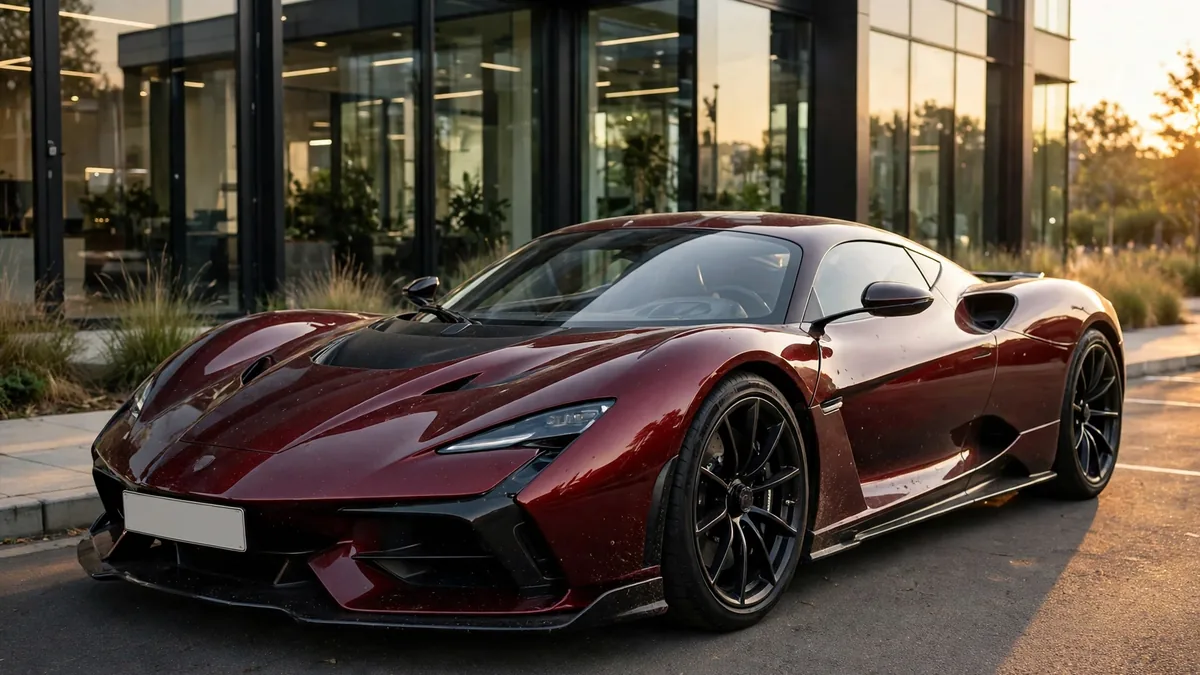
What the Spec Sheet Is Really Telling You
Power is the headline, torque is the push
Power tells you how fast the engine can do work at high revs, but torque tells you how hard it pushes at any given moment. A hypercar with huge torque feels violent from low speed, shoving you into the seat the instant the throttle opens, while a car with the same power but less torque needs to be revved hard before it wakes up. Modern hypercars often pair a petrol engine with electric motors precisely to fill in the torque at low revs, so the push is instant and then the power takes over. When you read the sheet, look at both figures, and at the revs where they arrive.
Weight is where the money goes
A hypercar’s weight, usually quoted dry, without fuel or fluids, is the result of thousands of small decisions. Carbon fibre bodywork, a carbon tub instead of a steel frame, titanium bolts and even hollow wheels all exist to shave kilograms. The reason is simple: weight hurts everything. A lighter car accelerates faster, brakes shorter and corners harder on the same tyres. It also feels different, more alert and more alive, because there is less mass for the suspension and steering to manage. When a hypercar weighs under 1,500 kilograms with over 1,000 horsepower, the ratio alone tells you it will feel like nothing else on the road.
Aerodynamics change with speed
Unlike a normal car, a hypercar’s shape is not fixed. Active wings rise at speed, flaps open to cool the brakes, and the ride height drops on the straight to cut drag. The downforce figure on the sheet is usually quoted at top speed, and it can be several hundred kilograms, pressing the car into the road exactly when grip matters most. At low speed the same car is docile, because the wings are tucked away and the car behaves like a normal, if very low, sports car. The spec sheet’s aero numbers are therefore a promise about high-speed stability, not about how the car feels in traffic.
Acceleration is a grip test
The 0 to 100 kilometres per hour time is the figure everyone quotes, but it is mostly a test of traction and launch control. A hypercar can only use its power if the tyres can put it down, and on a cold road even the best car will spin its wheels. That is why all-wheel drive and clever electronics matter as much as the engine. The more honest acceleration figure is often the one from 100 to 200 kilometres per hour, where grip is no longer the limit and the engine’s real strength shows.
Brakes and tyres decide the lap time
Carbon ceramic brakes are standard on hypercars because they resist fade at the temperatures generated by stopping a fast, heavy car again and again. The discs are huge, the callipers are enormous, and the system is designed to work lap after lap without losing bite. Tyres are equally specialised: wide, sticky and quick to wear out, they are the final link between every other figure and the road. A hypercar on ordinary tyres would be slower than a good sports car on proper ones, which is why the sheet’s brake and tyre figures deserve as much attention as the power.

Key Specifications
The figures below describe a typical modern luxury hypercar; individual models vary widely.
| Specification | Typical figure | What it means |
|---|---|---|
| Power output | 1,000 to 1,600 horsepower | How hard the car can accelerate once it has grip |
| Torque | 1,000 to 1,500 newton metres | The shove you feel in your back when the throttle opens |
| Dry weight | 1,200 to 1,500 kilograms | Lighter means faster everywhere, not just in a straight line |
| Power-to-weight ratio | 700 to 1,100 horsepower per tonne | The fairest single comparison between hypercars |
| 0 to 100 kilometres per hour | 2.4 to 2.8 seconds | Mostly a test of grip, tyres and launch control |
| Top speed | 350 to 440 kilometres per hour | A statement of intent, rarely reached outside a test track |
| Downforce at top speed | 500 to 800 kilograms | Invisible weight pressing the tyres down in fast corners |
| Braking, 200 to 0 kilometres per hour | Around 4 seconds | Shorter stops mean later braking and faster laps |
How to Read It in Five Minutes
Start with the power-to-weight ratio, then check torque and where it arrives in the rev range. A car with huge torque from low revs will feel fast in everyday driving, while one that needs high revs will feel calmer until you push it. Then look at downforce and top speed together: high downforce with a modest top speed means a track car, while a very high top speed with modest downforce means a straight-line car. Finally, check the weight and the brakes, because a light car with big brakes will be quick and repeatable, lap after lap. Read in that order, the sheet describes a personality, not just a set of records.
To see how these machines are put together, how a luxury hypercar is made follows the build from carbon tub to finished car, and how a luxury hypercar works explains the hybrid systems and active aero in action. For the part that stops it all, best hypercar brakes ranked compares the braking systems that make the speed usable.

A Rare Fact
Here is something few buyers ever learn: the engine of a top hypercar can cost more than an entire luxury car. A hand-built, high-revving V12 or a hybrid V8 with bespoke turbos, exotic materials and hours of bench testing is a small production run of its own, and the price reflects the engineering rather than the parts alone. Some hypercar engines are assembled by a single technician who signs the finished unit, and the whole car is built around that engine rather than the other way around. It is the reason the spec sheet’s power figure is not just a number: it is the result of a machine that was, in effect, built twice, once on the drawing board and once by hand.
A hypercar spec sheet is not a race to the biggest number. It is a balance between power and weight, grip and drag, speed and stopping, and the best cars are the ones that hold that balance at every speed, not just at the top. Learn to read the balance, and the sheet will tell you which hypercar is a track weapon, which is a grand tourer in disguise, and which one is simply fast in a straight line.


