The car is a luxury hypercar, the fastest road car its maker will ever build, and only a handful will ever exist. Each one is built by hand, over months, by people who know that a car with more than a thousand horsepower cannot be built the way ordinary cars are built, because ordinary methods would not survive the forces this car creates.
This is how a luxury hypercar is made, in six steps, from the first carbon fibre to the day the car is handed to its owner: the monocoque, the hybrid heart, the body, the aerodynamics, the interior, and the testing that proves a car this fast is also safe enough to drive on a public road. This is a story about petrol and hybrid hypercars, the kind with a roaring combustion engine at their centre, not the silent electric hypercars built on a different line.
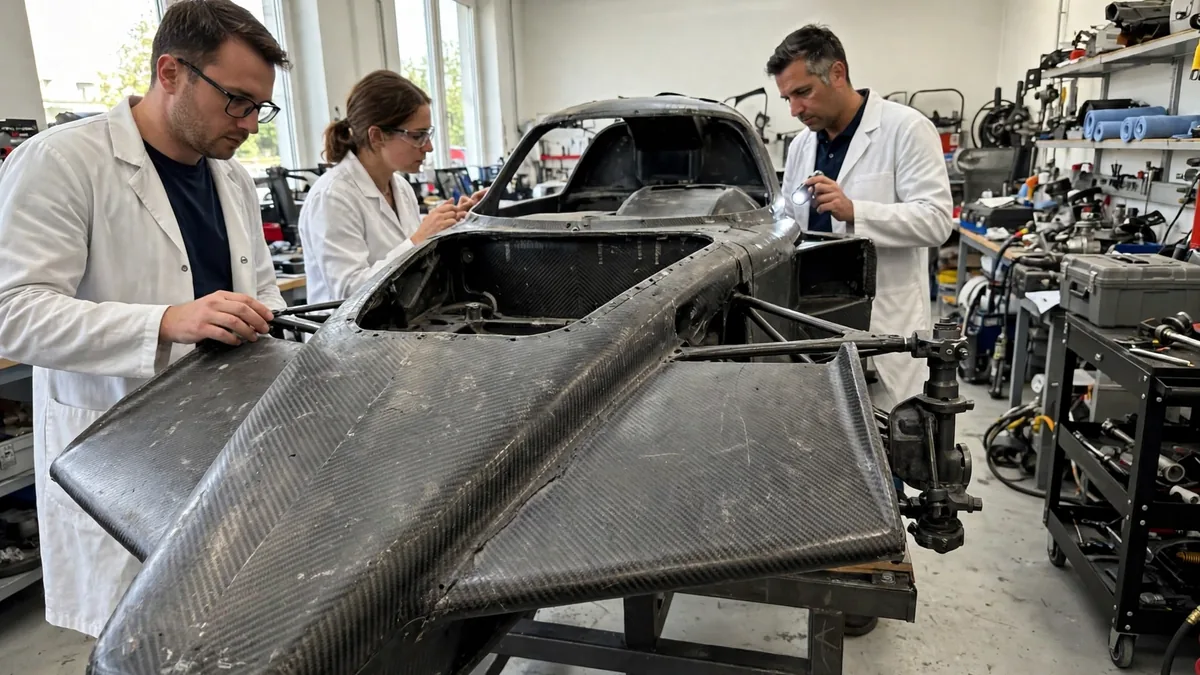
Step 1: Baking a monocoque that weighs almost nothing
The monocoque is the heart of the car, a single rigid shell that holds the driver. The monocoque is X-rayed and weighed before it is accepted, because a hypercar with a weak shell is a hypercar that bends under its own power, and bending is the enemy of everything that follows. The guide to how a luxury electric hypercar is made follows a silent cousin through a different workshop, where the shell is the same idea but the power comes from batteries instead of a roaring engine, and the two cars are built for different kinds of speed.
Step 2: Building a hybrid heart with two kinds of power
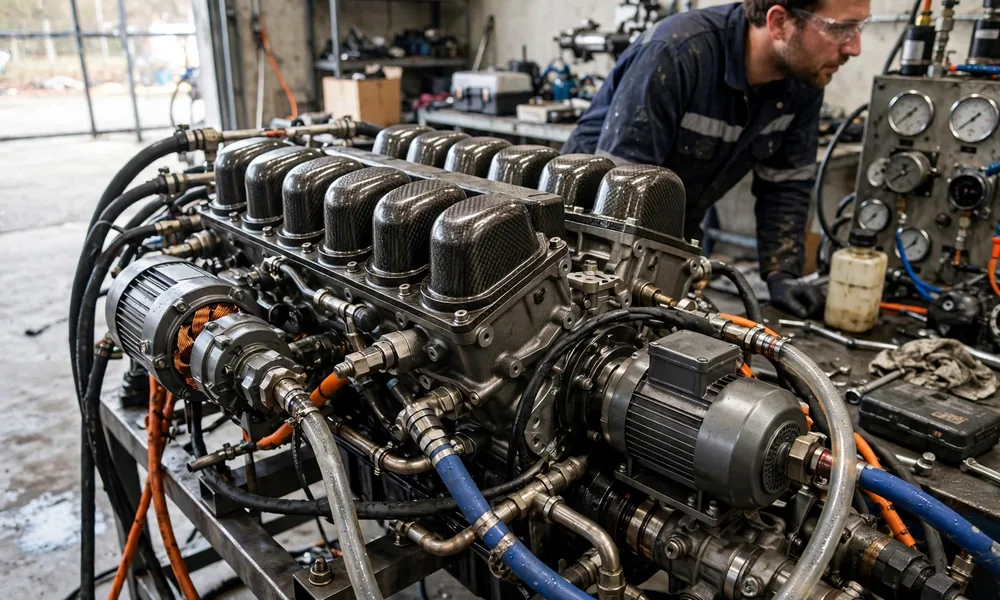
The heart of a modern luxury hypercar is a hybrid: a large petrol engine, often a V8 or a V12, joined to one or more electric motors that fill in the power when the engine is still waking up. The battery for the hybrid system is small, because it is there to help, not to drive the car alone, and it is cooled by its own circuit, tucked into the floor where its weight keeps the car balanced.
Step 3: Shaping a body that is also a wing
The body of a hypercar is not just a shell but a wing, and every curve is shaped by the wind, not by fashion. The panels are made from carbon fibre, and they are fitted by hand, with gaps measured to a fraction of a millimetre, because a panel that sits proud will catch the air wrong and cost the car speed. The guide to luxury hypercar battery specs, explained sets out the numbers behind the hybrid system, where the size of the battery, the power of the motors and the weight of the whole car are all part of one calculation about how fast the car can go, and for how long, before it must slow to cool down.
Step 4: Tuning the air, flap by flap
The aerodynamics of a hypercar are tuned in a wind tunnel, where the car is held still while air is blown over it at speeds no road allows, and smoke is used to show where the air goes. Engineers watch the smoke curl around the mirrors, under the floor and over the wing, and they adjust the flaps and ducts, sometimes by millimetres, until the air presses the car down without slowing it. Some flaps move while the car drives, opening to cool the brakes and closing to cut drag, and the driver never sees them work, because the car decides for itself, hundreds of times a second.
Step 5: Fitting an interior built for speed, not comfort
The interior of a luxury hypercar is spare, because weight is the enemy, and every gram saved is a gram that does not need to be accelerated or braked. The seats are moulded to the driver’s body, sometimes made to fit one owner alone, and they are covered in thin leather or Alcantara, a suede-like material that grips the driver when the car corners hard. There is no carpet to spare, no heavy soundproofing, and the dashboard is a single screen that shows only what the driver needs: speed, revs, gear and temperature. The steering wheel is covered in buttons, because the driver must change the car’s behaviour without taking a hand off the wheel, and the guide to hypercar hybrid specs, explained sets out the numbers for the systems the driver controls from that wheel, where the hybrid boost, the wing and the suspension can all be changed in a single lap.
Step 6: Testing a car that must never fail
Before a hypercar leaves the factory it is tested more thoroughly than almost any other road car, because a car with more than a thousand horsepower must never fail at full speed. The car is driven in heat and in cold, in rain and in dust, because a hypercar that only works on a perfect day is not a road car at all.
The hypercar at a glance
| Part | Typical luxury figure | What it tells you |
|---|---|---|
| Monocoque | Carbon fibre, under 100 kilograms | How stiff the car is, and how light it can be |
| Powertrain | V8 or V12 plus electric motors, over 1,000 horsepower | How the car accelerates, and how it sounds |
| Body | Carbon panels, hand-fitted, flat floor | How the car cuts the air, and how it looks |
| Aerodynamics | Moving wing, active flaps, downforce over its own weight | How the car stays on the road at full speed |
| Interior | Moulded seats, thin leather, single screen | How the car feels when you drive it hard |
| Testing | Rolling road, track laps, heat, cold and rain | How the car proves it is safe at full speed |
| Build time | Months, not weeks, per car | How much human time is inside the price |

What it costs
A luxury hypercar typically costs an estimated $2,000,000 to $4,000,000, depending on its engine, its hybrid system and how few of them are made, and the estimate covers the car alone, not the insurance, the servicing or the options, which are a real part of buying a car like this, and which can add hundreds of thousands before the car ever leaves the factory. Many hypercars are sold before they are built, and buyers wait years for their car, because the factory can only make a handful each year, and the waiting list is longer than the production run.
A rare fact
One detail few buyers ever learn is that some hypercar makers weigh every single part before it is fitted, and they keep a running total of the car’s weight, gram by gram, as it is built. The finished car’s weight is written on a plaque inside the door, next to the builder’s name, so that the owner can see, every time they climb in, exactly how light the car they are sitting in really is.
Follow the six steps in order, monocoque first, then hybrid heart, body, air, interior and testing, and a luxury hypercar stops looking like a fast car with an impossible price and starts looking like what it is: months of careful work by people who have done one job for years, on a car that pushes every material and every idea to its limit, because a hypercar is not built to be practical, it is built to show what is possible when nothing is held back.


