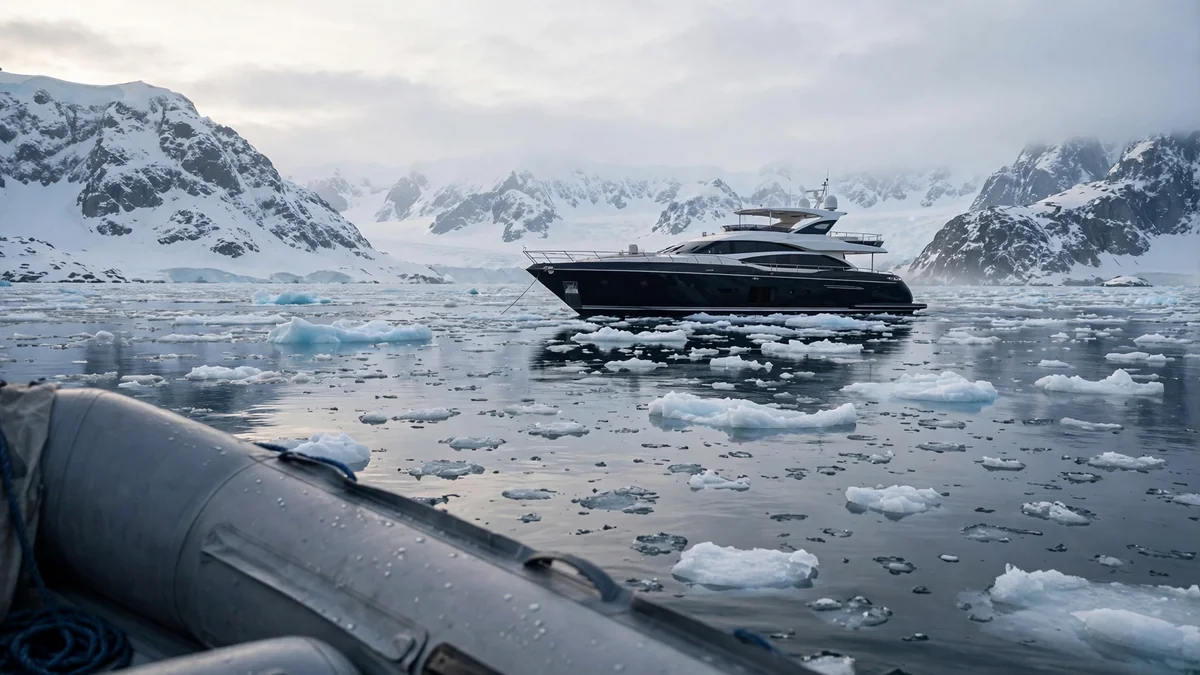
The water in the anchorage is the colour of bottle glass, and it is full of ice. Small floes knock gently against the hull as the yacht swings at anchor, and nobody on board is worried, because this hull was drawn for exactly this. It is thicker where the ice will hit it, shaped to ride up and crack the floes rather than meet them head on, and warm inside in a way that has nothing to do with luck. A luxury ice yacht is a superyacht rebuilt, almost from the keel up, to go where superyachts are told not to go.
What makes a yacht an ice yacht
The difference starts with the ice class, a certification that grades how much ice a hull can take. The classes run from ships that can only handle the occasional floe in summer to true polar vessels that can push through first-year ice a metre thick. A luxury ice yacht usually sits in the middle: strong enough to work in ice for a season, but not a government icebreaker. The rating is stamped into the design and checked by a classification society, and it is the first thing a broker will ask about, because it decides where the yacht may sail and what insurance it can buy.
Ice class changes almost everything below the waterline. The steel is thicker, the frames are closer together, and the bow is shaped to ride up onto the ice and break it with the weight of the ship. Above the waterline, the changes are about cold: heated decks, double glazing and insulation in every wall. The support vessels that follow superyachts carry the toys and the fuel, and support yacht specs explained shows how a working yacht’s numbers are built around carrying capacity rather than comfort. An ice yacht is the opposite compromise: it gives up speed and open deck space to buy strength and warmth.
How a luxury ice yacht is made
An ice yacht is not a standard hull with a stronger coat of paint. It is built differently, in a different order, and the sequence matters.
Step 1: The hull is drawn for ice
Naval architects start with the ice, not the interior. The bow gets a sloping, spoon-shaped profile that lifts the ship onto a floe, the waterline belt is thickened with higher-grade steel, and the frames behind it are spaced tightly to spread the load of an impact.
Step 2: Steel is cut, shaped and welded heavy
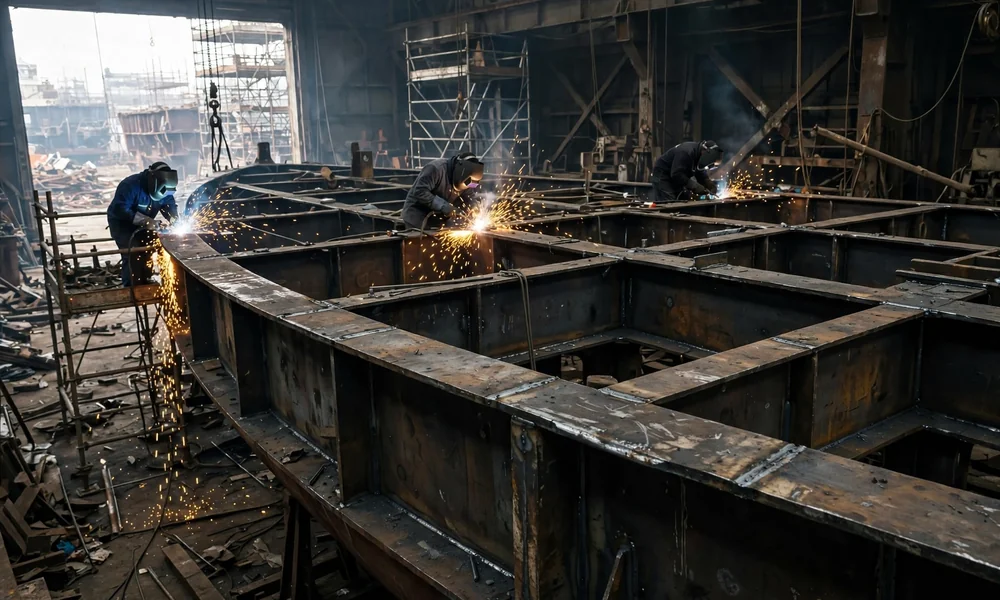
The plating at the waterline can be twice the thickness of a normal yacht hull, and the steel itself is a low-temperature grade that stays tough when it is cold rather than turning brittle. Plates are rolled, cut and welded into sections, and every weld in the ice belt is inspected far more strictly than on a fair-weather yacht.
Step 3: Propulsion is protected and doubled up
Propellers on an ice yacht are built to survive a strike: thicker blades, stronger materials, and nozzles or skegs that shield them from floating ice. Many designs use twin engines and twin shafts, not for speed but for survival, so that losing one side to ice damage still leaves the ship able to move.
Step 4: The ship is insulated like a house in winter
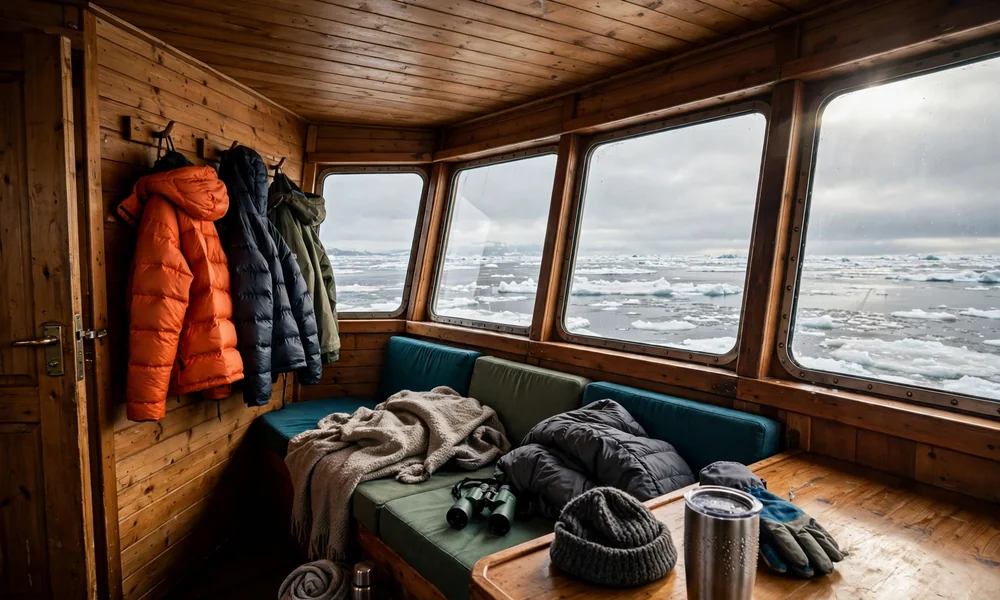
Once the steel is closed, the yacht is wrapped in insulation from the inside: sprayed foam, mineral wool and vapour barriers in every wall, floor and ceiling. Windows are double or triple glazed, doors are sealed, and the heating system is sized for air twenty degrees below freezing, not for a warm evening in the Mediterranean.
Step 5: Sea trials go to the ice
Trials include open-water speed and handling, but the real test is in the floes. The ship is driven into first-year ice at slow speed, the crew listen for the sound of the hull working, and surveyors check the plating and paint afterwards for damage. The polar cruise world runs the same test at a larger scale, and polar cruise ship specs explained shows how a big passenger ship proves it can work safely in ice before it takes paying guests there.
The spec sheet, decoded
An ice yacht spec sheet is really two sheets in one: a luxury yacht sheet and an icebreaker sheet, sharing the same page. The table below uses a typical 60 to 70 metre luxury expedition yacht, the size now most often built for polar cruising.
| Specification | Typical figure | What it tells you |
|---|---|---|
| Length overall | 60 to 70 metres | Big enough for range, small enough for remote bays |
| Ice class | PC5 to PC6, or equivalent 1A | Summer and autumn ice, first-year floes |
| Hull plating, ice belt | 20 to 30 millimetres | Roughly twice a normal yacht hull |
| Gross tonnage | 1,500 to 2,000 GT | Volume, and the size of the interior |
| Cruising speed | 12 to 14 knots | Slower than a fair-weather superyacht |
| Range | 6,000 to 8,000 nautical miles | Enough to reach the ice and get home |
| Guests and crew | 12 guests, 16 to 20 crew | Nearly two crew per guest |
| Propulsion | Twin diesel, 2,000 to 3,000 kW total | Redundant, protected, slow-speed tuned |
| Fuel capacity | 150,000 to 250,000 litres | Long range with no bunkering in the ice |
Ice class is the number to read first, because everything else follows from it. A PC6 ship and a PC3 ship may look identical in photographs, but the PC3 hull is heavier, stronger and vastly more expensive. Range matters too, because there are no fuel stations in the polar regions. The twin-hull world makes the same point about choosing the right platform, and luxury catamaran specs explained shows how a different hull shape buys a different kind of comfort.
What a luxury ice yacht costs
Prices here are estimates, because ice yachts are built one at a time and the price depends on how much ice the owner wants to face. A 60 to 70 metre luxury ice yacht is estimated at roughly 80 to 150 million dollars to build, roughly double the price of a comparable fair-weather superyacht of the same length. A week of chartering one in the polar regions is estimated at roughly 500,000 to 1 million dollars, including the expedition guides, the cold-weather equipment and the permits polar cruising demands. The money goes into steel, insulation and redundancy: the heavier hull, the heating package, the twin propulsion and the expedition equipment. Running costs are higher too, with long distances, specialist crew and maintenance in yards that understand ice-class steel.
A rare fact worth knowing
The strongest ice yachts borrow a trick from the old wooden polar explorers: they let the ice squeeze them upward rather than crushing them. A hull with sloping sides, pressed by ice on both sides, is pushed up and out of the water instead of being squeezed flat. Modern steel hulls use the same geometry, and it is the reason the bow and the waterline are shaped the way they are.
The verdict
Read a luxury ice yacht spec sheet from the ice class down, not from the interior up. The ice class decides where the ship can go, the range decides how long it can stay, and the insulation decides whether anyone will enjoy it. The luxury on board is real, but it is not the point. The point is a warm, quiet room with a huge window, anchored in a bay no ordinary yacht can reach, while the ice knocks softly against a hull built to take it.


