From the deck of the main yacht, the support vessel looks almost plain. It has no sweeping glass, no sun pads, no guests sipping drinks at sunset. Then the stern door opens, and a helicopter lifts off the deck, a submarine slides into the water, and a tender the size of a small ferry carries the jet skis out to play. The support yacht is the machine that makes the fantasy possible, and it does its work out of sight, in the background, while the main yacht takes the photographs.
A support yacht, sometimes called a shadow vessel, carries everything the main yacht cannot: the toys, the tenders, the fuel, the spare parts, and often the crew who look after them. Some carry a helicopter and its hangar, others carry a submarine, a fleet of watercraft, and a workshop that can rebuild an engine at sea. The spec sheet for such a vessel reads like a warehouse inventory crossed with a ship’s passport, and the numbers that matter most are the ones that describe capacity rather than speed.
This guide explains those numbers in plain language. You will learn which figures decide how much a support yacht can actually carry, how far it can travel without refuelling, and whether it can keep up with the yacht it serves. By the end, you will be able to read the sheet like a captain does: as a list of promises about space, range, and work.

The Specs That Decide What a Support Yacht Can Do
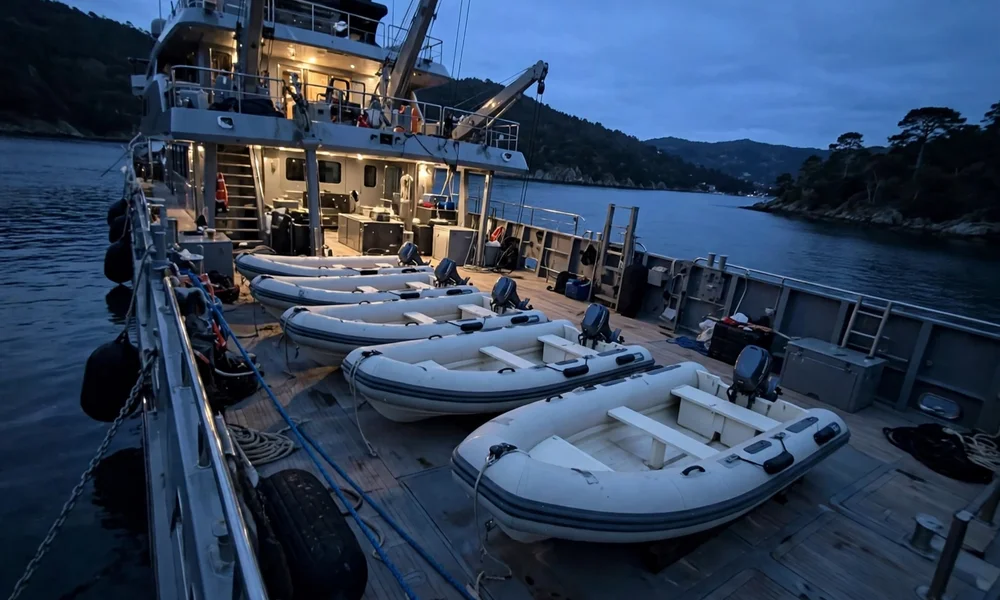
Length and beam decide the deck. A support yacht is usually measured first by how much flat deck it offers, because the deck is where the work happens. Length overall tells you the size of the vessel, but beam, the width at its widest point, tells you whether a helicopter can land safely and whether two tenders can sit side by side. A wide, stable platform matters more than a long, narrow one, and the best support yachts are built broad on purpose.
Gross tonnage measures volume, not weight. This is the figure that confuses newcomers most. Gross tonnage is a measure of a ship’s internal volume, and it decides which regulations apply, how many crew are required, and what the vessel costs to register and insure. Two support yachts of the same length can have very different gross tonnage figures, and the larger one is usually the roomier, more capable ship below deck.
Range decides independence. A support yacht that must refuel every few days is a burden, not a help. Range, measured in nautical miles at a stated cruising speed, tells you how far the vessel can travel before it needs fuel. The figure is always tied to a speed, so a range quoted at ten knots will shrink sharply at fifteen. Read the speed alongside the range, and treat any figure quoted without a speed as a marketing number rather than a fact.
Deck load and crane capacity decide the toys. The deck of a support yacht is rated for a maximum load, and its cranes are rated for a maximum lift. Those two numbers decide whether the vessel can carry a submarine, a large tender, or a container of supplies. A crane rated at twelve tonnes can lift most tenders with ease, while a smaller crane limits the vessel to jet skis and diving gear. Ask what the largest single item is, and the crane figure will tell you whether it fits.
Speed decides whether it can keep up. Support yachts are not built for racing, but they must be able to shadow a superyacht that cruises at twelve or fourteen knots. A support vessel with a top speed of sixteen knots can keep pace comfortably and still have reserve power for bad weather.
Fuel and fresh water capacity decide endurance. A support yacht carries fuel not only for itself but often for the tenders, the helicopter, and sometimes the main yacht’s toys as well. Large fuel tanks extend its time at sea, while generous fresh water tanks keep the crew comfortable and the washdown hoses running. When a spec sheet lists tank volumes, it is telling you how long the vessel can work before it must find a port.

How to Read the Spec Sheet in Seven Steps
- Start with length and beam, because the deck area they imply decides what the vessel can carry.
- Check gross tonnage to understand the ship’s true internal volume and the rules that follow from it.
- Read range together with its cruising speed, and ignore any range figure quoted without one.
- Look at deck load and crane capacity, and match them against the largest toy the owner wants to carry.
- Compare top speed and cruising speed with the main yacht it will shadow, and leave a margin for weather.
- Check fuel and fresh water tank volumes, because they decide how long the vessel can stay at sea.
- Finish with crew cabins and workshop space, since a support yacht is a working ship and its people need room to work.
Read in that order, the sheet stops looking like a list of dry measurements.
The Numbers at a Glance
| Specification | Typical support yacht |
|---|---|
| Length overall | 45 to 75 metres |
| Beam | 10 to 14 metres |
| Gross tonnage | 800 to 2,500 GT |
| Range | 4,000 to 6,000 nautical miles at 12 knots |
| Top speed | 15 to 18 knots |
| Crane capacity | 8 to 20 tonnes |
| Helicopter deck | Optional, rated for aircraft up to 4 tonnes |
| Crew | 12 to 22, plus guest staff when needed |
What a Support Yacht Costs
A new support yacht typically costs an estimated $20 million for a smaller, simpler vessel and rises past an estimated $80 million for a large, helicopter-capable ship with a submarine hangar. The price is driven less by luxury than by capability: a bigger crane, a reinforced helicopter deck, and a larger fuel capacity each add millions, while the interior stays deliberately plain. A second-hand support yacht can cost far less, with an estimated $8 million buying a capable older vessel, though refitting its cranes and tenders can add an estimated $2 million or more.
Running costs are heavy but predictable. Fuel dominates, because a support yacht burns a great deal of it while shadowing a superyacht across oceans, and a long season can cost an estimated $1 million in fuel alone. Crew wages, insurance, and maintenance add further millions each year, and helicopter operations carry their own separate budget. Owners accept these costs because the alternative, cramming tenders and toys onto the main yacht, would spoil the very luxury they bought it for.
To see how the vessel itself is put together, read our guide to how a support yacht is made, which follows the build from steel cutting to sea trials. The luxury tender spec sheet explained in plain language covers the boats a support yacht carries, while the motor yacht spec sheet explained simply shows the numbers on the main yacht it serves.
A Rare Fact Worth Remembering
The first support yachts were not built for pleasure at all. They were working vessels, often converted from offshore supply ships, that wealthy owners pressed into service because their main yachts had run out of room for toys. The idea caught on so quickly that shipyards now design support yachts from scratch, but the working-ship DNA is still there: plain cabins, huge decks, and cranes that would look at home on a construction site.


