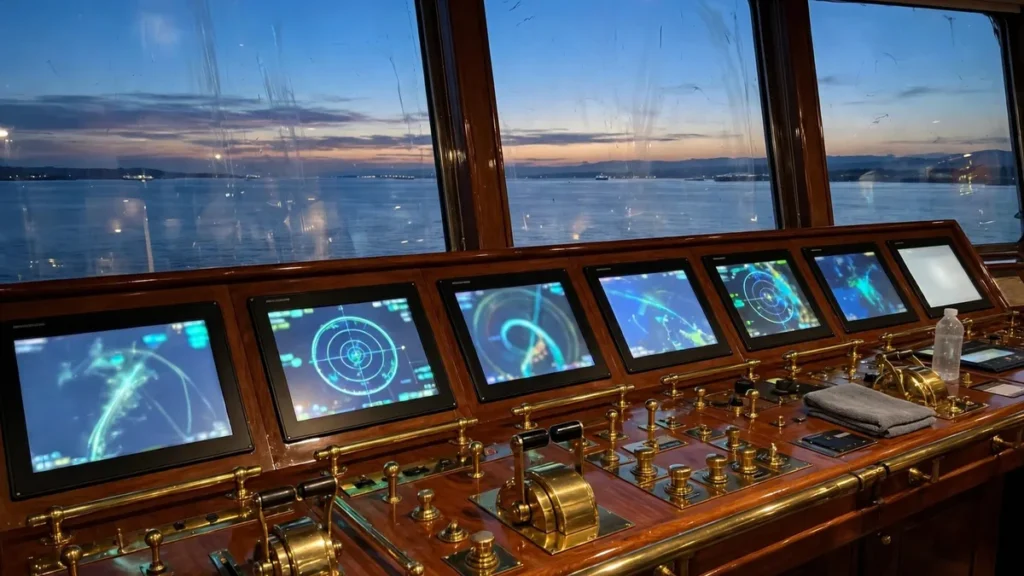
The little white craft sat on the deck of its mother ship like a toy, all curves and clear dome, while the ocean stretched away in every direction and the crew checked it over with the care of people about to send friends into the deep. It carried no torpedoes, no missiles, no secrets. It carried two scientists, a basket of sample jars, and a camera, and its whole purpose was to go down where the light fades and bring back answers about a world almost nobody has seen.
A research submarine is a very different machine from the military boats it resembles. It is smaller, slower, and far gentler, built to hover over a reef rather than to hide from an enemy, and its specification sheet is written in the language of depth, endurance, and visibility rather than stealth and firepower. This guide explains what each of those figures means, and why a machine this small can cost as much as a mansion.

The spec sheet at a glance
| Specification | Typical luxury figure |
|---|---|
| Length | 3 to 8 metres |
| Weight in air | 3 to 12 tonnes |
| Maximum depth | 300 to 1,000 metres, some rated deeper |
| Crew | 1 pilot plus 1 or 2 scientists |
| Endurance | 6 to 12 hours underwater |
| Speed | 2 to 4 knots, about walking pace |
| Power | Electric thrusters, 10 to 30 kilowatts |
| Pressure hull | Steel, titanium, or acrylic sphere |
| Viewports | Acrylic dome or ports, up to 180-degree view |
| Manipulator arm | One or two arms, five or seven joints |
| Life support | Oxygen plus carbon dioxide scrubbers, 72-hour reserve |
| Lights and cameras | LED arrays and 4K cameras, sonar for navigation |
Depth: the number that rules everything
Maximum depth is the figure that shapes the whole machine, and on a research submarine it runs from about 300 metres on a shallow-water craft to 1,000 metres or more on a deep-diving one. Every ten metres of depth adds roughly one atmosphere of pressure, so at 1,000 metres the hull is squeezed by about a hundred times the pressure at the surface, which is like balancing a small car on every square centimetre. The hull must be a perfect shape, usually a sphere, because a sphere spreads that crushing force evenly, and any flat panel would buckle.
The pressure hull is made from steel, titanium, or acrylic, and the choice is a trade between strength, weight, and visibility. Steel is cheap and strong but heavy, titanium is light and strong but expensive, and a clear acrylic sphere gives the crew a panoramic view but is the most demanding of all to build. The guide to how a luxury submarine battery is made follows the power system that keeps such a craft alive down there, and the battery is sized for a long, slow day of work rather than for speed.
Endurance: a working day underwater
Endurance is how long the craft can stay down, and it runs from about six to twelve hours, which is a full working day for the scientists inside. The limit is not oxygen, because the life support carries a reserve of up to 72 hours, but the battery, which must power the thrusters, the lights, the cameras, and the heaters that keep the crew warm in water that is barely above freezing. Cold is a constant enemy: at depth the sea is about four degrees, and the crew wear thick clothes inside a steel ball that conducts the cold straight through.
Speed is modest, two to four knots, which is about walking pace, and that is deliberate. A research submarine does not chase things; it hovers, drifts, and watches, and its electric thrusters are sized for fine control rather than for speed. Ten to thirty kilowatts of power sounds small beside a car engine, but it is enough to hold the craft steady against a current while the pilot works the manipulator arm. The account of luxury submarine battery specs explains how that modest power is stored and managed, and why the battery is one of the most expensive parts of the boat.
Seeing in the dark: viewports, lights, and cameras
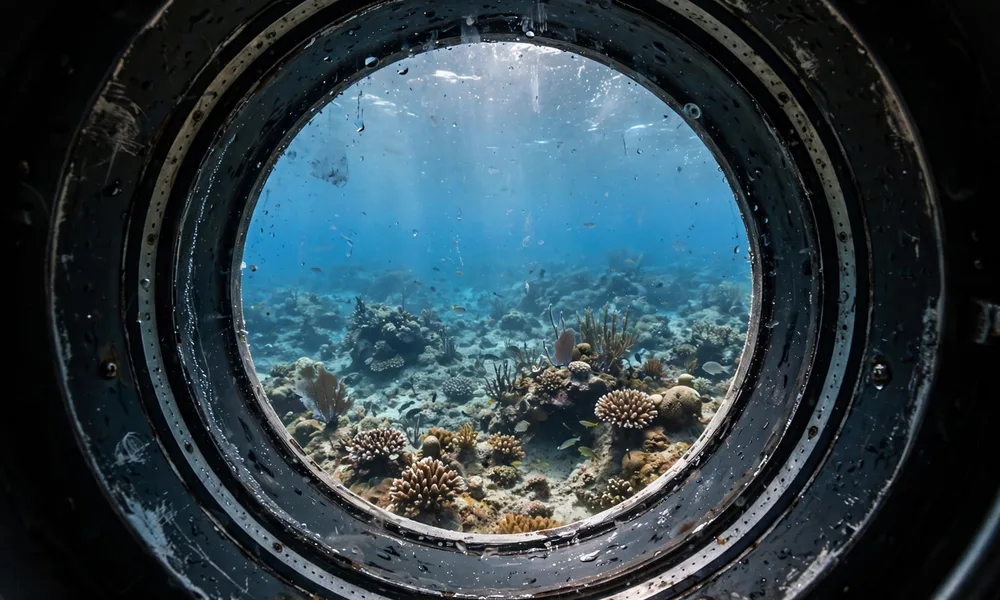
Below about 200 metres there is no sunlight at all, and the research submarine brings its own. LED light arrays flood the seabed with white light, 4K cameras record everything, and a small sonar helps the pilot navigate when the lights show nothing but particles drifting in the dark. The viewports are made from thick acrylic, sometimes a full dome that gives the crew a view of up to 180 degrees, and the glass is the most precious part of the craft: it must be flawless, because a scratch at depth can become a crack.
Life support: air for three days
Life support is the system nobody notices until it matters, and it is built with generous margins. Oxygen comes from tanks or chemical generators, carbon dioxide is removed by scrubbers that absorb it from the air, and the reserve is sized for about 72 hours, far longer than any planned dive. The air inside is monitored constantly, and the pilot checks the gauges the way a driver checks the fuel: often, and with respect.
The crew is tiny, one pilot and one or two scientists, and they sit shoulder to shoulder in a space not much bigger than a small car. There is no toilet, no galley, and no room to stand, so dives are planned around the crew as much as around the science: food and water are simple, the work is scheduled in advance, and the pilot keeps a close eye on how tired everyone is. The guide to luxury explorer yacht specs covers the mother ship that often carries such a craft, a vessel built to support expeditions rather than to impress guests.

Price
A luxury research submarine typically costs an estimated $2 million to $10 million, depending on depth rating, size, and equipment, with the deepest and most capable craft at the top of that range. The support ship, the launch system, and the crew add to the bill, and a single expedition day can cost an estimated $10,000 to $50,000. These are estimates, not list prices, because research submersibles are built to order for each mission, and the final figure depends on the depth and the science. What the buyer is paying for, in the end, is access to a place almost nobody has been: the deep sea, seen through a clear dome, with time to look properly.
A rare fact
Some research submarines have discovered new species on their very first dive in a new area, because so little of the deep sea has ever been seen by human eyes. Scientists estimate that fewer than one in a thousand deep-sea species has been formally described, and a single afternoon hovering over a reef can turn up animals that no one has ever photographed before. The pilot of one famous submersible once watched a fish swim up to the viewport and stare back at him, and the two of them, human and fish, looked at each other through the acrylic for a full minute before the fish swam away.