The broker slid the specification sheet across the teak table like a hand of cards, and the numbers on it looked modest for a yacht that cost as much as a city block. Fifty metres long, a mast taller than a ten-storey building, a top speed under sail that a family car could beat on a motorway. The client frowned, and the broker smiled, because he had seen that frown before. A luxury sailing yacht is not sold on the numbers that look impressive, and the figures that actually decide how it sails, how it feels, and how much it costs to keep are the ones most buyers skim past.
A sailing yacht spec sheet is a dense document, written by naval architects for other naval architects, and it hides its most important information in ratios and abbreviations. Length, beam, draught, displacement, sail area, and ballast are not separate facts, they are a single argument about how the boat will behave, and reading them together is the difference between buying a fast, comfortable yacht and buying a beautiful floating disappointment. This guide translates the sheet, line by line, so you can read one like the people who design them.

The Specs That Decide How a Sailing Yacht Sails
Length overall is the first number everyone reads, and it is the least informative on its own. What matters is the waterline length, the part of the hull that actually sits in the water, because that figure decides the hull speed, the fastest the boat can sail without climbing its own bow wave. The old rule says hull speed in knots is roughly 1.34 times the square root of the waterline length in feet, so a yacht with a 45-foot waterline has a hull speed of about 9 knots, while one with a 60-foot waterline reaches about 10.4 knots.
Displacement is the weight of the yacht, usually quoted in tonnes, and it decides whether the boat feels like a feather or a freight train. A 50-metre luxury sailing yacht typically displaces 350 to 500 tonnes, most of it low in the hull, in the keel and the ballast, which keeps the mast pointing at the sky when the wind tries to push it over. The displacement-to-length ratio tells you whether a yacht is light and quick or heavy and comfortable, and the best cruising yachts sit in the middle.
How to Read a Luxury Sailing Yacht Spec Sheet in Seven Steps
First, read the waterline length and work out the hull speed, because that is the honest speed limit of the boat. Second, divide the sail area by the displacement: a ratio above 16 means a lively yacht that moves in light airs, while below 14 means a heavy cruiser that needs a proper breeze. Third, look at the ballast ratio, where 35 to 40 percent means a stiff, stable yacht. Fourth, check the draught, because a deep keel of 4 or 5 metres gives superb upwind performance but locks the yacht out of shallow anchorages. Fifth, look at the mast height and air draught, since a mast of 60 metres cannot pass under some bridges. Sixth, read the fuel and water tankage, because large tanks mean weeks at sea. Seventh, check the guest and crew numbers together, because crew size decides the level of service on board.
Those seven steps turn a page of numbers into a picture of a life at sea, and they expose the compromises every designer makes. A yacht with a huge sail area and a light displacement will be thrilling to sail and terrifying to insure, while a yacht with a small sail area and a heavy displacement will be calm, safe, and slow, and will spend more time motoring than sailing. Neither is wrong, and the right answer depends on whether the owner wants to race across an ocean or host dinner parties in a quiet bay. The builders who get it right are the ones whose spec sheets match their owners’ ambitions, and the best sailing yacht brands ranked shows how differently the great yards answer that same question.
Sail Area, Rig, and the Numbers That Move the Boat
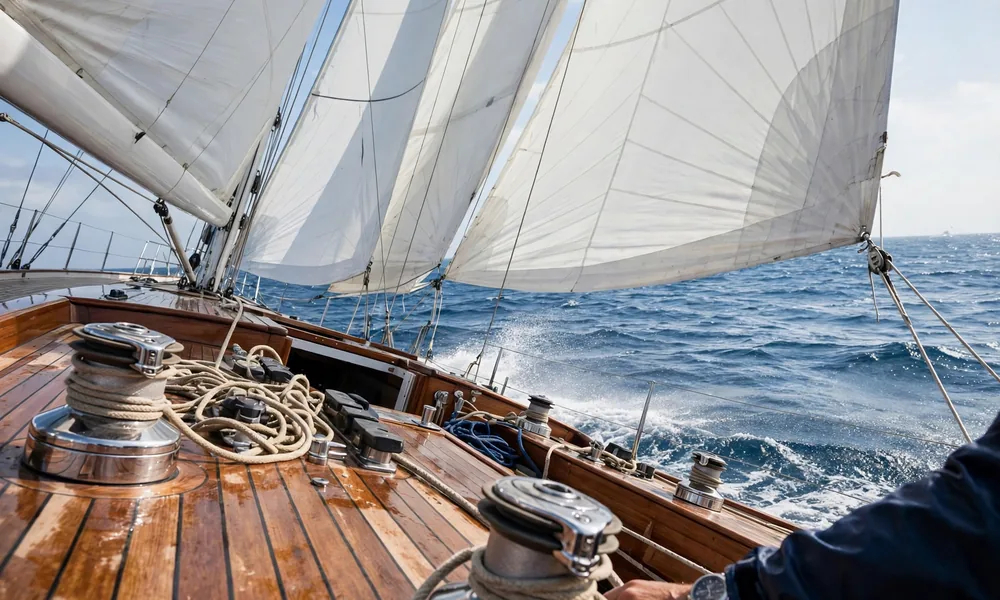
Sail area is quoted in square metres, and it is split between the mainsail and the headsails, but the total is what matters, because it decides how much wind the yacht can turn into speed. A 50-metre yacht might carry 1,200 to 1,500 square metres of sail, an area larger than three tennis courts, and managing it requires powered winches, hydraulic furling, and a crew who know what they are doing. The same material argument shapes hulls, and the carbon fibre versus aluminium superyacht materials comparison explains why two yachts of the same length can differ by tens of millions in build cost.
Luxury Sailing Yacht Specs at a Glance
| Specification | Typical 50 m Luxury Sailing Yacht | What It Means for You |
|---|---|---|
| Length overall | 48–55 m | Size, berthing cost, and presence in harbour |
| Waterline length | 42–48 m | Decides hull speed, the honest speed limit |
| Beam | 10–11 m | Interior space and stability, higher marina fees |
| Draught | 4–5.5 m | Deep is fast upwind, shallow opens more anchorages |
| Displacement | 350–500 tonnes | Heavy is comfortable, light is quick |
| Sail area | 1,200–1,500 sq m | More sail means more speed and more crew work |
| Mast height | 55–65 m above water | Taller is faster, but limits bridges and harbours |
| Ballast ratio | 35–40 percent | Higher means stiffer and more stable under sail |
| Engine power | 800–1,200 hp diesel | Motoring speed 12–14 knots, ocean-crossing range |
| Guests and crew | 10–12 guests, 8–10 crew | Crew size decides the level of service on board |
Accommodation is where the spec sheet turns into a hotel brochure, and the numbers deserve the same sceptical reading. A yacht that sleeps twelve guests in six cabins sounds generous, but the size of those cabins and the gross tonnage, a measure of internal volume rather than weight, decide whether twelve people feel like a party or a crowd. Expedition yachts push this logic furthest, and the expedition yacht specs explained guide shows how volume, range, and toughness trade against speed and elegance.
What a Luxury Sailing Yacht Costs
New build prices for a 50-metre luxury sailing yacht typically start at an estimated $30 million to $40 million and climb past an estimated $60 million for a fully custom design from a top yard. Annual running costs typically run at an estimated 8 to 10 percent of the yacht’s value each year, covering crew wages, fuel, maintenance, insurance, and berthing, so a $40 million yacht can cost an estimated $3.5 million a year simply to own. A new set of sails alone can cost an estimated $500,000. These are estimates based on published build and brokerage figures, not fixed prices.

A Rare Fact
The rarest number on a sailing yacht spec sheet is the one that never appears on it: the height of the mast above the water, known as the air draught, decides whether the yacht can ever visit the Great Lakes, because the masts of the largest sailing yachts are too tall to pass under the bridges of the St Lawrence Seaway. A yacht built for ocean crossings may be physically unable to reach some of the finest cruising waters in the world, and the owner discovers it only when the broker mentions it, quietly, after the contract is signed.