A thermostat is the smallest screen in the house, and the one you look at least. It sits on a hallway wall, quietly deciding when the heating fires and when the air conditioning rests. Yet a luxury smart thermostat hides more engineering behind that little screen than some cars hide under their bonnets, because it is not just a switch. It is a sensor, a computer and a negotiator between you, your house and the weather outside.
The spec sheet is where that engineering shows, and it is easy to misread. Numbers like temperature accuracy, sensor count and learning time look dry, but each one answers a practical question: will the bedroom be warm when you wake, and will the bill at the end of the month actually fall? Read the sheet the way an engineer reads it, as a set of trade-offs rather than a list of boasts, and the thermostat starts to make sense.

Luxury Smart Thermostat Specs at a Glance
| Spec | Detail |
|---|---|
| Temperature accuracy | About plus or minus 0.5 degrees Celsius, measured at the wall sensor |
| Room sensors | About 3 to 8 wireless sensors, plus humidity, occupancy and light sensors |
| Learning time | About 1 to 2 weeks to learn a household routine |
| Heating and cooling stages | About 2 to 4 stages, including heat pumps and multi-zone systems |
| Display | About 2 to 3 inches, colour touchscreen behind a glass front |
| Connectivity | Wi-Fi, Bluetooth, and smart home platforms such as Apple, Google and Alexa |
| Power | About 24 volts from the heating system, with a rechargeable backup battery |
| Compatibility | Most gas boilers, heat pumps, underfloor heating and forced air systems |
These are typical figures for a luxury model, not promises for every thermostat on the market. One maker may chase accuracy, another may chase learning, and the numbers only make sense when you read them together.
Sensors, Learning and the Brain Behind the Dial
The sensor is the thermostat’s honest part. A cheap thermostat measures the temperature at one spot on one wall, and if that wall is in a sunny hallway, the whole house is judged by a sunbeam. A luxury model spreads small wireless sensors around the rooms that matter, and reads them together, so the heating answers to the room you are actually sitting in rather than the wall the thermostat happens to hang on.
Humidity and occupancy sensors add a second layer of sense. Humidity tells the thermostat when a room feels sticky even at the right temperature, and occupancy tells it which rooms are empty, so it can let a spare bedroom cool while the living room stays warm. The superyacht air conditioning specs show the same idea on a much grander scale, where climate is managed room by room, and a house that heats empty rooms is a house throwing money out of the window.
Learning is the feature the brochures boast about most, and it takes about one to two weeks. In that time the thermostat watches when you wake, when you leave, when you return and when you sleep, and builds a schedule from your life rather than asking you to program one. It also learns how long your house takes to warm up, so it can start the heating late on a mild morning and early on a frosty one, and that quiet timing is where most of the savings hide.
Heating, Cooling and the Zones It Controls
Stages are the thermostat’s muscle. A single-stage system is either on or off, like a light switch, while a two to four stage system can run gently most of the time and call on full power only on the coldest mornings. Gentle running is cheaper, quieter and kinder to the equipment, and it keeps the temperature steady instead of swinging between too hot and too cold, which is the feeling people describe as a draughty house.
Zoning is where a luxury thermostat earns its keep in a big house. Instead of one temperature for the whole building, the thermostat can run different zones at different temperatures, warming the bedrooms at night and the kitchen in the morning, and letting the unused guest room rest. The how a luxury smart speaker works story shows how a house full of small devices can act as one system, and the thermostat is the device that turns that idea into lower bills.
Heat pumps need a thermostat that understands them, because a heat pump warms a house slowly and steadily, and a thermostat that treats it like a gas boiler will cycle it on and off and waste its advantage. Luxury models are built to talk to heat pumps properly, holding a steady temperature rather than chasing one.
Power, Wiring and the Screen You Touch
Power is the spec buyers ignore until installation day. Most luxury thermostats draw about 24 volts from the heating system’s wiring, and if the house has no spare wire, known as a C wire, the thermostat may need an adapter or a new cable run. The rechargeable backup battery covers short power cuts and keeps the schedule alive, but it is a bridge, not a power source, and a thermostat that loses power loses its memory of your routine.
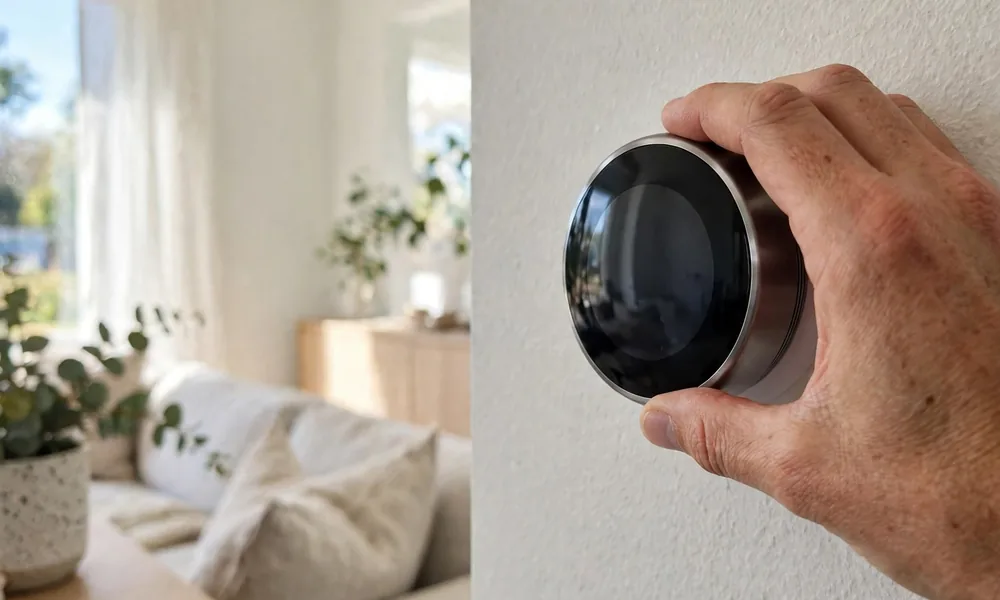
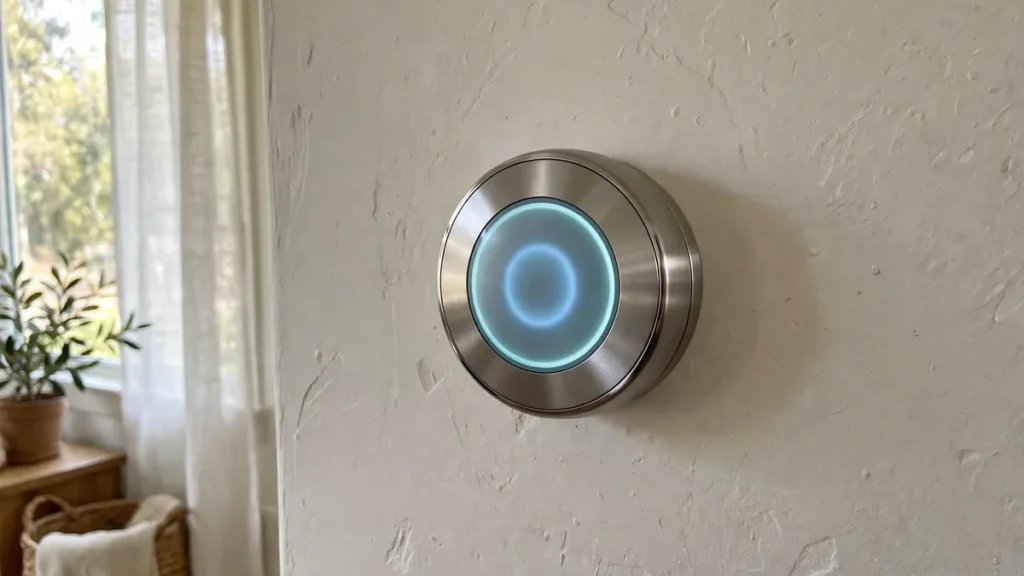
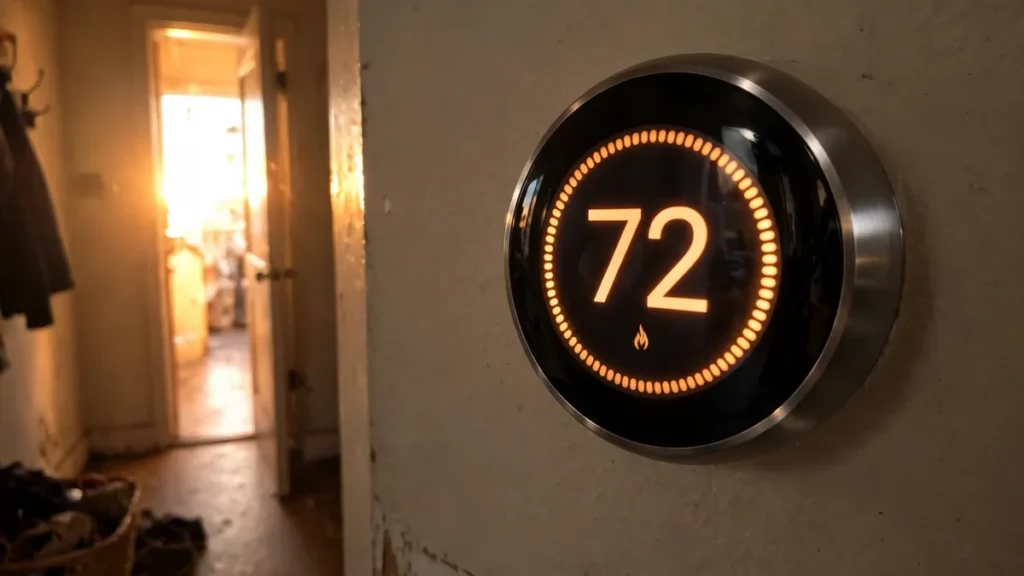
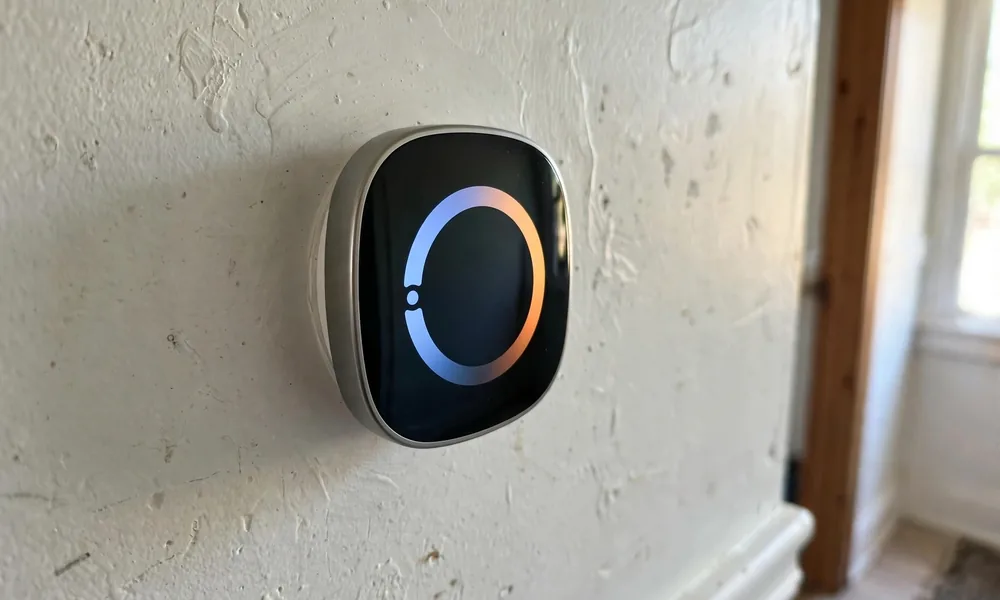
The screen is the part you actually touch, and on a luxury model it is a colour touchscreen of about two to three inches behind glass. It shows the temperature, the humidity and the weather outside, and it dims itself at night so the hallway stays dark. A good screen is readable from across the room and responds to a fingertip in gloves, while a poor one washes out in sunlight and needs a firm press to wake.
Connectivity is the thermostat’s social life. Wi-Fi lets you change the temperature from the train, Bluetooth lets the room sensors talk to the wall unit, and support for Apple, Google and Alexa means the thermostat can answer to a voice command or a routine that locks the doors and dims the lights at bedtime. The luxury espresso machine specs show the same thinking in the kitchen, where a machine that talks to the house is worth more than one that merely works, and the thermostat is no exception.
A Rare Fact From the World of Smart Thermostats
Here is a detail few owners ever learn: a luxury smart thermostat can tell when a window is open. It does not have a window sensor, and it does not need one. It watches the temperature in the room, and when the temperature falls far faster than the heating can explain, it works out that cold air is pouring in and pauses the heating until the window closes. The feature was never advertised, because it was discovered by engineers watching the data rather than planned in a meeting.
What the Specs Mean for You
If you are comparing luxury smart thermostats, start with four numbers: temperature accuracy, sensor count, learning time and zoning. Accuracy of half a degree or better, three or more room sensors, learning inside two weeks and true multi-zone control are the marks of a thermostat worth its price. Screen size matters less than the brochures suggest, and installation matters more than anyone admits, because a thermostat that needs new wiring is a thermostat that costs more than its price tag. The best luxury smart thermostat is the one you stop noticing, keeping every room at the right temperature while you forget it is even there.