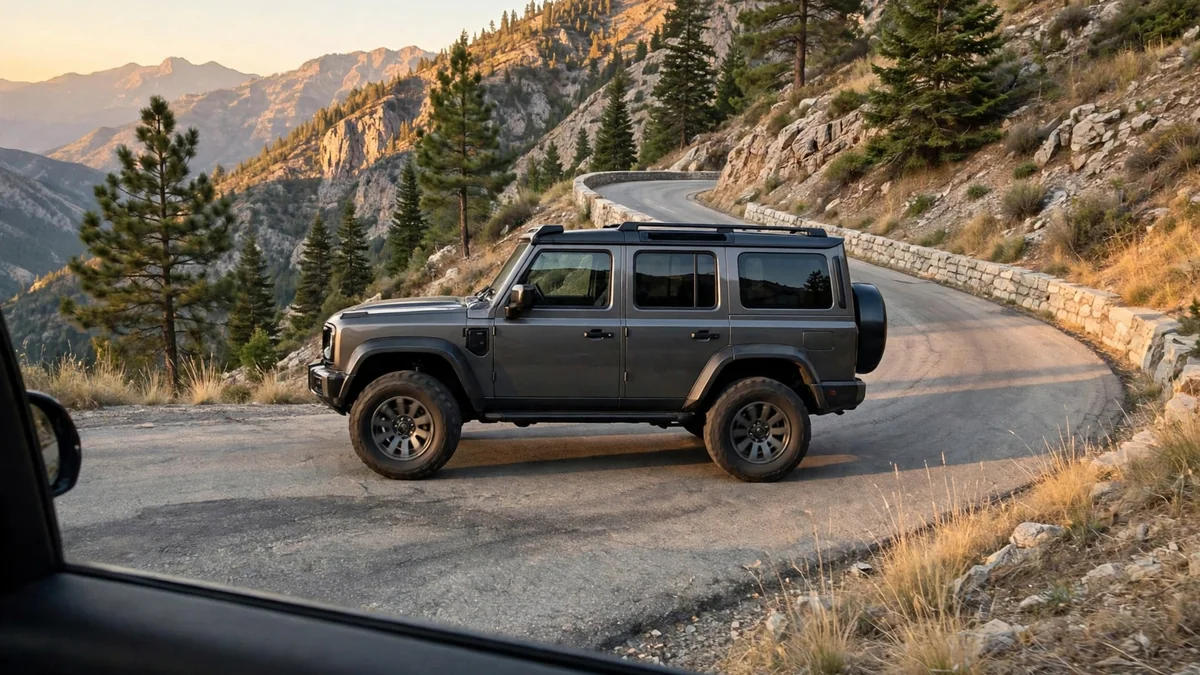
The track up the mountain was rough, rutted by rain and scattered with loose stone, and the big SUV climbed it without a single complaint. Inside, the passengers barely noticed the surface change: the suspension soaked up the worst of it, the cabin stayed level, and the driver could see over the hedges and down the valley for miles. That high driving position, that feeling of looking down on the road instead of up at it, is the first thing every SUV buyer falls for, and it is the reason the shape has taken over the luxury market.
But the spec sheet of a luxury SUV is a crowded place, mixing the numbers of a family car, an off-roader and a sports car all at once. Power and torque sit next to ground clearance and wading depth, towing capacity next to boot space. This guide sorts them out in plain words, so each figure makes sense on its own and together.
The spec sheet at a glance
| Figure | Typical range | What it tells you |
|---|---|---|
| Engine | 3.0 to 4.4 litre, turbocharged petrol, diesel or hybrid | How the power is made |
| Power | Roughly 300 to 600 horsepower | How hard the car can push |
| Torque | Roughly 500 to 850 Nm | How easily it pulls a load |
| 0 to 100 km/h | Roughly 4 to 7 seconds | How quickly it gathers speed |
| Towing capacity | Roughly 2,500 to 3,500 kg | How much it can pull |
| Ground clearance | Roughly 200 to 300 mm, adjustable on air suspension | How rough a track it can cross |
| Wading depth | Roughly 500 to 900 mm | How deep water it can drive through |
| Weight | Roughly 2,200 to 2,700 kg | How heavy it is to stop and turn |
| Boot space | Roughly 600 to 900 litres | How much luggage and gear it holds |
| Seats | Five as standard, seven in larger models | How many people it carries |
Power and torque: built to pull, not just to sprint
An SUV needs more torque than a sedan, because it is heavier and because it is expected to tow. Torque is the figure that matters when the car is pulling a horsebox up a hill or a boat trailer out of a slipway, and luxury SUVs are tuned to produce it low in the rev range, so the pulling power arrives the moment the driver asks for it. Power still matters for motorway cruising and overtaking, and the strongest SUVs make more than 500 horsepower, but the number to look at first is torque. The engine is only half the story, though: the gearbox and the four-wheel-drive system decide how that power reaches the road, and a good one sends it to the wheels with grip before any slip is felt. The way the whole machine is put together is described in the guide to how a luxury SUV works, from the engine to the systems that watch the road.
Ground clearance and wading depth: the off-road numbers
Ground clearance is the distance between the lowest part of the car and the ground, and it decides whether the SUV can cross a rutted track without scraping its underside. Around 200 mm is enough for a farm track, while 300 mm handles serious ruts and rocks. Most luxury SUVs use air suspension, which can raise the body for rough ground and lower it again for the motorway, where a lower car is quieter and more stable. Wading depth is the deepest water the car can drive through without damage, and the best SUVs manage close to a metre, with sensors that tell the driver the depth in real time. The off-road side of the family is explored in the guide to how a luxury off-roader works, where the same ideas are taken further.
Towing and weight: the numbers that pull together
Towing capacity is the maximum weight the SUV can legally pull, and for a luxury SUV it is usually between two and a half and three and a half tonnes, enough for a large caravan, a horsebox or a boat. Weight is the trade-off. An SUV weighs half a tonne more than a sedan of similar size, and that weight makes it harder to stop and slower to change direction. Engineers fight it with aluminium body panels and clever suspension, but they cannot remove it entirely, because the size, the four-wheel drive and the safety structure are the point of the car. What the weight buys is presence on the road, a high seating position and room for seven people and their luggage, and for most buyers that trade is worth it.

Boot space and seats: the family numbers
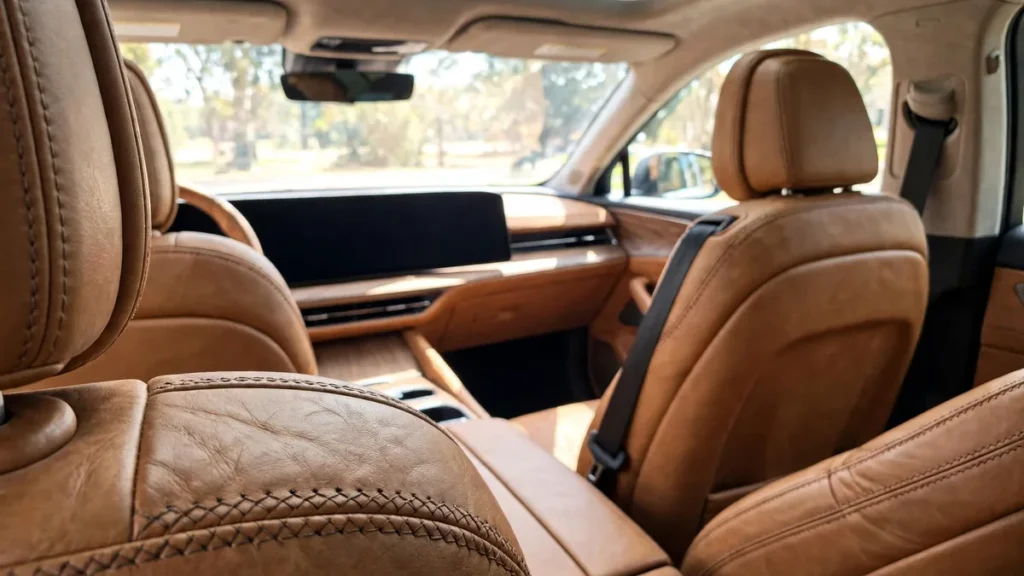
Boot space is where an SUV earns its keep as a family car. Six hundred litres is enough for a holiday for five, and the larger models offer close to nine hundred, with the rear seats folded flat to make a load bay big enough for furniture. Seven seats are available in the biggest models, with the third row best suited to children or short journeys, but even five-seat SUVs offer rear legroom that a sedan can only dream of. These are the numbers that decide whether the car works on a school run as well as on a mountain track, and they are why so many buyers choose an SUV over a saloon even when they never leave the tarmac.
What a luxury SUV costs
A luxury SUV typically costs roughly $80,000 to $160,000 as an estimate, with the largest and most powerful models going higher, and the flagship versions with every option can pass $200,000. The price is estimated to include the four-wheel-drive system, the air suspension, the driver assistance and the hand-finished cabin, and it varies by brand, model and market. The money buys versatility, a car that can tow a trailer in the morning, cross a flooded road in the afternoon and take seven people to dinner in the evening, all in silence. A sharper, lower comparison is set out in the guide to luxury sports car specs explained, where the numbers of a car built only for speed are decoded the same way.
A rare fact
Some luxury SUVs can change their ride height while the car is moving, lowering themselves at motorway speed to cut wind noise and raising themselves again the moment the driver selects an off-road mode. A few can even kneel down when parked, dropping the body so older passengers and children can climb in more easily, then rising back up when the doors close. It is a small piece of theatre, but it shows what the spec sheet’s ground clearance number really means: it is not a fixed measurement, but a range the car moves through all day long.
A luxury SUV spec sheet is a list of compromises made well: heavy but quick, tall but stable, practical but quiet. Learn to read the torque, the ground clearance and the towing figure, and the numbers stop being a jumble and start being the reason the car can do so many jobs at once.