The smell reaches the guests before the food does. On a yacht at anchor, the wind carries the smoke from the aft deck across the sun pad, and everyone on board knows dinner is being cooked outside, a few steps from the table. The grill doing the work looks like a simple steel box with a lid, but the spec sheet behind it is long.
A luxury yacht barbecue grill is a built-in outdoor cooker, usually gas or charcoal, fixed to the aft deck of a yacht so the chef or the owner can grill fish, meat, and vegetables in the open air. It is not a portable grill carried on board: it is bolted down, plumbed in, and built to marine standards, and the numbers on its spec sheet are about heat, size, and surviving the sea. This is a plain translation of the numbers that matter.
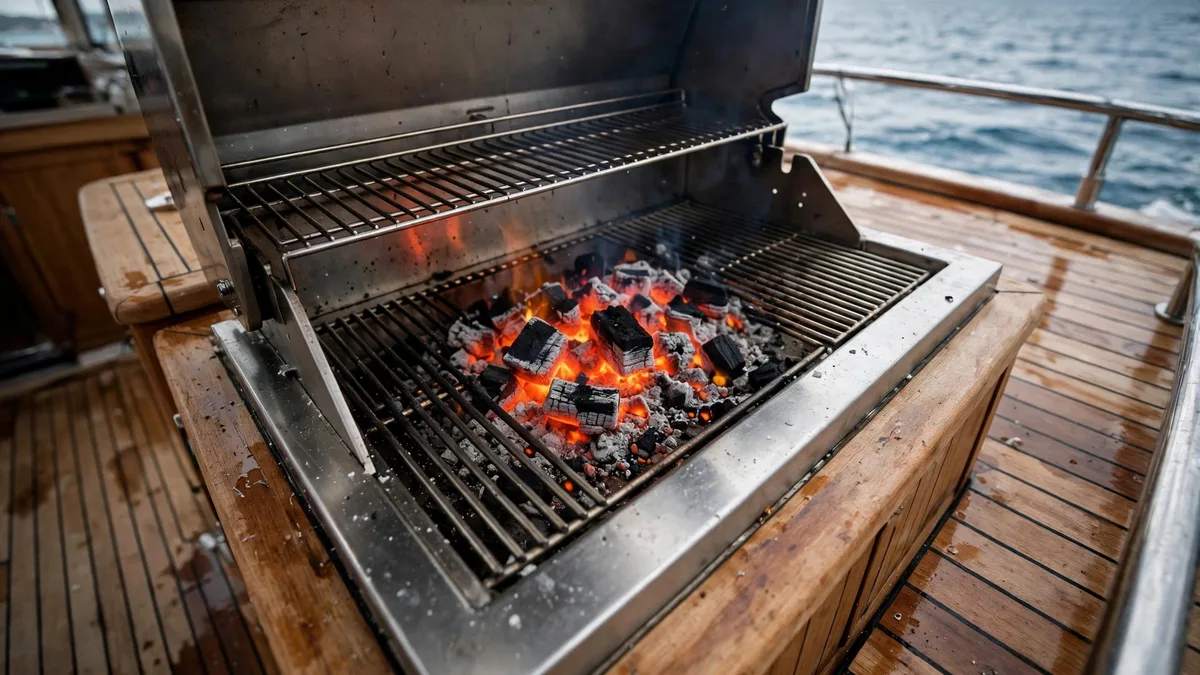
1. Cooking area and size, and the grill drawn for a party
The first numbers on the sheet are the cooking area and the size of the grill. A yacht barbecue grill usually offers 800 to 1,500 square centimetres of cooking surface, on a unit 60 to 90 centimetres wide and 50 to 65 centimetres deep. That is enough to grill for six to ten guests at once, with steaks on one side and vegetables on the other, and it is the size the yacht can fit without eating the whole aft deck.
The figure to read next to the size is the height of the cooking surface, usually 85 to 95 centimetres off the deck. That is standing height for the cook, and it keeps the grill clear of spray when a wave slaps the stern.
2. Heat output and burners, and how fast the grill recovers
The heat is the second number on the sheet. A gas yacht barbecue grill usually delivers 10 to 20 kilowatts across two to four burners, and it reaches grilling temperature, around 250 to 300 degrees Celsius, in 10 to 15 minutes from cold. Each burner is controlled on its own, so one side sears a steak while the other keeps fish warm.
The number to check next to the output is the recovery time, usually under two minutes after a cold load of meat lands on the grate. A grill that loses its heat when the food arrives cooks slowly and unevenly, and the guests notice. The flat steel grill beside it is described in how a yacht teppanyaki grill works, and the same rule applies: the surface must hold its heat.
3. The steel and the marine build, and a grill that never rusts
The steel is where the marine price appears. A yacht barbecue grill is usually built from marine-grade 316 stainless steel, chosen because it resists salt water where ordinary stainless steel pits and stains. The lid, the firebox, and the frame are all the same grade, and every weld is ground smooth so grease has nowhere to hide.
The figure to read next to the grade is the steel thickness, usually 2 to 3 millimetres in the firebox and 1.5 to 2 millimetres in the lid. The galley it works beside is measured in the yacht galley spec sheet, explained.
4. Fuel, gas lines, and the tank below deck
The fuel is the number the owner asks about first. A gas yacht barbecue usually runs on propane from a dedicated locker below deck, with a fixed copper or stainless line to the grill and a shut-off valve the crew can reach in seconds. A charcoal grill, rarer on a yacht, uses lump charcoal and needs a fireproof ash box, because embers and a wooden deck do not mix.
The number to check next to the fuel is the consumption, usually 0.5 to 1 kilogram of propane per hour of cooking. A full evening of grilling for ten guests uses roughly 2 to 3 kilograms, so a standard 10-kilogram bottle lasts three to four evenings.
5. Wind, grease, and the grill that cooks in a breeze
The wind is the enemy a land grill never meets. A yacht barbecue has a deep lid, a raised lip around the cooking surface, and a wind guard at the back, so a gust does not blow the flame sideways or push the heat off the grate. The lid is heavy enough to stay shut in a breeze, and it is hinged so it cannot blow open and hit a guest.
The figure to read next to the wind guard is the grease system, usually a slide-out tray holding 1 to 2 litres, with a drain that the crew empties after every use. Grease left in a grill at sea goes rancid fast, and it is a fire risk when the grill is lit again. The outdoor oven beside it is covered in how a yacht pizza oven is made.
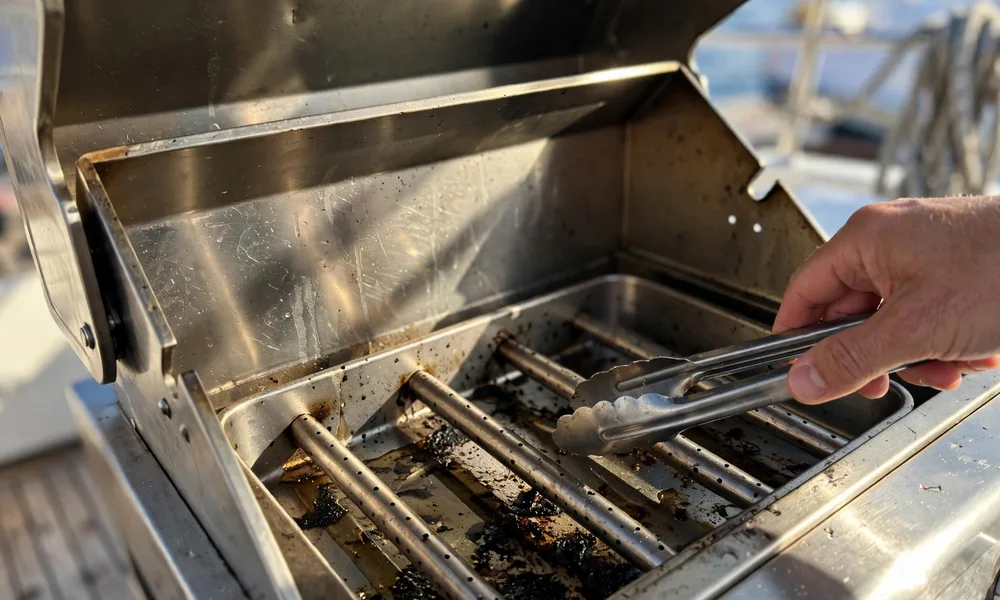
6. Cleaning and care, and a grill built for a decade
The last number on the sheet is the service life. A yacht barbecue grill usually lasts eight to twelve years, the burners three to five, and the grates two to three before they are replaced.
The figure to read next to the life is the cleaning time, usually 15 to 20 minutes after a meal. A grill that is not cleaned grows a layer of burnt grease, and burnt grease is the fastest way to ruin a grill that is otherwise sound. The cover is fitted, not a loose sheet, so it does not blow off in the first squall.
The Specifications at a Glance
Here are the numbers that matter most on a luxury yacht barbecue grill.
| Specification | Typical Luxury Range |
|---|---|
| Cooking area | 800 to 1,500 square centimetres |
| Grill width | 60 to 90 centimetres |
| Heat output | 10 to 20 kilowatts, gas |
| Burners | 2 to 4, independently controlled |
| Grilling temperature | 250 to 300 degrees Celsius |
| Steel grade | Marine-grade 316 stainless steel |
| Fuel use | 0.5 to 1 kilogram of propane per hour |
| Service life | 8 to 12 years for the grill body |
What Does a Luxury Yacht BBQ Grill Cost?
A luxury yacht barbecue grill is estimated to cost roughly $8,000 to $30,000 installed, depending on size and fuel. A standard gas grill in marine-grade steel is estimated at roughly $8,000 to $15,000, while a larger custom grill with a rotisserie, a side burner, and a plumbed gas line is estimated at roughly $15,000 to $30,000. A replacement grate set is estimated at roughly $300 to $800.
A Rare Fact
A yacht barbecue grill is lit downwind, and the chef checks the wind before the charcoal. On a yacht at anchor the wind swings with the tide, so the grill is built to be used from either side, and the chef moves around it as the evening turns. A land grill has one front; a yacht grill has two, and the cook uses both.

Once you know which numbers do the work, the sheet makes sense. Cooking area decides whether ten guests eat together or in shifts, steel grade decides whether the grill survives a decade of salt air, and recovery time decides whether the second round of steaks cooks as well as the first.


