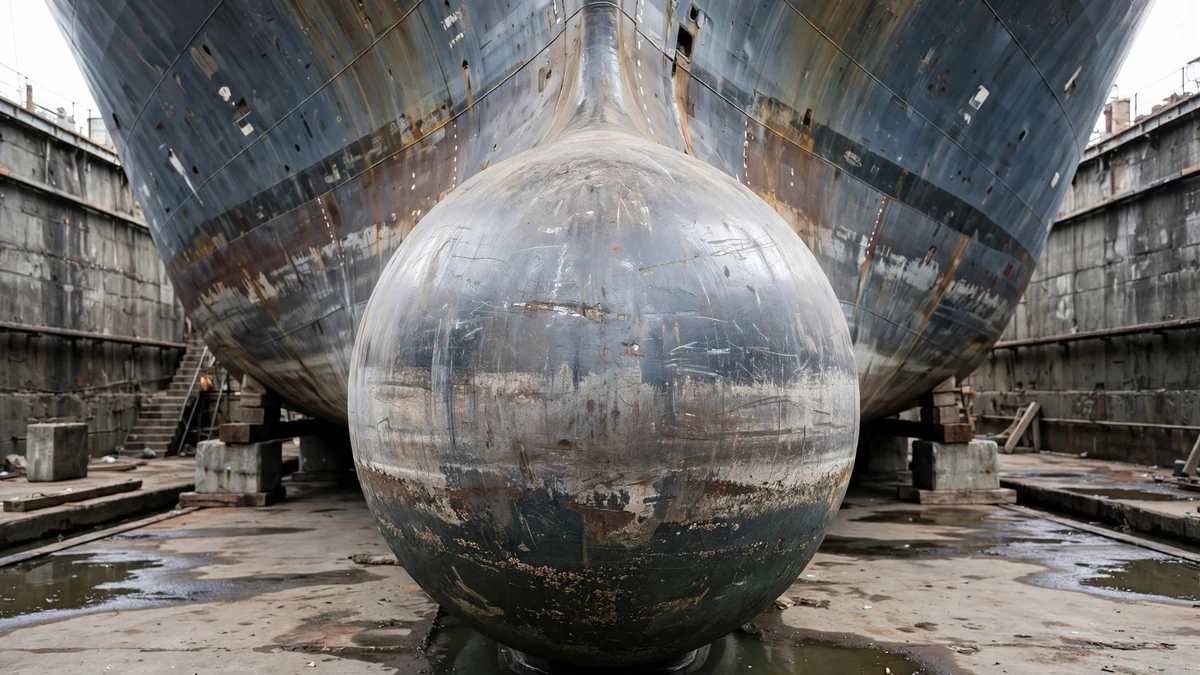
Look at the bow of a large ship in dry dock and you will see something odd: below the waterline, the sharp stem swells into a rounded bulb, like a torpedo welded to the front of the hull. It looks like a mistake, or a piece of another vessel grafted on by accident. In fact it is one of the most valuable shapes in shipbuilding, and it has been saving fuel on ocean crossings for more than a century.
The bulb is called a bulbous bow, and its job is to tame the wave a ship makes as it pushes through the sea. Every ship drags a bow wave behind its stem, and that wave costs energy — energy the engines must supply by burning fuel. The bulb creates a second, smaller wave of its own, and if the two waves are timed right, they cancel each other out.
This guide explains the key specifications of a ship bow bulb in plain English: its size, its shape, and the numbers that decide whether it helps or hurts. Every figure here is a typical estimate for modern merchant ships, not the specification of any single vessel.
The Key Specifications, Explained
A bow bulb is a matter of millimetres and timing. The six numbers below are the ones naval architects calculate first, and together they describe how a lump of steel at the front of a ship can make the whole vessel more efficient.
1. Bulb volume: how big the bulb is
The bulb’s size is quoted as a percentage of the ship’s displacement, and a typical value is 1 to 3 percent of the volume of water the ship pushes aside. On a large container ship that can mean a bulb of several hundred cubic metres — big enough to walk inside during construction. The sweet spot depends on the ship’s speed and its hull shape, which is why no two bulbs are quite alike.
2. Bulb length: how far forward it reaches
A bulb usually extends forward of the stem by roughly 3 to 5 percent of the ship’s length, and its tip is the most forward point of the vessel when the ship is loaded. The length sets the timing: the wave the bulb makes must arrive at the bow wave exactly out of step with it, so the crest of one meets the trough of the other. This is why a bulb designed for one speed can be a handicap at another.
3. Bulb depth: how deep it sits
The bulb’s centre typically sits about 1 to 2 metres above the keel, or roughly 40 to 50 percent of the ship’s draught below the waterline. Depth matters because the bulb only works when it is submerged: at the ship’s normal loaded draught it is fully underwater, doing its job.
4. Cross-section shape: round, teardrop or ram
Bulbs come in several shapes, and the choice is a trade-off. A rounded, teardrop bulb is the most common on container ships and tankers, because it makes a clean wave with little drag of its own. A flatter, ram-shaped bulb is sometimes used on ferries and ships that sail in shallow water, where a deep bulb would risk hitting the seabed. Some modern bulbs are shaped like a sideways teardrop with a pointed top, tuned in computer simulations to match one specific hull.
5. Design speed: the speed the bulb is tuned for
Every bulb is designed around one speed, the ship’s normal service speed, typically 14 to 22 knots for a container ship or tanker. At that speed the wave cancellation is at its best, and the fuel saving is commonly estimated at 10 to 15 percent compared with a hull with no bulb. This is one reason the recent trend towards slow steaming — sailing at lower speeds to save fuel — has forced designers to retune bulbs for slower service speeds than the ones they were first built for. A bulb retuned for slow steaming is usually smaller and set slightly deeper, matching the wave pattern of a ship that rarely exceeds 16 knots.
6. Fuel saving: the number that pays for it all
The headline figure for a bow bulb is the fuel it saves, and on a large ship the numbers are enormous. A container ship burning 100 to 200 tonnes of fuel a day can save 10 to 30 tonnes a day from its bulb, which over a year adds up to thousands of tonnes and millions in fuel costs, not to mention the emissions avoided.

| Specification | Typical value (estimate) | What it tells you |
|---|---|---|
| Bulb volume | 1–3% of displacement | How big the bulb is for the ship |
| Bulb length | 3–5% of ship length | How far forward the bulb reaches |
| Bulb depth | 40–50% of draught | How deep the bulb sits underwater |
| Design speed | 14–22 knots | The speed the bulb is tuned for |
| Fuel saving | 10–15% | What the bulb saves at design speed |
| Bulb shape | Teardrop or ram | How the bulb’s wave is formed |
| Tip position | Forward of the stem | The most forward point when loaded |
How the Specs Matter in Use
At sea, these numbers show up as fuel bills and arrival times. A well-tuned bulb lets a ship hold its schedule on less fuel, which matters on routes where a day’s delay costs a fortune and fuel is the biggest single expense. Passengers on a cruise ship feel the difference as a steadier deck; crews on a cargo ship feel it as a quieter, less tiring ride.
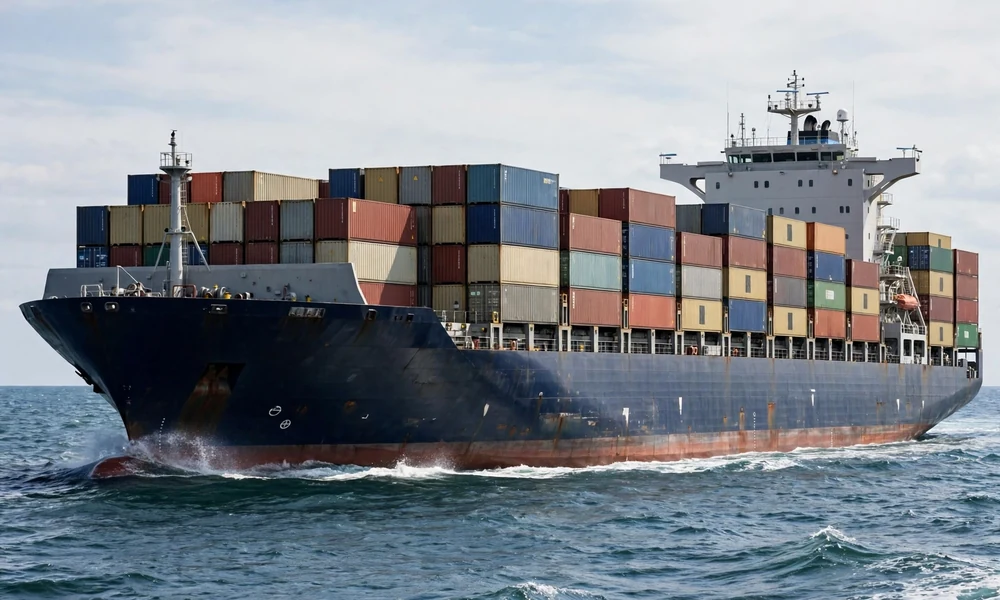
The trade-offs appear when a ship’s work changes. A bulb tuned for fast ocean crossings is a poor fit for a ship that now sails slowly to save fuel, and some owners have had bulbs cut off and replaced with smaller ones as service speeds fell. The hull the bulb is attached to is a story of its own, explained in the container ship hull specs. The engines that benefit from the saving are covered in the cruise ship engine specs, and the deep-diving craft that borrow the same torpedo shape are explained in the deep-sea submersible specs.
A Rare Fact
The bulbous bow was not invented by a shipbuilder, but by an American naval officer who noticed something strange in 1910: a torpedo towed underwater created less drag than the same shape towed on the surface. David Taylor, the US Navy’s chief constructor, realised that a submerged bulb ahead of a ship’s bow could interfere with the bow wave, and he fitted the idea to the battleship USS Delaware. The ship gained speed on trials, and within a few decades the bulb had spread to almost every large vessel afloat. More than a century later, the same trick still works — a shape first spotted on a towed torpedo now saves the world’s merchant fleet millions of tonnes of fuel every year.


