Every yacht begins as a choice of metal, and the two old rivals are steel and aluminium. Both have crossed oceans, both have carried families and crews in comfort, and both have their loyal builders who will tell you the other metal is a mistake. The truth is less dramatic and more useful: steel and aluminium solve the same problem in opposite ways, and the right one depends on the size of the yacht, the waters it will sail, and the owner who will pay to keep it.
Steel is the traditionalist. It is heavy, tough, forgiving, and honest about its weaknesses. Aluminium is the modernist. It is light, fast to build with, and quietly demanding about the way it is handled. This comparison looks at weight, strength, corrosion, repair, cost and life aboard, and ends with a verdict for different kinds of owner.
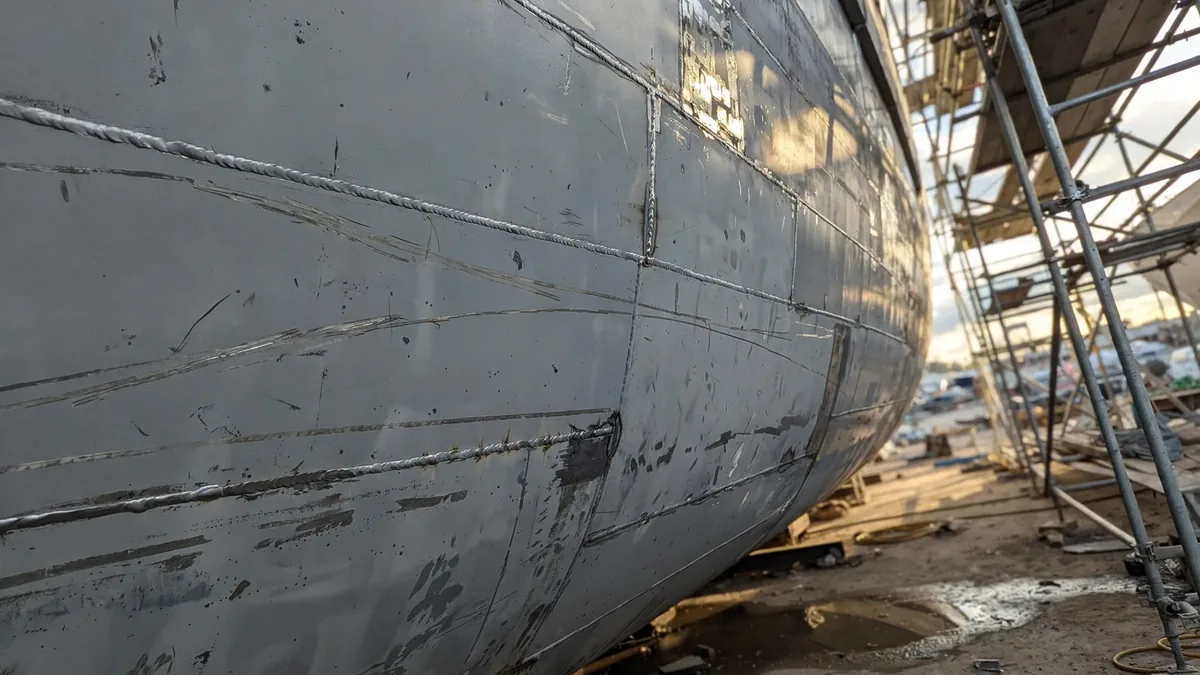
Weight: the difference that shapes everything
Weight is where the two metals part company. Aluminium weighs roughly a third of steel for the same volume, so an aluminium hull of the same strength is far lighter than a steel one. That lightness ripples through the whole design. A lighter yacht needs less sail area to move, less engine power to motor, and less fuel to cover the same distance.
Steel gives that advantage away and gets something else in return. A heavy hull is a steady hull. In a seaway, weight damps motion, and a steel yacht tends to roll more slowly and comfortably than a light aluminium one of the same size. For a long-distance cruising yacht that will spend weeks at sea, that steadiness matters more than a knot of speed. The question is not which is better in the abstract, but whether you value speed and efficiency or comfort and momentum.
Strength: surviving a knock
Steel is the toughest hull material in common use. It bends before it breaks, it absorbs a grounding or a collision with a container far better than any lighter metal, and a dent in steel is usually a dent, not a disaster.
Aluminium is strong for its weight, which is a different claim. A well-designed aluminium hull is perfectly strong enough for ocean sailing, and racing yachts have proved it for decades. But aluminium is less forgiving of a hard impact. The practical difference is about the cruising ground. In deep water and well-charted seas, aluminium’s strength is ample. In ice, coral and uncharted shallows, steel’s extra toughness is worth its weight.
Corrosion: the quiet enemy
Both metals corrode, but they do it in different ways, and the difference decides how much work an owner inherits. Steel rusts, openly and honestly. Rust shows itself as a brown stain, it can be ground back, treated and repainted, and any competent yard in any port can deal with it.
Aluminium does not rust, which sounds like a victory until you meet its own weakness. Aluminium suffers from galvanic corrosion, where contact with a different metal in salt water turns the aluminium into the sacrificial part. Preventing that takes careful isolation of fittings, good electrical practice, and an owner who understands the system. Steel forgives neglect for longer. Aluminium punishes ignorance faster.
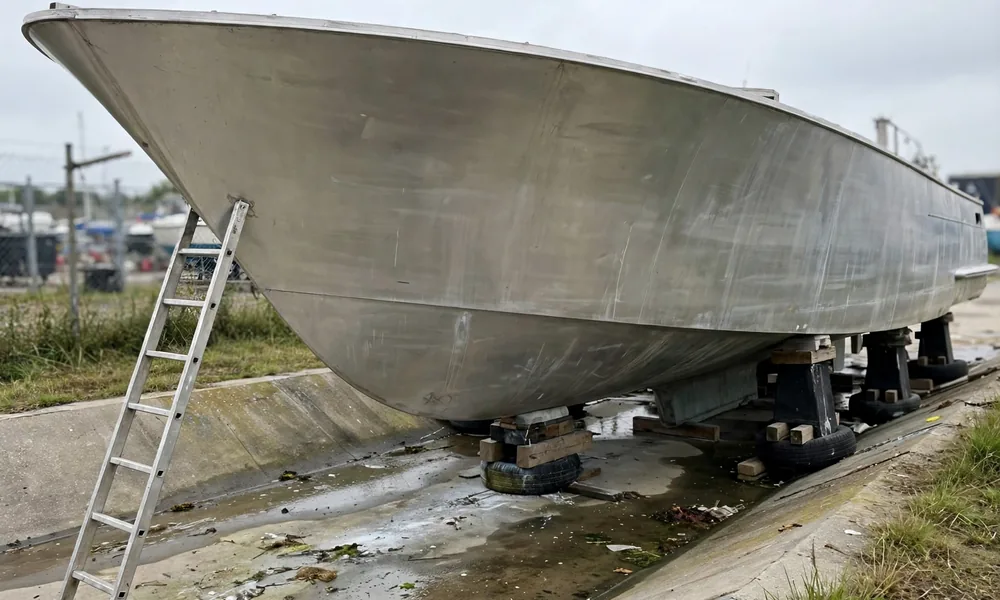
Building and repairing
Building in steel is straightforward. The material is cheap, the welding is familiar to yards all over the world, and the skills to repair it exist in almost every port. How a steel superyacht hull is made shows the process at its most refined, but the same principles apply to a forty-foot cruiser: plate is cut, shaped, welded and faired, and the result is a structure any competent welder can cut into and repair.
Aluminium building is faster in the yard and harder in the field. Plates are lighter to handle, welding is quicker, and there is no heavy fairing compound to shape, because aluminium plate can be left fair and painted directly. How yacht hull fairing is done shows how much labour goes into making any hull smooth, and on aluminium that labour is different rather than absent: the finish is only as good as the platework underneath it.
Cost over a yacht’s life
On purchase price, steel usually wins. The material costs less, the labour is widely available, and a steel yacht of a given size is generally cheaper to build than its aluminium equivalent. The gap narrows on larger yachts, where aluminium’s weight saving allows smaller engines, smaller rigs and less fuel, and some of the build premium comes back over the years.
On running costs the picture flips and flips again. Aluminium’s lighter weight means lower fuel bills and, for a sailing yacht, less wear on sails and rigging. Steel’s maintenance is cheaper and more predictable, but it is also more constant: the paint system is a permanent commitment, and letting it slide is how a steel yacht loses its value. Over twenty years, the total cost of the two is closer than the build price suggests, and the deciding factor is usually how well the boat was maintained rather than which metal it was built from.
Life aboard: noise, insulation and comfort
A steel hull is a good insulator of sound and a poor one of temperature, in the sense that both matter and both can be managed. Steel deadens the slap of waves and the hum of machinery, and with proper insulation a steel yacht is quiet and warm. Insulation is not optional on a steel yacht; it is part of the design.
Aluminium is louder. It rings with the sound of water against the hull, it transmits engine vibration more readily, and it needs sound-deadening as well as thermal insulation to be comfortable. But a cheaply insulated aluminium yacht is a noisy one, and noise is the complaint that makes owners sell. Whichever metal you choose, ask how the builder insulated it before you ask how fast it sails. The two are connected: the propulsion choice matters too, and diesel versus electric yacht propulsion changes the noise and vibration picture as much as the hull material does.
The verdict
There is no single winner, and any builder who claims otherwise is selling you their yard’s habit. For a heavy-displacement cruising yacht, an expedition boat, or a yacht heading to remote waters where repairs must be possible anywhere, steel is the right answer. It is tougher, cheaper to build, easier to repair, and more forgiving of the neglect that long voyages impose. The weight penalty is real, but for a boat that values comfort and self-sufficiency over speed, it is a price worth paying.
For a fast cruising yacht, a performance cruiser, or a larger yacht where the weight saving pays for itself in smaller engines and better sailing performance, aluminium is the right answer. It is lighter, faster to build, and, in the hands of an owner who understands galvanic corrosion, no harder to live with. The maintenance is more specialised, but the sailing is better, and for many owners that is the whole point of the boat.
The honest rule is simple. Buy steel if you want the toughest, most repairable hull and you are willing to carry the weight and maintain the paint. Buy aluminium if you want the lightest, fastest hull and you are willing to learn its electrical rules and pay for specialist care. The metal does not make the yacht. The care does.


