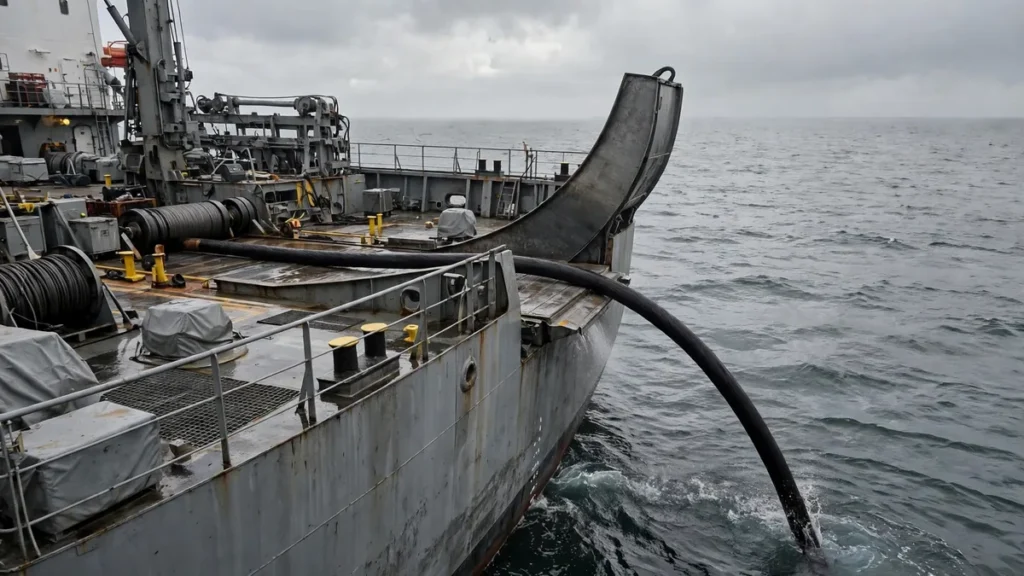
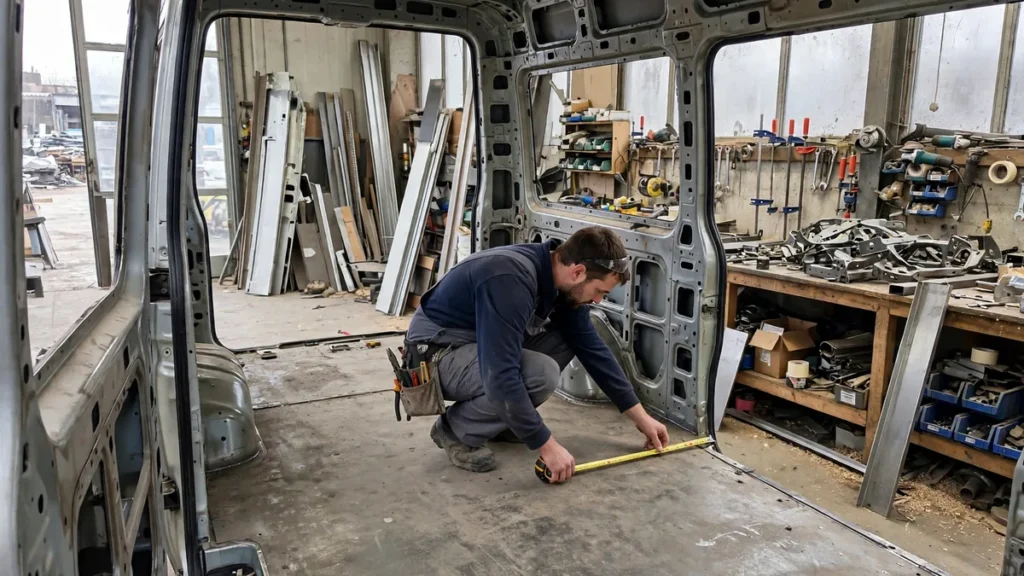
In a shipyard at dusk, the arc flashes blue-white and the sparks fall like rain. The welder moves slowly along a steel seam, the electrode humming, the molten pool glowing orange behind a dark visor. It looks like craft, and it is — but it is also a science of numbers. The current, the voltage, the wire, the gas and the speed are all specified, and the difference between a weld that holds a ship together for thirty years and one that cracks in the first winter is often a few amps or a few millimetres of penetration.
Steel welding is the most important joining process in the world. It holds together ships, bridges, buildings, pipelines and cars, by melting steel and letting it freeze into a single piece. A good weld is not glue and it is not a bolt: the two pieces of steel become one, and the joint is meant to be as strong as the metal around it. That is only true when the specifications are right.
There are several ways to weld steel, and each has its own numbers. The most common are MIG and MAG, TIG and stick welding, each suiting a different job. The way welding works in practice is explained in welding steel that must never fail, and the most precise method of all is covered in electron beam welding specs explained. The heat and metal that shape every welded joint also matter in forging, as aluminium forging specs, translated simply shows for a different metal. Here is what the steel welding numbers mean.
The Specs, Explained
1. Welding processes: MIG, TIG and stick
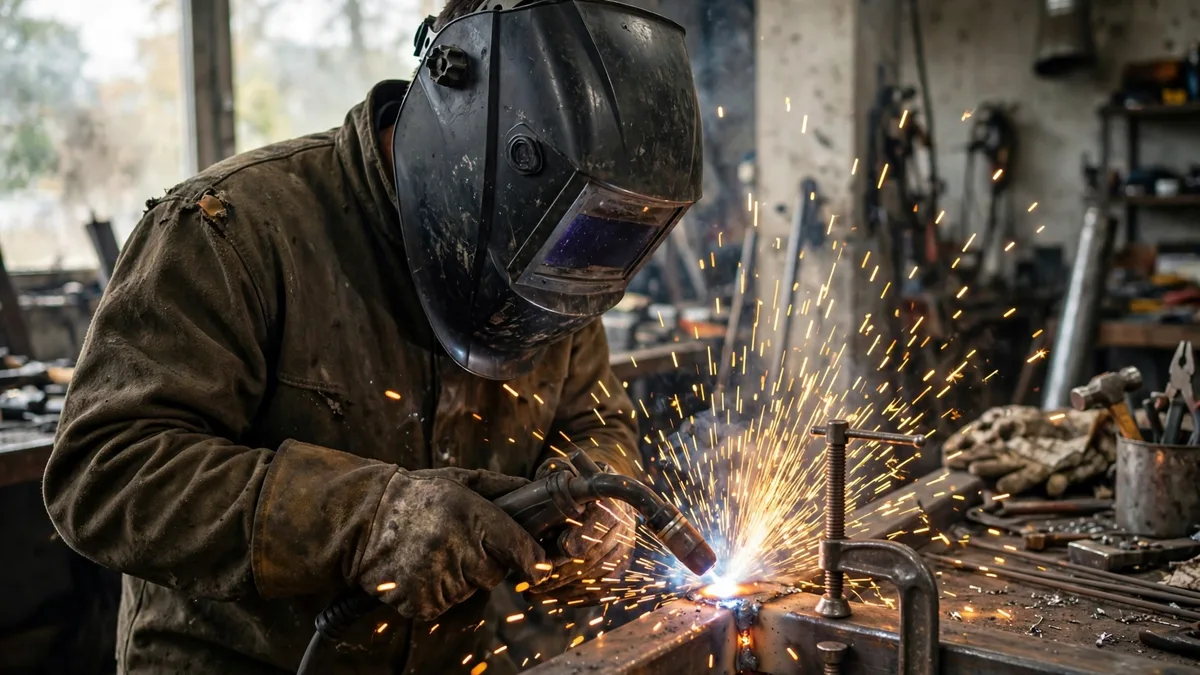
The three main ways to weld steel are MIG, TIG and stick. MIG welding feeds a wire electrode through a gun and is fast, easy to learn and ideal for production work — most car bodies and ship panels are MIG welded. TIG welding uses a tungsten electrode and a separate filler rod, is slower, and gives the cleanest, most precise welds, so it is used for pipework and thin steel. Stick welding uses a coated electrode, works outdoors in wind and rain where gas-shielded methods fail, and is the choice for construction sites and repair work.
2. Current and voltage: the heat of the arc
The welding arc is an electric current jumping a small gap, and its heat is controlled by the current and the voltage. For MIG welding of steel, the current typically runs from about 80 amps for thin sheet to 300 amps or more for heavy plate, with the voltage between about 16 and 30 volts. More current means deeper penetration and a faster weld, but too much burns through thin steel, while too little leaves a weak, shallow joint. The welder sets the numbers on the machine, then adjusts by eye and ear — a good arc sounds like bacon frying.
3. Wire and electrode diameter
The wire or electrode that feeds the weld is specified by its diameter, and the size must match the job. MIG wire for steel is commonly 0.8 mm for thin sheet, 1.0 mm for general work, and 1.2 mm for heavy plate. Stick electrodes are larger, typically 2.5 mm to 4.0 mm, chosen by the thickness of the steel and the position of the weld. A wire too thin for the current will burn back into the torch, while one too thick will not melt properly. The wire is not just filler: it is an alloy, matched to the steel being joined, so the finished weld has the right strength and toughness.
4. Penetration and the weld bead
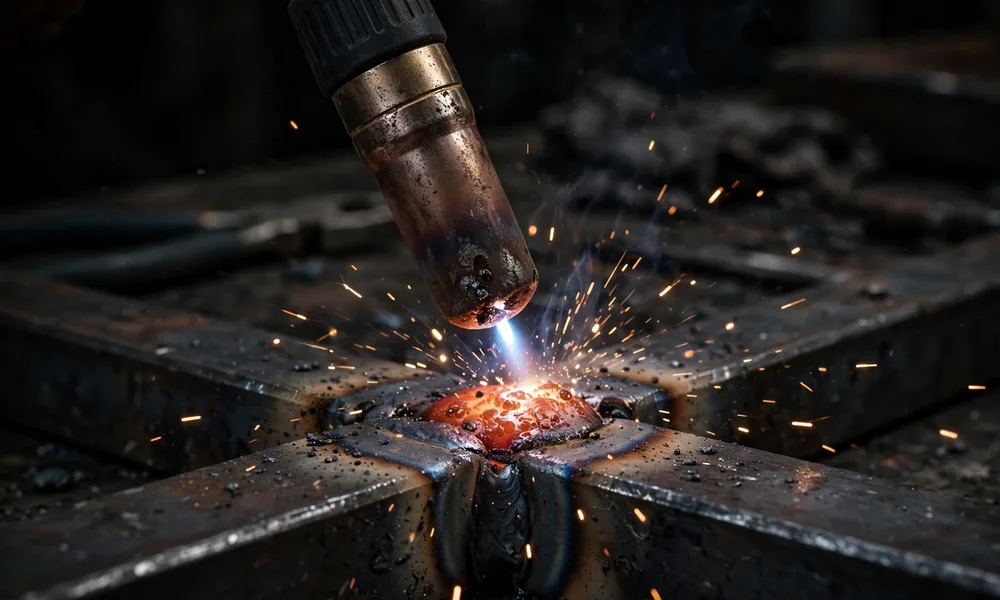
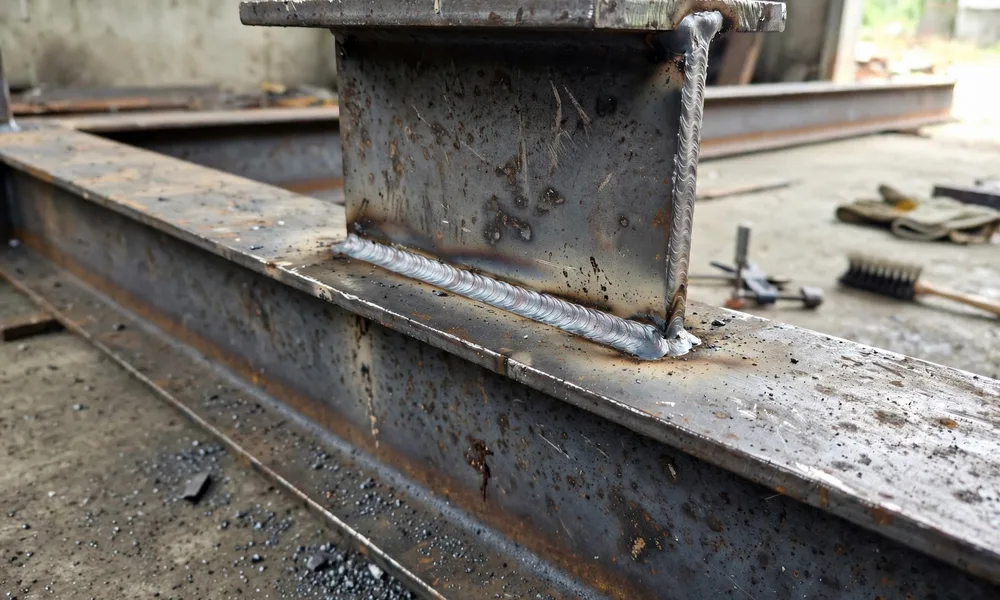
Penetration is how deep the weld melts into the steel, and it decides whether a joint is strong. A weld that sits on the surface like a bead of toothpaste looks fine but has almost no strength; a weld that penetrates fully through the joint is as strong as the steel itself. Good penetration is judged by the shape of the bead — wide enough, flat enough, with smooth edges flowing into the parent metal — and by testing: welds in critical work are inspected by ultrasound or X-ray for hidden flaws. A structural weld specification often states a minimum penetration depth.
5. Shielding gas: keeping the air out
Molten steel reacts violently with the oxygen and nitrogen in the air, so the weld must be shielded while it is liquid. MIG welding of steel uses a mix of argon and carbon dioxide, typically 80 per cent argon and 20 per cent carbon dioxide, flowing at about 12 to 18 litres per minute. TIG welding uses pure argon. Stick welding needs no gas at all, because the coating on the electrode burns and forms its own protective shield. Too little gas and the weld is porous and weak; too much and the gas disturbs the molten pool.
6. Heat input and weld strength
Heat input is the energy put into each millimetre of weld, and it controls the steel’s properties after welding. Too much heat makes the steel around the weld coarse-grained and brittle; too little leaves the joint under-penetrated. It is calculated from the current, the voltage and the travel speed, and for structural steel it is typically kept between about 0.5 and 2.5 kilojoules per millimetre. The finished weld is graded by its strength — a weld on structural steel is typically specified to match the parent metal, around 400 to 500 megapascals of tensile strength — and tested until it proves it.
Steel Welding Specs
| Specification | Typical range |
|---|---|
| MIG current, thin sheet | About 80 to 120 amps |
| MIG current, heavy plate | About 200 to 300 amps |
| MIG voltage | About 16 to 30 volts |
| Stick electrode diameter | About 2.5 to 4.0 mm |
| Shielding gas mix (MIG) | About 80% argon, 20% carbon dioxide |
| Heat input, structural steel | About 0.5 to 2.5 kilojoules per mm |
| Weld tensile strength | About 400 to 500 megapascals |
| Travel speed | About 200 to 600 mm per minute |
| Weld inspection | Visual, ultrasound or X-ray |
What Does Steel Welding Cost?
A professional MIG welding setup for a home workshop — machine, torch, gas bottle and helmet — is estimated to cost roughly $500 to $3,000, depending on the machine’s power and quality. Industrial welding is priced by the job: structural steel welding is estimated at roughly $50 to $150 per hour for a qualified welder, and a ship’s hull involves thousands of hours of welding. Prices are estimates only: TIG and specialist work cost more, and a weld that fails costs far more than doing it right.
A Rare Fact
Underwater welders work with an electric arc burning inside a bubble of gas, in the water, at depth. In wet welding, the diver strikes an arc directly in the water, and the burning electrode coating creates a bubble of gas around the arc that keeps the water out just long enough for the weld to form. It is one of the most dangerous trades in the world — the diver works with live electricity in water, in the dark, often in strong currents — and the welds hold together oil rigs and ship hulls that could not be repaired any other way.
Next time you cross a bridge or board a ship, remember the welds holding it together. They are invisible from a distance, and they are the reason the whole structure stays in one piece.