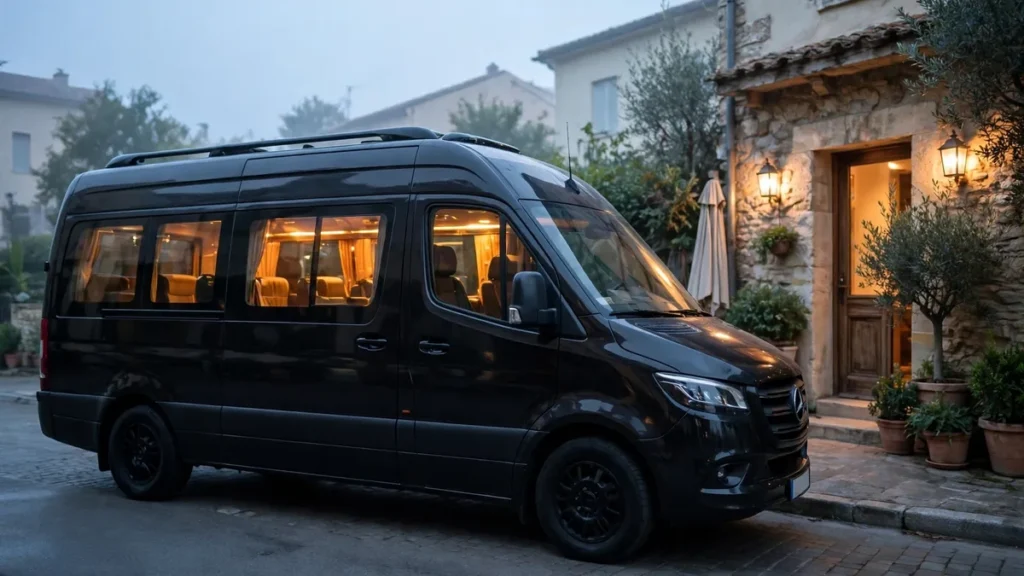
The minibus pulled up outside the boutique hotel at seven in the morning, and the eight guests who stepped out did not look like people who had just spent an hour in a van. They looked rested, uncreased and unhurried, as if they had been sitting in a lounge rather than a vehicle.
This is how a luxury minibus is made, from the van shell and the soundproofing to the eight hand-fitted chairs, the lounge fittings and the final road test, and why a small vehicle can take almost as much hand work as a large one.
Step 1: The van shell is stripped and measured
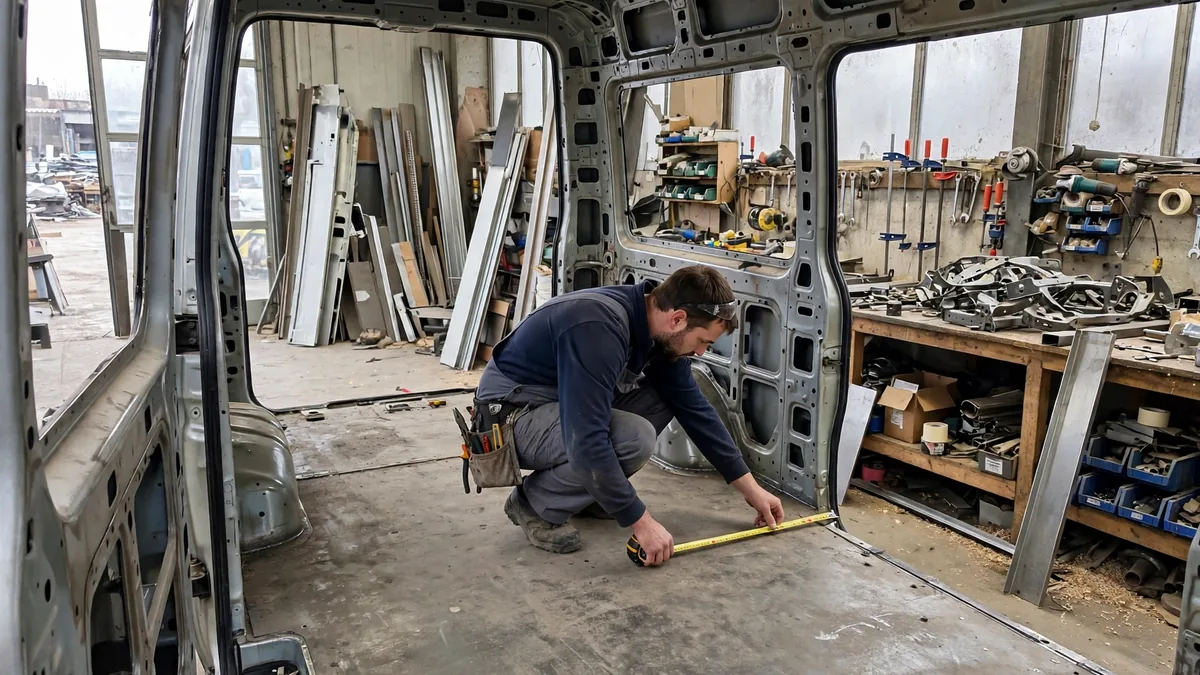
Every luxury minibus starts with a van shell, and the first job is to take it apart. The thin bench seats come out, the hard floor is lifted, and the inner panels are removed so the builders can see the steel underneath. Every weld is checked and every panel is tested, and the whole body is measured corner to corner before it moves on. The guide to why a luxury minibus costs so much follows the money through this rebuild, from the shell to the seats and the fittings.
Step 2: Soundproofing, insulation and lining go in
With the shell strong and square, the inside becomes a room. The roof is lined with acoustic panels that soak up chatter, and the windows are refitted with tinted double glazing and proper seals, so the cabin stays cool in summer and quiet at speed. Ventilation gets its own system, with fresh air ducted above every seat and a heater that can warm the whole van before the first guest boards. The sliding door is rebuilt with heavier runners and a soft-close mechanism, because a door that slams will undo all the soundproofing in a single bang. Nothing here is off a shelf: every panel is cut to fit this one van, because no two minibuses are fitted out quite the same way.
Step 3: The eight chairs are built and fitted
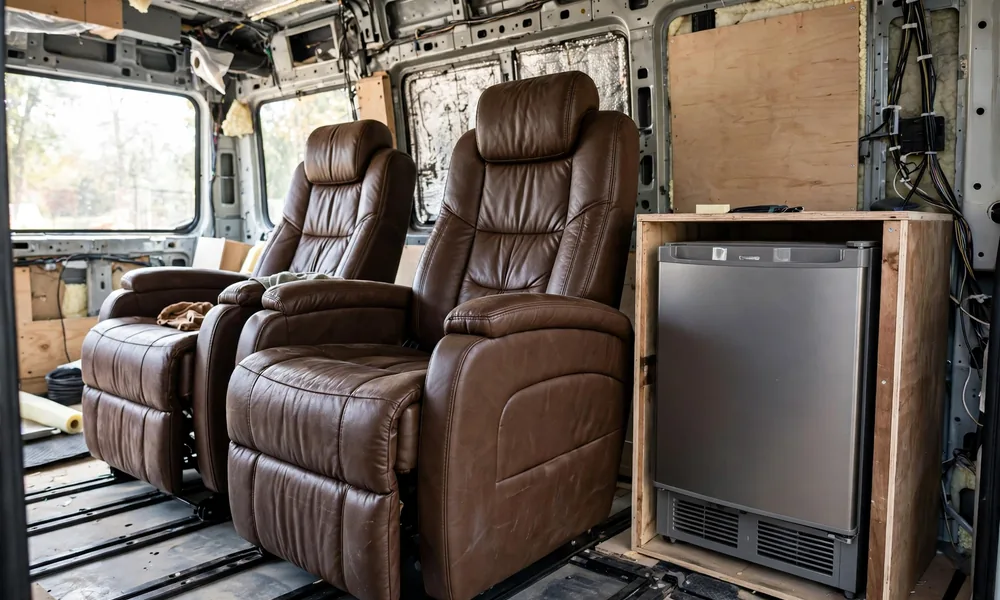
The seats are the heart of a luxury minibus, and they are built like first-class airline chairs rather than van seats. Each one is wide, deeply reclining, with a leg rest, a heater and sometimes a massage function, trimmed in leather that is cut and stitched by hand. The chairs are anchored to steel rails in the floor, each mounting torqued to a figure on the build sheet, and the spacing is set so a tall passenger can stand up without disturbing anyone. The shuttle difference is time: a minibus passenger sits for an hour or two, but the seat has to feel first-class from the first minute, because the journey is the product. A smaller family vehicle shows the same chair-first logic in the guide to how a luxury minivan works, where a car becomes a lounge one fitting at a time.
Step 4: The lounge, fridge and desk are fitted
Past the seats, the minibus becomes a small lounge. A fridge is fitted beside the door, with a coffee machine above it, and a small desk folds down from the side wall. The luggage space is built under and behind the seats, lined with carpet and lit, so eight suitcases fit without blocking the aisle. The wiring for all of this runs behind the panels in labelled looms, and every circuit is tested before the panels are screwed shut, because reaching a buried wire later means stripping the cabin apart. The same lounge logic at a much larger scale is covered in the guide to how a luxury double-decker bus works, where the upper deck turns the whole vehicle into a viewing platform.
Step 5: Electrics, air and screens are connected
A modern minibus carries more wiring than a small flat, and fitting it is a job for patient hands. Looms run the length of the van behind the panels, feeding the lights, the screens, the charging sockets, the air conditioning and the driver’s display, and every circuit is labelled at both ends. The air conditioning unit sits on the roof, with ducts running above every seat, and the heater is sized to warm the whole cabin on a cold morning before the first guest boards. The whole electrical system is then powered up, circuit by circuit, and every light, socket and screen is tested before the panels are screwed shut for the last time.
Step 6: Road testing, tuning and handover
The finished minibus is not handed over on the day the last panel goes on. It goes to the test track, where the brakes are tested from speed, the suspension is run over rough ground, and the driver checks the sliding door, the mirrors and the camera views. Inside, the fitters ride along and listen, hunting for rattles, whistles and buzzes, and every noise is chased to a loose clip or a panel that needs a felt pad. The air conditioning is run at full heat and full cold, the fridge is run overnight, and the coffee machine is used as if a hotel run were under way.
The spec sheet at a glance
| Specification | Typical luxury figure | What it tells you |
|---|---|---|
| Seats | 8, leather recliners | How many people it carries, and how much room each has |
| Body | Strengthened van shell | How stiff and quiet the body stays over years of use |
| Floor | Raised, carpeted, insulated | How warm and quiet the cabin feels on cold mornings |
| Fridge | Compact, with coffee machine | How guests are looked after on short runs |
| Door | Sliding, soft-close, heavy runners | How quietly guests board and leave |
| Air | Roof unit, ducts above every seat | How comfortable the cabin stays at speed |
| Screens | Seat-back or ceiling media | How passengers are entertained on the run |
| Build time | Several weeks of hand work | Why no two minibuses are quite the same |
| Luggage | Carpeted, lit space for 8 cases | How much a group can take without blocking the aisle |
What good design looks like
A well-built luxury minibus gives itself away in small details. The best test is the simplest: ride in the back row with the engine running and listen. If you hear the engine more than the air conditioning, the build is not done yet.

What it costs
A luxury minibus typically costs an estimated $120,000 to $300,000, depending on its size, its seats, its fittings and the systems inside. The estimate covers the vehicle alone, not the driver or the running costs. Most of the price is in the strengthened shell, the eight hand-stitched leather chairs and the weeks of skilled labour that fit the lounge, the fridge and the wiring into a space where every centimetre was fought over.
A rare fact
One detail few guests ever learn is that the floor of a luxury minibus is raised, sometimes by several inches, and the reason is not comfort alone. Raising the floor lets the builders run the wiring, the air ducts and the heating pipes underneath it in straight, labelled runs, and it gives the seat rails a perfectly flat surface to bolt to, so the chairs never rock or creak. It also hides the soundproofing that makes the cabin quiet, which is why a minibus that looks like a van from the outside can feel like a lounge the moment the sliding door closes.