Stand on the dock beside a superyacht on a bright morning and the first thing you notice is not the white hull or the polished teak. It is the glass. Long bands of it run along the side of the yacht, curving with the hull, reflecting the sky and the water, and making the whole vessel look as if it were built from light.
Up close, the story is very different. That glass is doing a hard job. It has to hold back the sea when a wave slams against the side of the yacht, keep the rain and spray out at speed, and stay clear enough to see through in bright sun. A single panel can be taller than a person and heavier than a piano, and it has to be fitted so precisely that it never leaks, never rattles, and never cracks under load.
The numbers on a superyacht glass specification sheet describe exactly that job. Thickness, weight, strength, and light transmission each answer a different question: how hard can the sea hit it, how much does it weigh, and how good is the view from inside. Here is what those numbers mean, in plain English.

How It Works
Step 1: The laminated sandwich
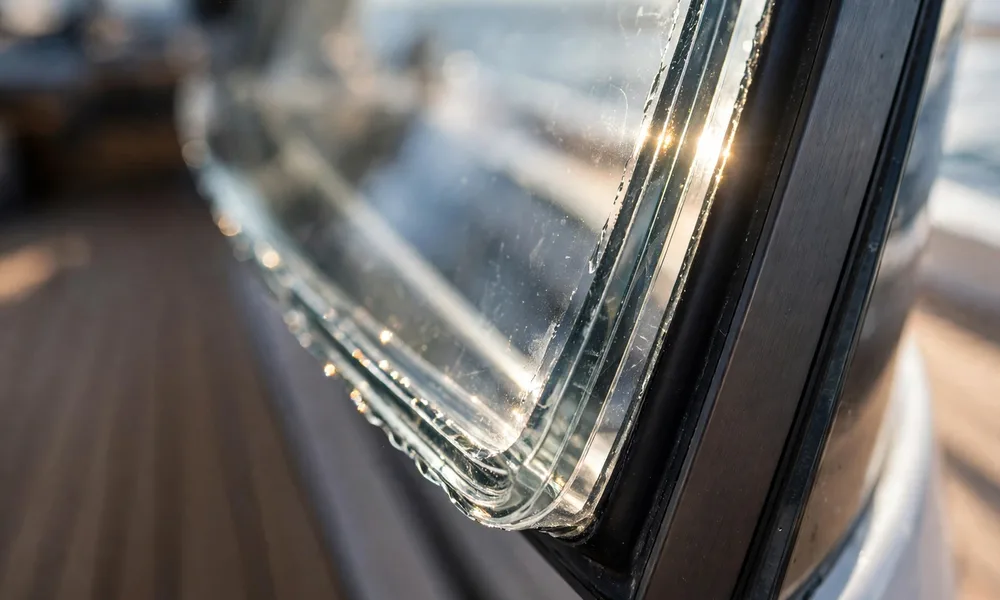
Superyacht glass is almost never a single sheet. It is laminated: two or more layers of glass bonded together with a clear plastic interlayer, usually a tough material called PVB. The layers share the load, so the panel is far stronger than one sheet of the same thickness would be. If the glass is struck hard enough to crack, the broken pieces stay stuck to the interlayer instead of falling out, so the window stays sealed. That is the same idea as a car windscreen, taken to a much larger and tougher scale.
Step 2: Thickness and weight
The headline number on any yacht glass specification is its thickness, and it is usually much bigger than people expect. A small window might use glass around 12 millimetres thick, while the large windows on a big yacht can be 20 to 30 millimetres thick, and the curved windscreen panels on the bridge can be thicker still. Every extra millimetre adds strength, but it also adds weight, and glass is heavy: a single large panel can weigh several hundred kilograms. Builders have to balance strength against the weight high up in the yacht, because weight up high makes a vessel less stable.
Step 3: Strength against the sea
A yacht window does not only face wind and rain. In heavy weather a wave can slam against the side of the yacht with enormous force, and the glass has to take that blow without breaking or popping out of its frame. Engineers test this by applying pressure across the whole panel, measuring how much it bends and how much load it can carry before it fails. The glass is usually heat-strengthened or fully tempered as well as laminated, which makes its surface much harder to break than ordinary glass. The frame matters just as much: the glass sits in a strong metal frame, bonded with a flexible marine adhesive that lets the panel move slightly as the hull flexes. The hull itself is the foundation for all of this, as explained in our guide to superyacht steel hull specs explained.
Step 4: Clarity and coatings
Thick glass can look green or dull, because ordinary glass absorbs some light and tints it. Yacht glass is usually made from low-iron glass, which removes most of that green tint and keeps the view clear and true to colour. Thin coatings are then added to the surface: one type reflects heat while letting light through, so the cabin stays cooler in the sun, and another reduces reflections, so the glass almost disappears when you look out. Some panels also carry a coating that helps water run off, so rain and spray do not blur the view.
Step 5: Curves and shapes
Many yacht windows are not flat. They curve to follow the shape of the hull or the superstructure, and making a curved laminated panel is a slow, skilled job. The glass is heated until it is soft, bent over a mould to the exact curve, and then cooled in a controlled way so that it keeps its strength. A large curved panel can take weeks to make, and if it breaks during bending the whole process starts again. That is one reason curved glass is so expensive. The curved sections sit above the hull and form part of the yacht’s upper structure, which is covered in our guide to how a superyacht aluminium superstructure works.
Step 6: Fitting, sealing, and testing
A yacht window is only as good as its fitting. The panel is lifted into place, often by crane, and bonded into its frame with a marine sealant that stays flexible for years. The seal has to keep water out while allowing the glass and the frame to expand and shrink at different rates as temperatures change. Once fitted, the windows are tested with hoses and pressure sprays that imitate driving rain and breaking waves. The full process is described in our guide to how superyacht glass works.
Superyacht Glass Specs
| Specification | Typical range |
|---|---|
| Glass thickness | About 12 to 30 millimetres, depending on panel size |
| Panel size | About 1 to 4 metres wide for large side windows |
| Weight per square metre | About 30 to 75 kilograms per square metre |
| Light transmission | About 80 to 90 per cent for low-iron glass |
| Heat reflection | Coatings can cut solar heat by about 40 to 60 per cent |
| Interlayer | Usually PVB, about 0.76 to 3 millimetres thick |
| Design pressure | Built to take wave loads of several tonnes per square metre |
| Service life | About 15 to 25 years with proper care |
What Does Superyacht Glass Cost?
Superyacht glass is priced by the panel, and the numbers are large. A single large laminated and curved window panel is estimated to cost roughly $10,000 to $50,000 (estimate), depending on its size, curve, and coatings, while a full set of glazing for a large yacht is estimated to cost roughly $500,000 to $2 million (estimate) or more. Flat panels cost far less than curved ones, and a replacement panel can take weeks to make. Prices are estimates only and vary by yacht size and glass maker.
A Rare Fact
The largest single glass panels on a superyacht can weigh more than a tonne each — heavier than a small car — and they are so heavy that they have to be lifted into place by crane, with the yacht’s own crew standing clear. Once bonded in, a panel that size is effectively part of the structure: it helps stiffen the side of the yacht, and removing one for repair is a major job that can take the vessel out of service for days.
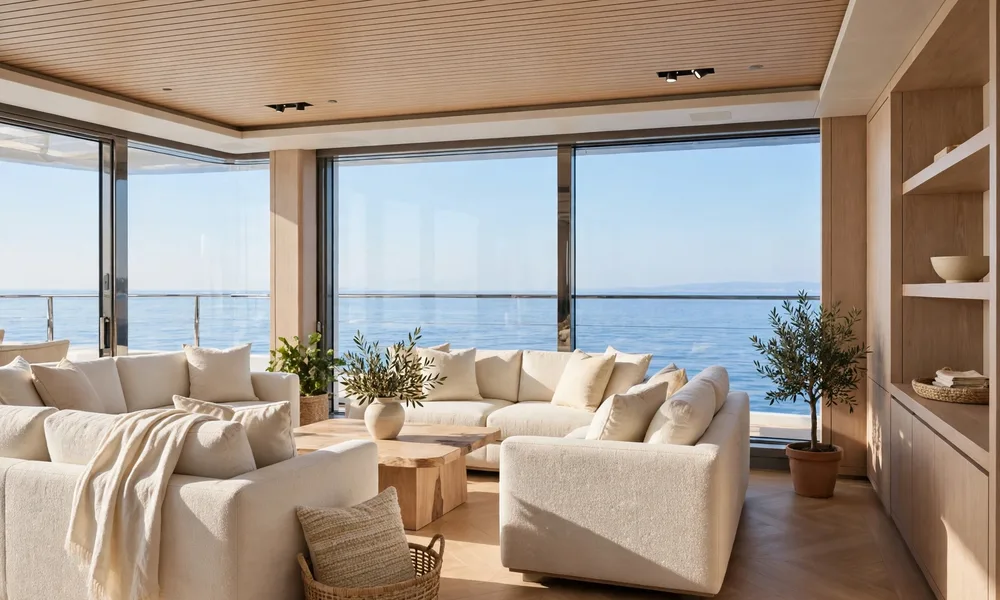
Superyacht glass looks like a luxury, but it is really a piece of engineering that happens to be beautiful. When you understand its thickness, its laminated layers, and its coatings, you are reading the answer to a practical question: how does a wall of glass hold back the sea and still let you see it clearly.


