At the top of a superyacht, above the bridge and the sun deck, there is often a room that seems to belong to another world: a glass dome, open to the sky, with a telescope in the middle and the sea stretching away on every side. It is the observatory, a place to watch the stars from the middle of the ocean — and it is one of the hardest rooms on the ship to build.
This is the story of the glass, steel and silence inside a superyacht observatory, and of what happens when each one fails.

The Materials Behind the Superyacht Observatory
An observatory is a glasshouse on top of a ship, and a ship is the worst place in the world for a glasshouse. The dome must hold back green water in a storm, flex with the hull as the ship rolls, keep the cold out and the condensation off, and still give a view clear enough for a telescope. The superyacht observatory construction starts with that frame, because nothing else in the room works until the glass has something strong to sit in.
Step 1: The laminated glass dome
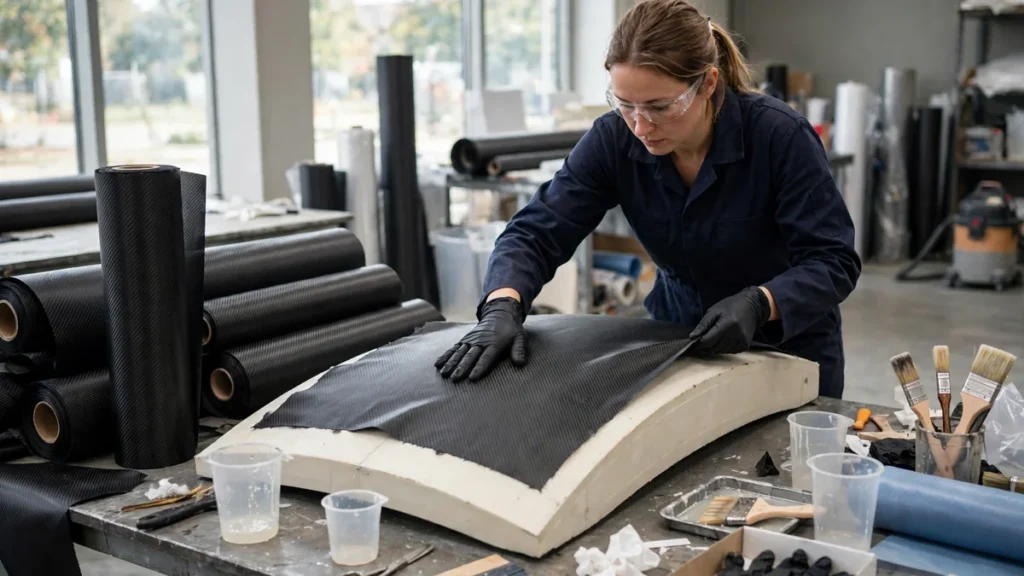
The glass is the heart of the room. It is not a single sheet but a sandwich: two or more layers of toughened glass bonded together with a clear plastic interlayer, usually polyvinyl butyral, which holds the pieces together if the glass cracks. The glass is chosen for clarity first — low-iron glass, which has almost none of the green tint ordinary glass gets at thickness — and for strength second, because a wave hitting the dome can strike with the force of a truck. If the glass fails, the interlayer is the last line of defence: a cracked pane stays in its frame like a spiderweb, instead of raining shards onto the deck below.
Step 2: The stainless steel frame
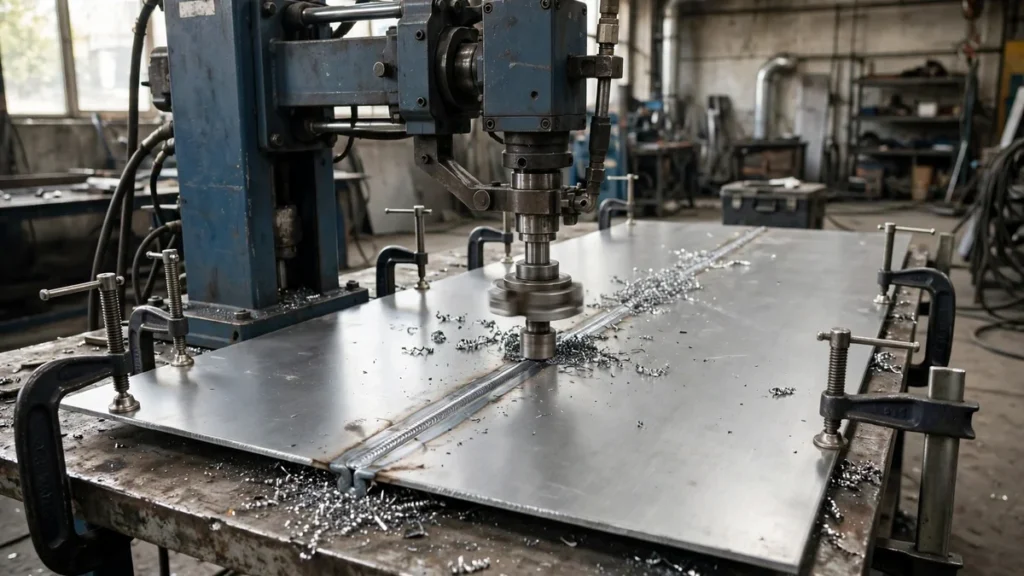
Holding the glass is a frame of stainless steel, usually the marine grade known as 316L, which contains molybdenum to resist the chloride in salt water. The frame is welded from curved sections, then polished until it shines like a mirror — not for looks alone, but because a polished surface has nowhere for salt to sit and start corrosion. Steel is chosen because it is stiff: the frame must hold the heavy glass panes in exactly the right curve while the ship flexes around it, and aluminium would bend too far. The superyacht steel hull materials face the same enemy, salt water, and the observatory frame fights it with the same weapon: the right alloy, polished smooth.

Step 3: The seals and gaskets
Between the glass and the steel sit the seals: rubber gaskets of EPDM or silicone, and beads of marine sealant that stay flexible for years. They do three jobs at once — they keep the sea out, they let the glass and steel expand at different rates as the temperature changes, and they cushion the glass against vibration. If a seal fails, the first sign is a thin line of condensation inside the dome, and then a drip. Water in the frame corrodes the steel from the inside, where nobody can see it, and a seal that looks fine from the deck can be rotten underneath.
Step 4: The deck, the insulation and the silence
Under the observatory floor is a sandwich that nobody sees: a steel deck, a layer of insulation, and a floating floor that sits on rubber mounts. The insulation is usually mineral wool or a closed-cell foam, chosen because it does not absorb water and does not burn. The floating floor is the silence: the observatory sits above the engine room on many yachts, and without the rubber mounts the low rumble of the engines would travel straight up through the steel and into the telescope. A quiet observatory is a sign that the hidden layers are still doing their job. The mounts are tuned like the suspension of a car, soft enough to absorb the rumble and stiff enough to hold the floor level.
Step 5: The telescope mount and the dark materials
In the middle of the room stands the telescope, and its mount is an engineering story of its own. It is usually cast aluminium or machined steel, bolted through the floor to the ship’s structure, and fitted with a gyroscope or a stabilised platform that cancels out the roll of the ship. Around it, the interior is finished in dark materials on purpose: dark wood, dark leather, dark fabric, all chosen to kill reflections. The superyacht glass is coated to cut reflections too, but the coating only works if the room behind it stays dark. If the mount loosens, the telescope drifts; if the room is too bright, the stars wash out — and both failures are fixed by materials, not by electronics.
Step 6: The heating, the coatings and the condensation war
The observatory’s quiet enemy is condensation. Warm, damp air from the people inside meets cold glass on a night at sea, and water forms on the inside of the dome. The defence is a thin, invisible coating on the glass that spreads water into a clear film instead of droplets, and a ring of warm air blown gently across the panes from hidden vents.

Materials at a Glance
| Material | Why it is chosen | How it is shaped | When it fails |
|---|---|---|---|
| Laminated low-iron glass | Clear view; holds together when cracked | Curved in a furnace, toughened, bonded with interlayer | Edge water clouds and delaminates the interlayer |
| 316L stainless steel | Stiff frame; resists salt-water corrosion | Welded curves, polished mirror-smooth | Wrong grade or unpolished welds rust and weep |
| Silicone and EPDM seals | Keep the sea out; flex with temperature | Gaskets and sealant beads between glass and steel | Hardening lets water in and corrodes the frame unseen |
| Mineral wool insulation | Warmth and silence; does not burn or soak | Laid in a sandwich under a floating floor | Wet insulation loses power and adds weight |
| Low-emissivity coating | Reflects heat in; lets starlight through | Metal oxide layer thinner than a soap bubble | A scratch fogs the glass in exactly that spot |
| Dark wood and leather | Kill reflections that would ruin the view | Panels and upholstery in the darkest tones | One bright surface washes out the stars |
Superyacht Observatory at a Glance
| Specification | Detail |
|---|---|
| Glass type | Laminated, toughened, low-iron, curved |
| Frame alloy | 316L stainless steel, polished |
| Seals | Silicone and EPDM gaskets |
| Insulation | Mineral wool or closed-cell foam |
| Telescope mount | Cast aluminium or steel, stabilised platform |
| Main enemy | Condensation on the inside of the glass |
| Maintenance | Seals inspected yearly; glass cleaned by hand |
A Rare Fact
The glass in a superyacht observatory dome is often thicker than the glass in a bank vault — and it has to be, because the sea can hit it harder than a burglar ever could. The thickest glass on the yacht is not protecting money. It is protecting a view. It is also why the dome is the most expensive room on the yacht per square metre — every pane is a custom curve, bent and bonded to order.