Take the crew off a container ship and the argument almost makes sense. The cargo does not complain, the cargo does not panic, and the cargo does not need to be told where the life jackets are. Take the crew off a ferry and the argument falls apart, because a ferry is not a ship carrying cargo. It is a bus on water, carrying hundreds of people who are standing up, walking around, eating lunch, chasing children and trusting that someone is in charge. The case against autonomous ferries is not a case against technology. It is a case against forgetting what a ferry actually is.
Ferries are the most human vessels on the water. They carry schoolchildren and commuters, tourists with suitcases and lorry drivers on a deadline, all of them packed into a steel box that crosses a busy harbour several times a day. It is the crew: the captain who knows the harbour, the deckhands who manage the traffic, the people who notice when something is wrong before any sensor does. Remove them, and you have not made the ferry more efficient. You have removed the part that keeps it safe.
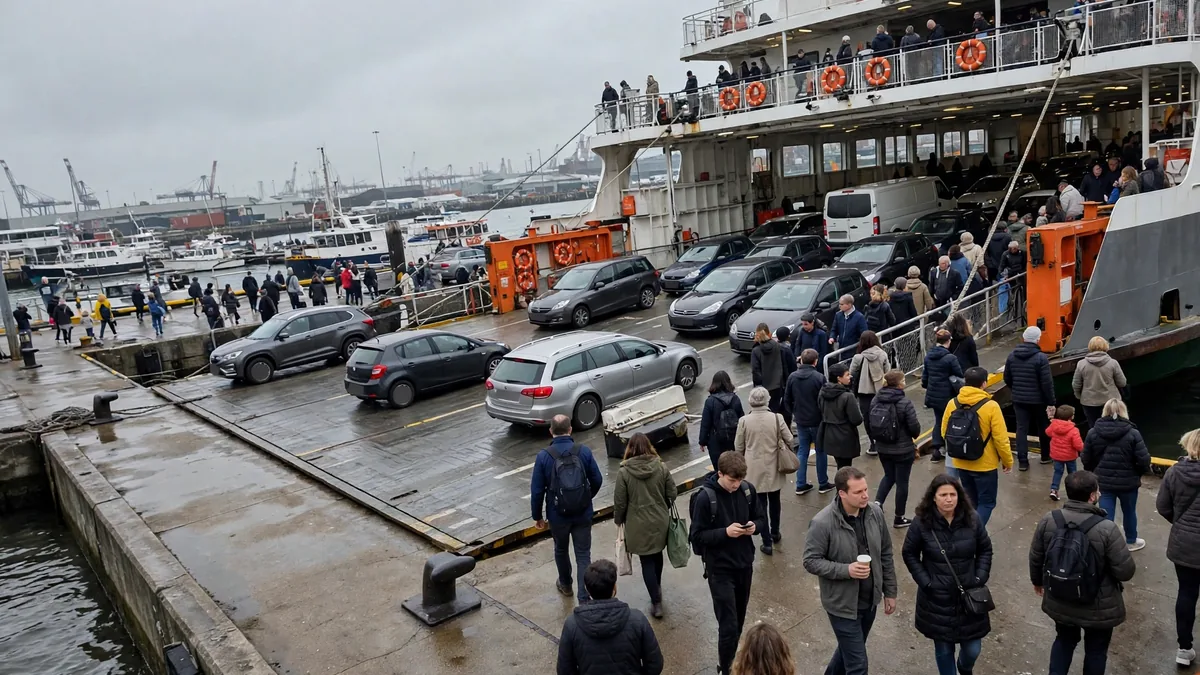
A ferry crossing is a crowd, not a cargo
Start with the passengers, because they are the whole point. A container ship’s cargo sits still. A ferry’s passengers do not. They move around the deck, they lean on rails, they let go of children’s hands, they slip on wet steel, they have heart attacks, they faint, they panic. On a crewed ferry, someone sees these things happen and acts in seconds. A deckhand reaches the person who has fallen before the announcement finishes. A crew member spots the child climbing the rail and stops it happening. That kind of noticing is not a sensor reading. It is a human being paying attention to other human beings, and no array of cameras and algorithms does it as well.
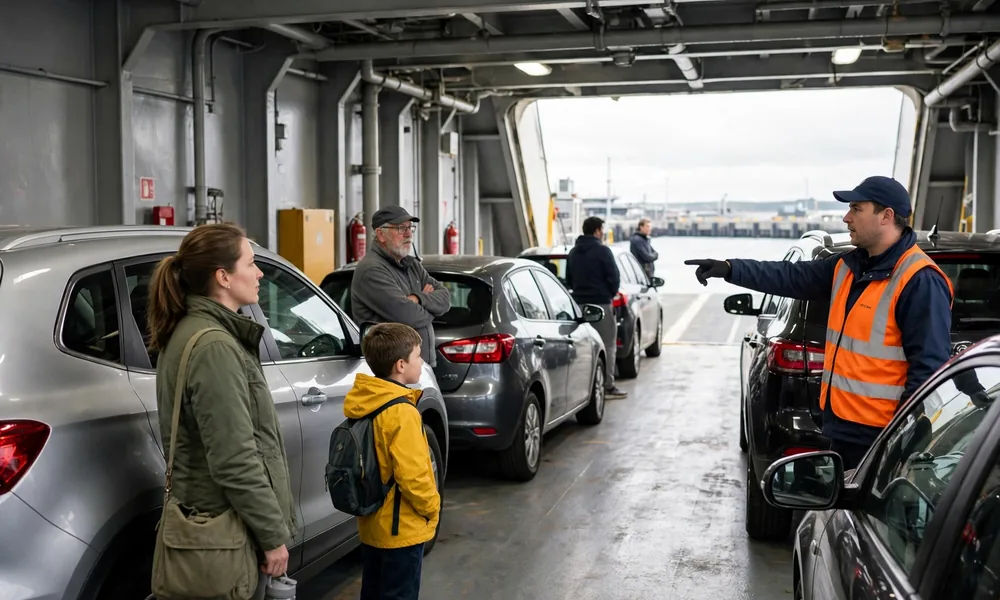
Then there is boarding, which is the most dangerous part of any ferry crossing and the part autonomy handles worst. Vehicles and foot passengers mix in a tight space, in bad weather, under time pressure, with drivers who are tired, lost or simply careless. The crew direct the traffic, spot the car that has stopped in the wrong lane, hold back the pedestrian walking behind a reversing lorry, and keep the whole dance moving. A ferry that loads itself is a fantasy: what actually happens is a queue of confused drivers and a machine that cannot wave its arms, shout, or step in front of a moving vehicle to stop it. The technology that explains how an autonomous ferry works is impressive on the open water. In the loading bay, at 7 a.m. in the rain, it is out of its depth.
Harbours are the hard part
Defenders of autonomy always show the same picture: a vessel alone on an empty sea, steering a straight line. But a ferry almost never sails on an empty sea. It spends its life in harbours, and harbours are the hardest waters in the world to navigate. They are crowded with small boats that do not follow the rules, with fishing vessels, yachts, tugs, pilot boats, kayaks and swimmers, in currents that swirl around piers and in wind that gusts between buildings. The traffic does not behave like traffic on a road. It behaves like a crowd, and the only way to move through a crowd safely is to read intentions: the fishing boat that is about to turn, the yacht that has not seen you, the kayaker who has no idea you are there.
That reading is what a ferry captain does all day. It is built on local knowledge — this harbour’s tides, that pier’s eddies, the way the wind funnels down this particular channel — and on a lifetime of judging what other vessels will do next. Autonomous systems are getting better at detecting objects, but detecting is not understanding, and understanding is what a harbour demands. The case against autonomous ships generally, which the case against autonomous ships sets out, applies here with interest, because ferries operate in exactly the waters where autonomy is weakest: short, crowded, unpredictable, and full of small vessels that do not broadcast their position.
When something goes wrong, people need people
The deepest problem is not technical at all. It is about what happens in the minutes after something goes wrong, and on a ferry those minutes are always about people. A passenger collapses: someone needs to do CPR, and to do it now, not when a remote operator has assessed the camera feed. A vehicle catches fire: someone needs to fight it, and to decide in seconds whether to evacuate. A ferry grounds or collides: someone needs to organise an evacuation of hundreds of frightened people, in the dark, in the rain, into life rafts or onto a pier, keeping order when every instinct is screaming to run.
None of that can be done remotely. A shore control centre can watch, and it can advise, but it cannot be there. The delay between a sensor detecting a problem and a human on shore understanding it, deciding what to do, and acting through the ship’s systems is measured in minutes, and on a ferry, minutes are lives. A crew is already there, already moving, already deciding. That is not a inefficiency to be engineered away. It is the safety system, and it is the only one that has ever actually worked.

The economics do not add up either
The economic case is weaker than it looks, too. Crew costs are a real expense, but on a ferry they are a small share of the total. Fuel, maintenance, port fees, insurance and capital costs dominate, and none of them shrink when the crew goes home. What grows instead is a new set of costs: the shore control centre and its staff, the satellite links and their redundancy, the sensors and their maintenance, the software and its updates, the cybersecurity and its constant vigilance. An autonomous ferry does not remove the human cost. It moves it ashore, adds a technology bill on top, and leaves the vessel itself more expensive to build and harder to insure.
None of this means autonomy has no place on the water. It has a real one, as assistance: systems that watch for hazards the crew might miss, that hold a course in open water, that dock in calm conditions while the crew supervise. The electric ferry, which the case for electric ferries over diesel argues for, shows what progress looks like when it serves the crew and the passengers rather than replacing them. But assistance is not autonomy, and a ferry with a crew and good tools is a better vessel than a ferry with good tools and no crew.
The verdict
Ferries exist to carry people safely across water they could not cross alone, several times a day, in all weathers, through the busiest harbours in the world. That job is human work: reading a crowd, judging a harbour, calming a frightened passenger, acting in the first seconds of an emergency. The technology to remove the crew is arriving before the case for removing them has been made, and the case, examined honestly, does not hold. It saves little money, it creates new risks, and it takes away the one safety system that has never failed: a trained crew, on board, paying attention. Keep the crew. Give them better tools. But do not send the ferry out alone.


