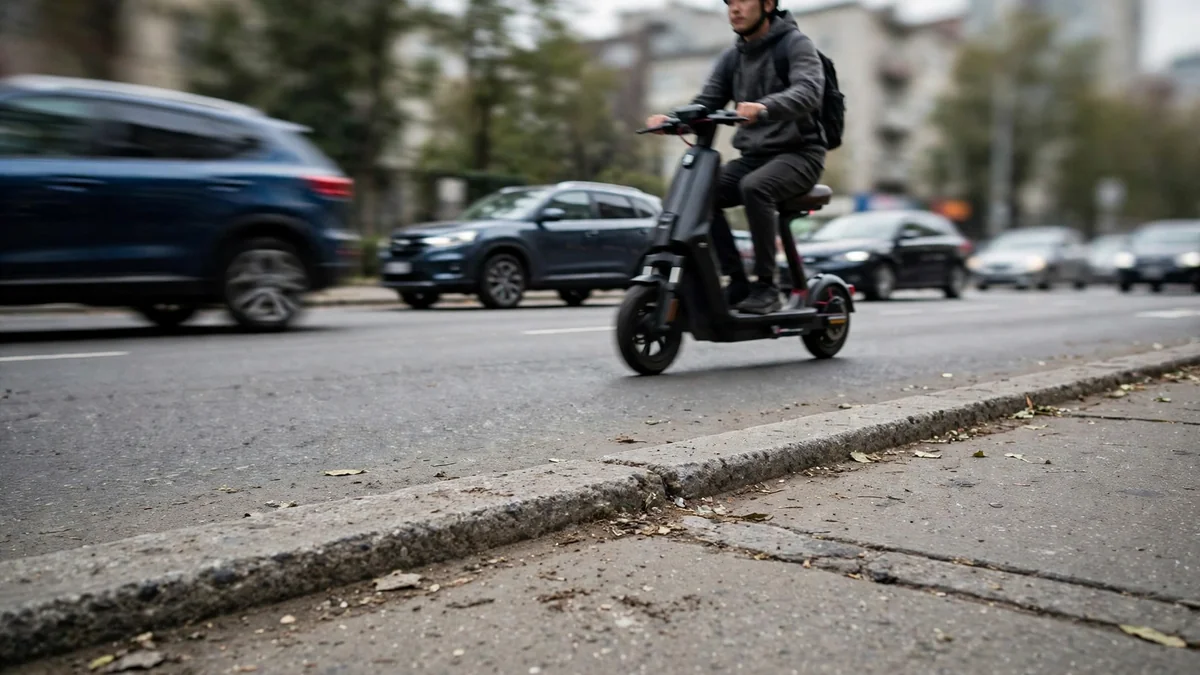
There is a machine appearing on city streets that looks like a scooter and behaves like a motorcycle, and the gap between those two descriptions is where the trouble lives. It has two small wheels, a standing deck, handlebars and no licence plate. It also has two motors, 3,500 watts or more of peak power, a top speed past 60 kilometres an hour, and a rider standing upright with no protection, no training and no insurance. The overpowered electric scooter is the fastest-growing road-safety problem nobody is talking about honestly, and the honest position is this: scooters above a modest power limit do not belong on public roads in their current form, and the industry selling them knows it.
The scooter was a good idea in its original form. A small, light, 250-watt machine limited to 25 kilometres an hour is a bicycle with a motor: quiet, clean, easy to park, perfect for the last mile of a commute. It fits the bike lane, it fits the rider’s skill, and it fits the physics of a standing rider on ten-inch wheels. Then the power race began. Manufacturers discovered that watts sell, and the market went from 250 to 500 to 1,000 to 2,000, and now to machines advertised at 3,500, 5,000 and even 8,000 watts — scooters that accelerate faster than most cars, climb any hill, and reach speeds that would have required a motorcycle licence and a helmet and a registration plate if the machine had a seat.
The numbers are not a grey area
The regulations, for all their patchiness, draw a clear line. In the European Union, the standard for a road-legal scooter is 250 watts and 20 to 25 kilometres an hour; anything above that is classed as a motor vehicle, requiring registration, insurance, a helmet and type approval. Germany bans high-power scooters outright on public roads unless registered. The Netherlands allows 250 watts only, with no exceptions even with registration. The United Kingdom treats anything above 500 watts as a motorcycle, with a licence, an MOT and insurance mandatory. In the United States the rules vary by state, but the pattern is the same: California bars scooters over 2,000 watts from bike paths and sidewalks, and most states cap road-legal scooter speeds around 25 kilometres an hour.
The machines on sale ignore all of this. A scooter advertised as 3,500 watts is typically quoting peak power — the short burst it can sustain for seconds — while its continuous output is closer to 1,200 to 1,800 watts. Even that is five to seven times the European legal limit. And the speed follows the power: these machines comfortably exceed 50 or 60 kilometres an hour, some far more. At that speed a standing rider on small wheels, with a braking distance far longer than a car’s and no crumple zone at all, is one pothole, one car door or one pedestrian stepping off a kerb away from a serious injury. The physics do not care that the machine is marketed as a scooter.
Small wheels, no protection, no training
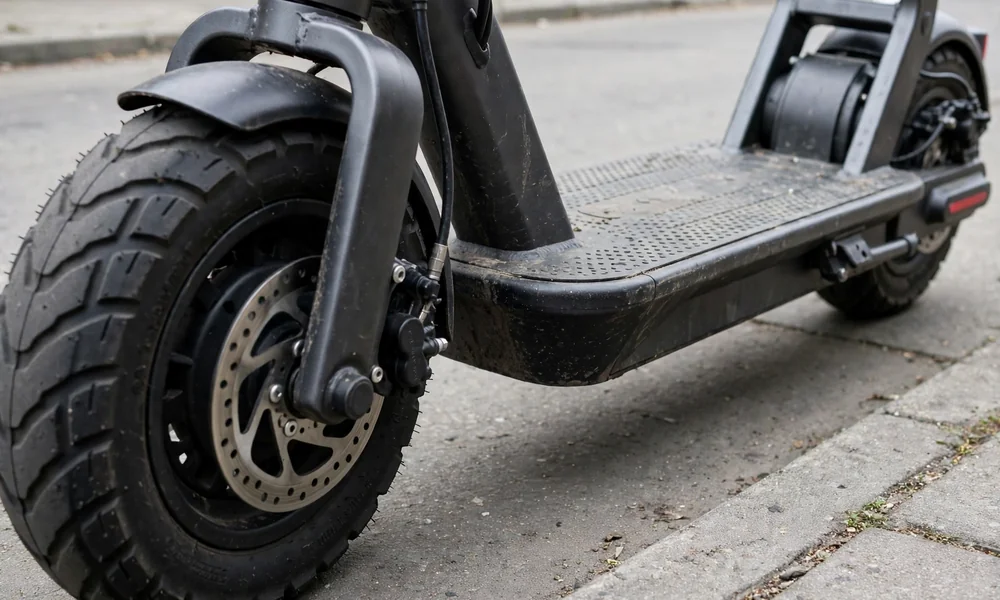
The mismatch is the heart of the case. A motorcycle rider at 60 kilometres an hour has a helmet, gloves, a jacket, a larger wheel that rolls over road imperfections, a proper braking system with real stopping power, and — in most countries — a licence that required training and a test. A scooter rider at the same speed has a pair of trainers, a T-shirt, ten-inch wheels that drop into every pothole, and a braking system designed for a machine that was supposed to go half as fast. The scooter’s tiny wheels are its greatest weakness: they transmit every bump directly to the deck, they catch on cracks and tram tracks, and they give the rider almost no margin when something goes wrong. At 25 kilometres an hour, a wobble is recoverable. At 60, it is a crash.
The counterargument deserves its due, because it is not frivolous. Power is not only about speed; it is also about usefulness. A 250-watt scooter struggles with a heavy rider, a steep hill or a rough road, and the people who suffer most from a strict 250-watt cap are heavier riders and those in hilly cities, for whom a modestly more powerful machine is the difference between a usable commute and a useless one. That is a real equity problem, and the answer is not to pretend it does not exist. But the answer is also not to hand a 100-kilogram rider a 5,000-watt machine with no licence. The answer is a sensible middle: enough power to climb a hill and carry a heavy rider — perhaps 500 to 750 watts, the range many American states already allow — with a hard speed limit, a helmet, and registration for anything beyond it. The line should be drawn by capability and use, not by whatever number sells best this year.
The fix is boring, and that is the point
Some of this is already happening. Cities are impounding unregistered high-power scooters. Insurers are refusing claims involving them. Courts are treating them as motor vehicles in accident cases, with the uninsured rider personally liable. The direction is clear, and the manufacturers who keep pushing the wattage higher are building a liability problem for themselves as well as a safety problem for everyone else. The scooter industry had a genuinely good product — the light, quiet, 250-watt commuter — and it is risking that product’s reputation by chasing the power race instead.
The sensible scooter still exists, and it is worth defending. How an electric scooter motor works shows how much clever engineering goes into even a modest machine, and how an electric scooter frame is made shows the care that goes into a deck and a steering column that have to be light and strong at the same time. Those machines are good. They are also the machines that a sensible power limit protects, because a scooter that respects its limits is a scooter that cities will keep welcoming, instead of banning.

The overpowered scooter is a motorcycle in disguise, and the disguise is the danger. It lets a machine with motorcycle performance travel without a motorcycle’s licence, training, helmet, registration or insurance, and it puts the consequences on the rider, the pedestrian and the hospital. Nobody needs a standing scooter that does 60 kilometres an hour. The commuter needs a machine that climbs a hill, carries a heavy rider and stops safely. Everything beyond that is a power race with no winner — only faster crashes, harder bans, and a good idea ruined by its own excess. Cap the power, enforce the limit, and keep the scooter what it was meant to be: small, light, quiet and welcome. That is the case against the overpowered electric scooter, and the streets will be safer for it.
The wider electric two-wheeler world is already drawing the same lines: the best electric motorcycles for 2027 shows what a fast electric two-wheeler looks like when it is built, licensed and insured as one. The powerful scooter should either become that — a real motorcycle, with all the rules that come with it — or stay a scooter, with all the limits that come with that. It cannot be both, and the pretence that it can is what is getting people hurt.


