Walk down any superyacht dock and you will see the same strange sight: a tender the size of a small car, hanging from a crane, waiting to be lowered into the water so it can carry four people fifty metres to the beach. It has more horsepower than most family cars, a fuel tank, a centre console, and a price tag that could buy a house. The case for smaller electric yacht tenders is simple: a tender is a shuttle, not a status symbol, and a small, light, battery-powered boat does that job better, cheaper, and with far less fuss than the big petrol monsters that currently fill the garages.
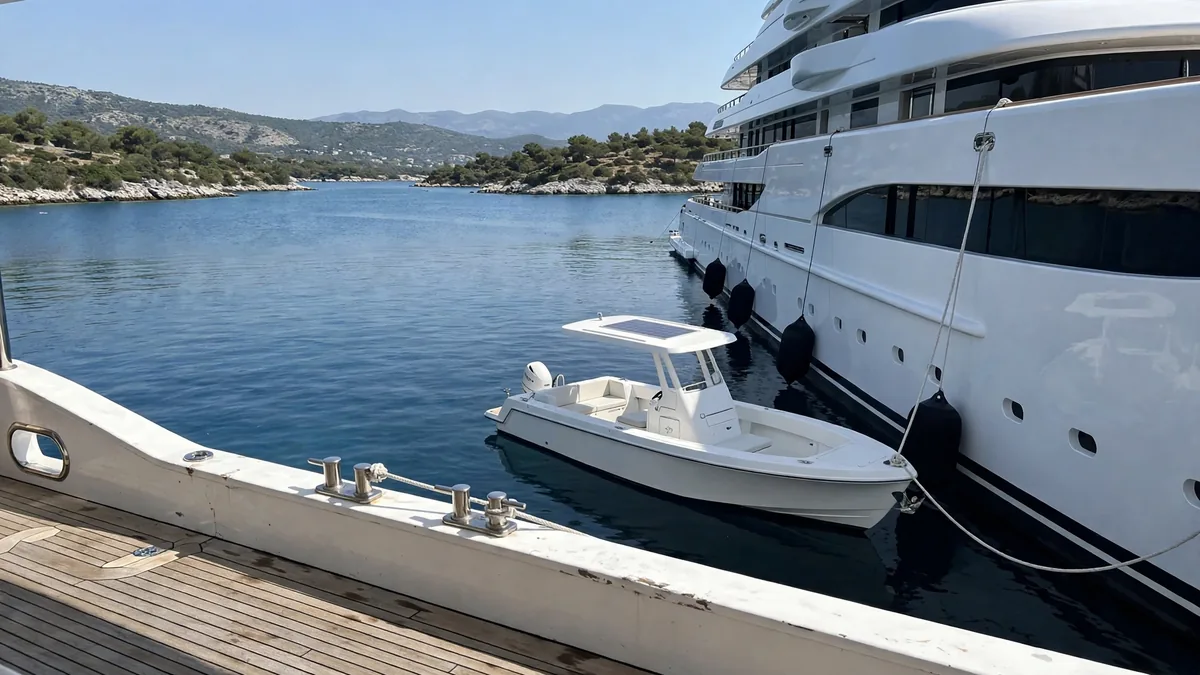
A tender is a shuttle, not a second yacht
A tender exists to do one thing well: move people and bags between the yacht and the shore, the dock, or the beach. Most of those trips are short, often under a kilometre, in calm water, at low speed, with a handful of passengers. Nothing about that job needs a heavy hull, a big outboard, or a top speed of forty knots. Yet the tender market has drifted steadily upward, with boats growing longer, heavier, and more powerful every year, as if the tender were competing with the yacht itself. The result is a machine that is harder to launch, harder to stow, harder to maintain, and far more expensive than the job requires.
A smaller electric tender strips the job back to what it actually is. A hull of three to four metres, a modest electric outboard or inboard pod, and a battery sized for a day of short hops is enough for the overwhelming majority of tender work.
Weight is the enemy of everything on a yacht
Every kilogram on a yacht matters, and the tender is one of the heaviest single items a yacht carries. A large petrol tender with its engine, fuel, and equipment can weigh well over a tonne, and that weight has to be lifted by a crane, carried in a garage or on deck, and accounted for in the yacht’s stability calculations. A smaller electric tender, by contrast, can weigh half as much or less. The battery adds mass, but the electric motor is far lighter than a petrol outboard of the same power, there is no fuel tank to fill, and the hull itself can be smaller and simpler.
That weight saving ripples through the whole boat. A lighter tender needs a smaller crane, which means less structure, less maintenance, and less deck space given over to lifting gear. The tender garage itself can be smaller, freeing space for storage, a gym, or a beach club. Weight is not an abstract engineering number here; it is the difference between a smooth operation and a daily struggle.
Electric power fits the tender’s real duty cycle
The classic objection to electric boats is range, and for a long-distance cruiser that objection has real force. For a tender, it barely applies. A tender’s day is a series of short runs with long pauses in between, which is exactly the duty cycle a battery handles best. The boat runs for a few minutes, waits at the dock or the beach, then runs again. Between trips it can sit on its charger, plugged into the yacht’s own power, topping up while nobody is using it. There is no need for a huge battery, because the boat never goes far from its charger.
That pattern also makes electric propulsion cheaper to run than petrol in this role. A small electric motor has one moving part, no oil changes, no spark plugs, no fuel filters, and no winterisation ritual. Charging from the yacht’s generators or shore power is simpler, cleaner, and quieter than refuelling, and the maintenance list shrinks to checking the battery, the propeller, and the hull.
Smaller means easier to stow, launch, and use
Ask any yacht crew what they dread about the tender, and the answer is rarely the driving. It is the launching and the recovery: the crane lift in a swell, the squeeze into a tight garage, the fenders, the straps, the chocks. A big tender turns that into a two-person job with a checklist and a held breath. A smaller tender turns it into a routine. It fits in a smaller garage, it can sometimes be carried on a compact davit rather than a heavy crane, and it can be launched and recovered in conditions that would keep a big tender on deck.
That ease of use changes how often the tender actually gets used. When launching is quick, the tender becomes what it should be: a casual, frequent shuttle that guests hop into without a plan. A tender that is used ten times a day is doing its job; a tender that is used twice a day because it is a chore to launch is not. The best electric yacht tenders are the ones that make the shuttle invisible, and smallness is what makes that possible.

The cost argument is not even close
A large petrol tender is a second boat to buy, insure, fuel, and maintain. The purchase price alone can run into six figures, and the running costs stack up: fuel, servicing, parts, and the crew time spent on maintenance. A smaller electric tender costs far less to buy, and its running costs are a fraction of a petrol boat’s. The battery is the expensive part, and even there the tender’s small size works in its favour, because a modest battery pack is enough for its short duty cycle.
What the critics get wrong
The usual criticism of small electric tenders is that they cannot do everything a big tender can: they cannot carry twelve people, they cannot tow a water-skier at speed, and they cannot punch through rough water at forty knots. That is true, and it misses the point. A tender does not need to do everything. Yachts that need a big chase boat can carry one, and many already do. But the everyday shuttle, the boat that runs guests to the beach and back, does not need to be a chase boat. Designing it as one is like buying a lorry to fetch the milk.
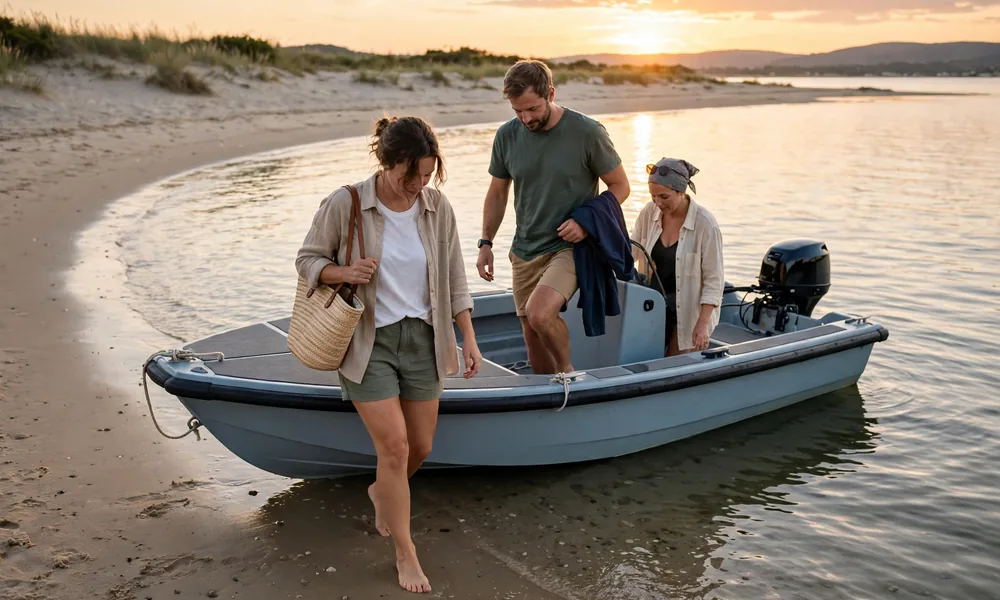
There is also a comfort argument that runs the other way. A small electric tender is quieter, smoother, and free of exhaust smell, which matters more to guests than top speed. A low, stable, quiet electric tender with a simple boarding step beats a fast, loud, petrol-powered one on every measure that guests actually notice.
The verdict: build the tender for the trip it makes
The yacht world has spent years making tenders bigger, faster, and more expensive, and the result is a fleet of impressive boats that are harder to use than they should be. The case for smaller electric yacht tenders is that the tender’s job is small, and the boat should be too. Lighter, cheaper, quieter, easier to stow and launch, and perfectly matched to the short hops it actually makes, a small electric tender is not a compromise. It is the right tool for the job, and the sooner the industry admits it, the better the tender will get.


