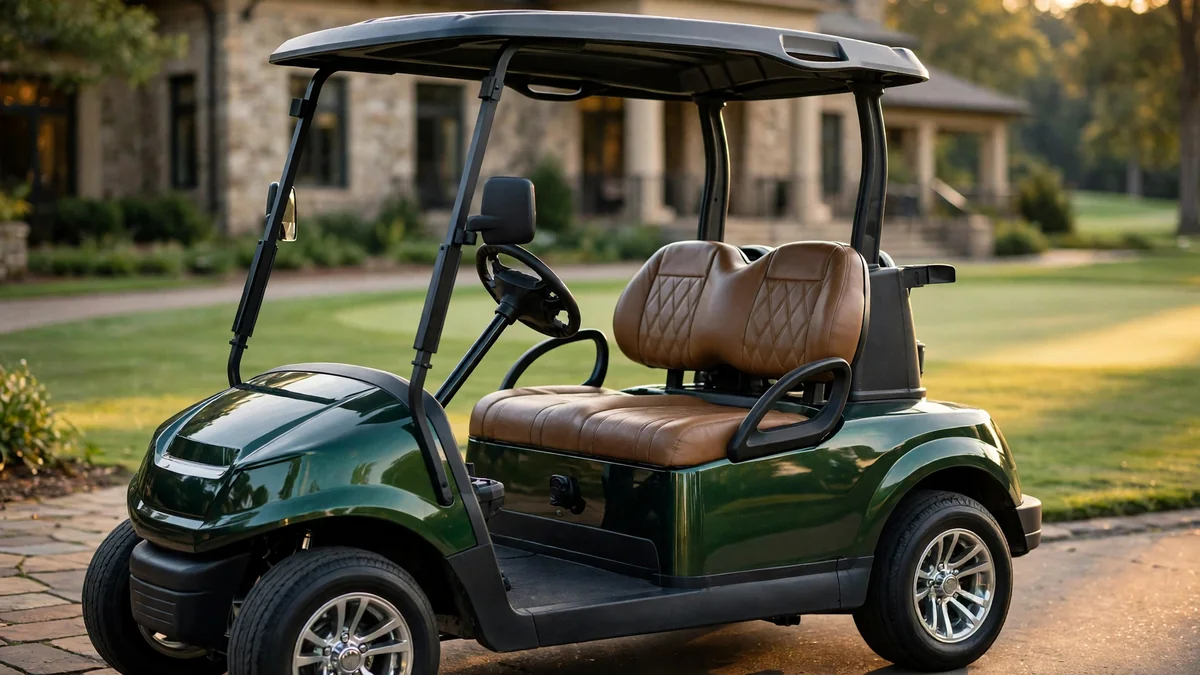
The golf cart waits outside the clubhouse in the late afternoon, and at first glance it looks like every other cart on the course. Then a member walks past it, stops, and walks back. A caddie mentions the price, and the member laughs out loud.
The cart costs more than the member’s car. Not a little more. Several times more. How can it possibly cost that much? The answer is that the cart outside the clubhouse is not a golf cart at all, at least not in the sense most people mean. It is a luxury vehicle that happens to be shaped like one.
The luxury golf cart is a small world of its own, and it has grown far beyond the golf course. Wealthy owners use them on private estates, in gated communities, on islands where cars are not allowed, and at resorts where the cart is the main way of getting around. They are bought by people who already own luxury cars and yachts, and who expect the same standard of finish in everything they own. The price is not a mistake. It is the point.
Why a Luxury Golf Cart Costs So Much
The craft: built like a car, in tiny numbers
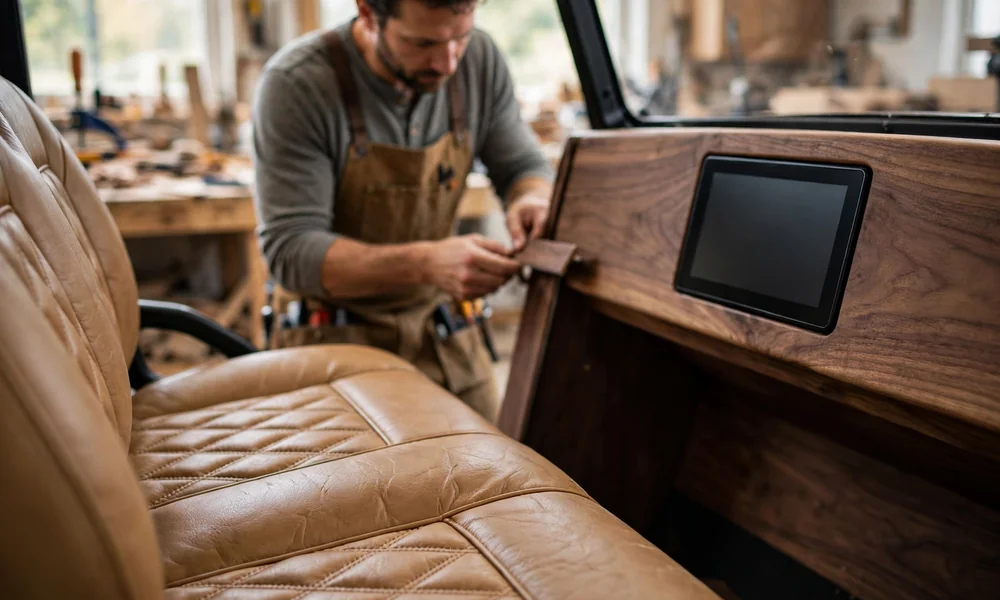
A standard golf cart is built on a production line, in the tens of thousands, from stamped steel and moulded plastic. A luxury golf cart is built in the hundreds, often to order, in a workshop where the body panels are shaped and finished by hand. The paint alone tells the story. A luxury cart receives the same multi-coat paint process as a prestige car: primer, colour coats, clear coats, and hours of polishing between stages, until the finish is deep enough to see a reflection in. The bodywork is often aluminium or carbon fibre rather than plastic, shaped to a design that belongs to that builder alone, and the panels fit with gaps measured in millimetres. A cart that looks simple from the outside can take weeks to build, and the labour is the first reason for the price.
The materials: leather, wood, and metal that belong on a yacht
The materials in a luxury golf cart are chosen from the same catalogues as the materials in a luxury car or a yacht. The seats are full-grain leather, stitched with contrast thread, over foam shaped to support a passenger for hours. The dashboard and trim are real wood, often walnut or teak, finished by hand and sealed against sun and rain. The floor is teak or woven matting, the fittings are polished stainless steel or brass, and the canopy frame is powder-coated aluminium rather than painted steel. The battery is the most expensive single component, and the reasons are familiar from larger electric vehicles. The way a battery system earns its price is set out in how an electric scooter battery works, and the same chemistry and engineering apply here, on a larger scale.
The equipment: a small car, without the car
Open the specification list of a luxury golf cart and it reads like a small car. A touchscreen display with navigation and a reversing camera. A sound system with speakers hidden in the canopy. LED headlights and taillights, indicators, and a horn. A heater for cold mornings, a fan or air conditioning for hot ones, and a windscreen that folds or slides. Under the rear seat sits a refrigerator for cold drinks, and beside the driver a lockable compartment for valuables. None of this equipment is exotic on its own. What is expensive is fitting all of it, neatly and reliably, into a vehicle the size of a garden shed, and making it survive rain, dust, and daily use on rough paths.
The rarity: made to order, in the hundreds
A luxury golf cart builder may produce a few hundred carts a year, across all models, and many are built to a single customer’s specification. The buyer chooses the paint colour, the leather, the wood, the wheels, and the equipment, and the cart is built for them alone. That is the opposite of mass production, and the economics are the opposite too. There is no volume discount on parts, no automated line to spread the cost of the tooling, and no dealer network holding stock. The market is small and wealthy, and the builders know it. The same logic drives the price of other small luxury electric vehicles, and the specification sheet of a much faster one is decoded in luxury electric SUV specs decoded, where the numbers are bigger but the principle is the same.
The life it is bought for: estates, islands, and resorts
Part of the price is the life the cart is bought for. On a private island where cars are banned, the golf cart is the family car, the school run, and the shopping trip, all in one. On a large estate, it is how the owner moves between the house, the stables, and the lake. That is why the finish is automotive, the materials are marine, and the price is closer to a car than to a cart. The electric bicycle world shows the same pattern at a smaller scale, and why a luxury electric bicycle is so expensive follows a machine that costs as much as a car for exactly the same reasons: hand building, rare materials, and tiny production runs.
What Does a Luxury Golf Cart Cost?
A luxury golf cart is estimated to cost roughly $20,000 to $60,000, depending on the builder, the materials, and the equipment. A well-specified cart from an established luxury builder is estimated at $20,000 to $35,000, while a fully custom machine, with a carbon body, a large lithium battery, air conditioning, and a bespoke interior, is estimated at $40,000 to $60,000 or beyond. The purchase price is only part of the story, because the battery is estimated to last eight to ten years with proper care, the leather and wood need regular conditioning, and servicing by a specialist is estimated at several hundred dollars a year.
A Rare Fact
Some luxury golf carts are built with a street-legal package that lets them drive on public roads at low speed, with seatbelts, mirrors, indicators, a number plate, and a vehicle identification number, just like a car. The owner registers the cart, insures it, and drives it to the shops, the beach, or the neighbours, at a top speed of about 40 kilometres per hour. In a few island communities, these carts have replaced cars entirely, and the traffic jam at the ferry terminal is a line of gleaming, leather-trimmed carts waiting to board.

A luxury golf cart costs so much because it is not really a golf cart. It is a small luxury car, built by hand, in tiny numbers, from materials chosen without regard to cost, for buyers who expect everything they own to meet the same standard. The clubs in the back are almost beside the point.


