Electric yachts used to mean a small harbour launch with a trolling motor. That era is over. The most powerful electric yachts of 2027 carry batteries bigger than a house, motors totalling hundreds of kilowatts, and solar arrays that cover the roof like a second deck. The biggest, Sunreef’s 100 Power Eco, runs four 180 kW motors off a 990 kWh battery.
This ranking orders ten electric yachts by installed electric motor power, with battery capacity breaking the ties. Where a builder does not publish a motor figure, the yacht is placed on its battery and range instead, and that is noted. Prices are approximate, because most of these yachts are built to order.
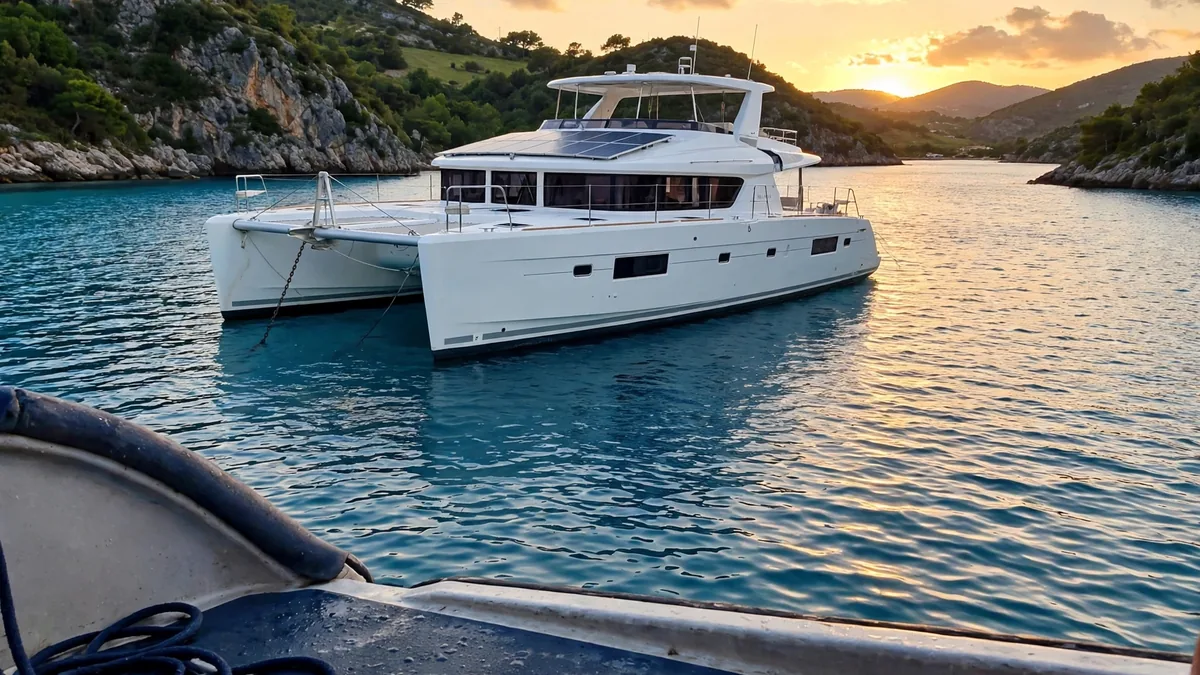
1. Sunreef 100 Power Eco — 720 kW
The most powerful electric yacht you can buy in 2027 is Sunreef’s 100 Power Eco, shown here as Double Happiness, a 28.63-metre catamaran launched in 2025. Four electric motors of 180 kW each give 720 kW of installed power, fed by a 990 kWh battery bank, with solar panels built into the superstructure to top it up. Nothing else on this list matches its combination of size, power and battery. It is the flagship of electric yachting, and it tops the ranking by a clear margin.
2. Sunreef 80 Power Eco — 720 kW
Second place goes to the smaller sister ship, the 80 Sunreef Power Eco, which matches the 100 on installed power: two 360 kW motors, again totalling 720 kW, with the same 990 kWh battery. The difference is the solar array, rated at up to 36 kWp across roughly 200 square metres of panels integrated into the composite exterior, which the yard says gives effectively unlimited range at low speeds. On power alone it ties for first; it sits second only because the 100 is the bigger boat.
3. Silent 55 E-Power — 500 kW
The Silent 55 takes third with the most powerful configuration in its range, the E-Power version, which fits two 250 kW motors for 500 kW in total. That pushes the 16.7-metre solar catamaran to a top speed of 20 knots, with a cruising speed of 12 to 15 knots, and the standard Cruiser version makes do with two 30 kW motors. It carries a 10 kWp solar array, a 25-year panel warranty and a 10-year battery warranty.
4. Silent 80 — 400 kW
Silent’s flagship, the Silent 80, is a 24.4-metre catamaran built from the outset as a fully integrated solar-electric yacht, and it won Best Electric Catamaran at Cannes in 2025. Two 200 kW motors give 400 kW of continuous power, fed by a lithium battery of 354 kWh as standard, expandable to 708 kWh, and a 22.4 kWp rooftop solar array. The interior volume matches a much larger monohull, thanks to the 10.93-metre beam, and a digital monitoring system tracks every watt the panels produce.
5. Sunreef 60 Power Eco — 360 kW
The Sunreef 60 Power Eco pairs two 180 kW motors, 360 kW in total, with a battery bank of 250 to 320 kWh and up to 68.6 square metres of integrated solar panels. It is the most practical entry point to the range, small enough to handle with a family crew and large enough to live aboard. It sits fifth on power, but for many buyers it is the sweet spot of the whole list.
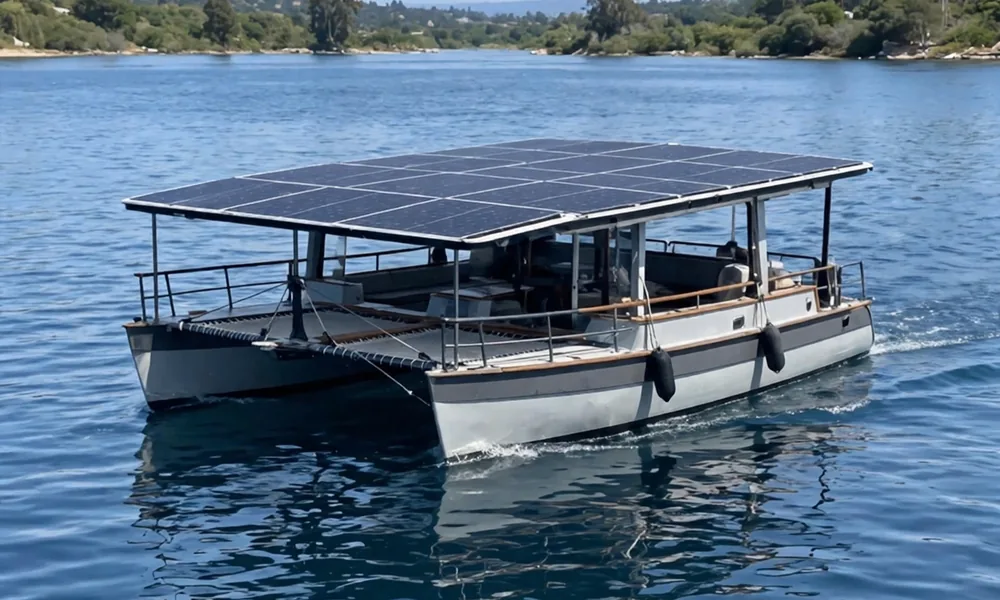
6. Sunreef 40M Explorer Eco — solar explorer
The 40M Sunreef Explorer Eco is the wildcard of this list. Sunreef does not publish a motor figure for it, so it ranks here on its energy system: a 50 kWp solar array, the largest on any yacht in this ranking, built into the hulls, superstructure, bimini and full-beam bow terrace. It is a 40-metre aluminium and composite explorer designed for transpacific passages to remote cruising grounds in complete silence, with no fumes and no vibration. It is less a yacht than a self-sufficient electric base camp, and its range is limited only by sunshine.
7. Savannah — the 1 MWh hybrid
Savannah is the outlier: an 83.5-metre Feadship superyacht, and the only hybrid on this list, with a 1 MWh battery, the largest battery of any yacht ranked here. The battery handles silent harbour manoeuvres and short electric runs, while diesel generators cover long passages. She is also the longest yacht on the list by a wide margin, and her hybrid system is a glimpse of how the biggest yachts will go electric: not in one leap, but by adding batteries until the diesel becomes the backup. The propulsion behind her is covered in our guide to the best electric boat propulsion systems.
8. Arc One — 200 kWh runabout
Arc One is the smallest boat on this list and the most surprising. The 24-foot runabout carries a 200 kWh battery, more than two Tesla Model Y packs, which gives it around 45 nautical miles of range and a top speed of 45 mph. The huge battery is the price of pushing a planing hull through water, which takes far more energy than rolling wheels on a road, and Arc’s answer is simply to fit the biggest pack that will fit. It is not the most powerful boat here, but it is the purest expression of the electric day boat idea.
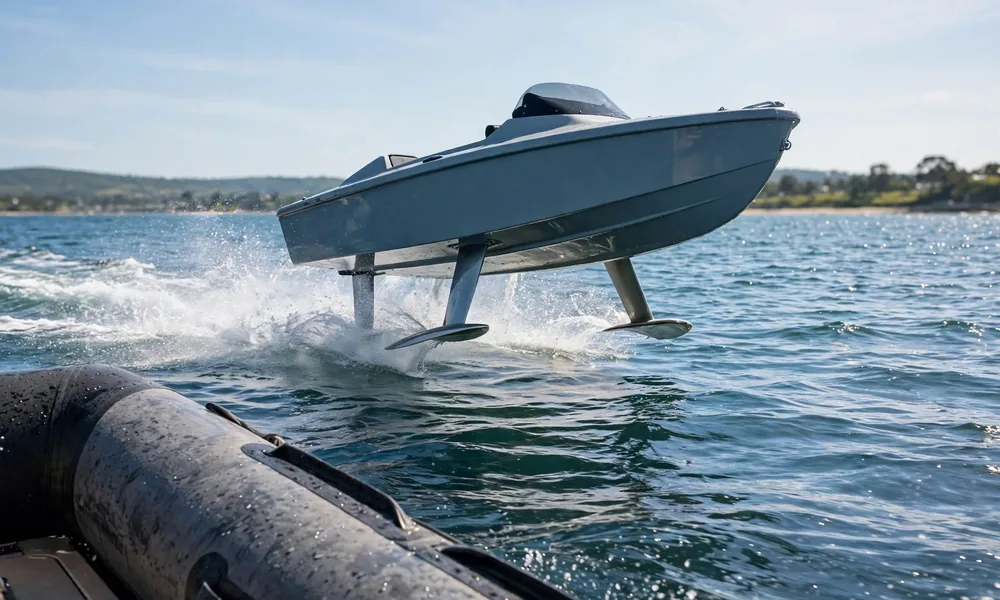
9. X Shore Eelex 8000 — 126 kWh day cruiser
The X Shore Eelex 8000 is a Swedish day cruiser with a 126 kWh battery, about 50 nautical miles of range at eco speed, and a top speed of 40 knots. It costs around $329,000, and it is a conventional planing hull, which is both its strength and its weakness: it looks and handles like a normal fast boat, but it needs nearly twice the battery of the foiling Candela below to go a similar distance. Keeping a boat like this charged is covered in our guide to how electric yacht charging works.
10. Candela C-8 — 75 kW, and the cleverest boat here
Last on power and first on efficiency, the Candela C-8 is the only foiling boat on this list. Its C-POD motor makes 75 kW continuous, and its 69 kWh Polestar battery gives 57 nautical miles of range at a 22-knot cruise, because the carbon-fibre hydrofoils lift the hull clear of the water and cut energy use by up to 80 percent. Top speed is 27 to 30 knots, and the boat charges from 10 to 80 percent in under 30 minutes on DC power. The C-8 proves the point this whole list makes: in electric yachting, the smartest engineering beats the biggest battery. The ferry-scale end of the same technology is ranked in our list of the best electric ferries.
The pattern across this list is clear. The biggest yachts win on battery size, the foiling boats win on efficiency, and the solar cats win on independence. One to watch beyond this top ten is the Navier N30, a foiling cruiser with a 90 kWh battery, around 75 nautical miles of eco range and a 35-knot top speed, which could climb this ranking as production grows.


