Ranking supercar brands is not like ranking cars. A car can be measured, but a brand is judged on history, engineering, racing success, desirability and the cars it builds today. This list ranks the ten greatest supercar brands by that combined measure, weighing what each company has achieved against what it is building now. It is an editorial ranking, so reasonable people will disagree about the order, and the reasons for each placing are given plainly.
One rule shaped the list. A brand earns its place by building supercars, not by building one famous car and disappearing. That is why the list favours companies with a sustained record, and why a brilliant one-off does not outrank decades of achievement. The brands below have all proved themselves over years, not months.
1. Ferrari — the benchmark
Ferrari sits at the top because no other brand combines racing success, road-car desirability and commercial power in the same way. Founded by Enzo Ferrari in 1947, the company has won more Formula 1 constructors’ championships than any rival, and its road cars, from the 250 GTO to the LaFerrari and the current hybrid flagships, define what a supercar is for most people. Ferrari’s waiting lists are legendary, its resale values are the strongest in the business, and its V12 engines are among the finest ever built, as our ranking of the best V12 engines ever built shows.
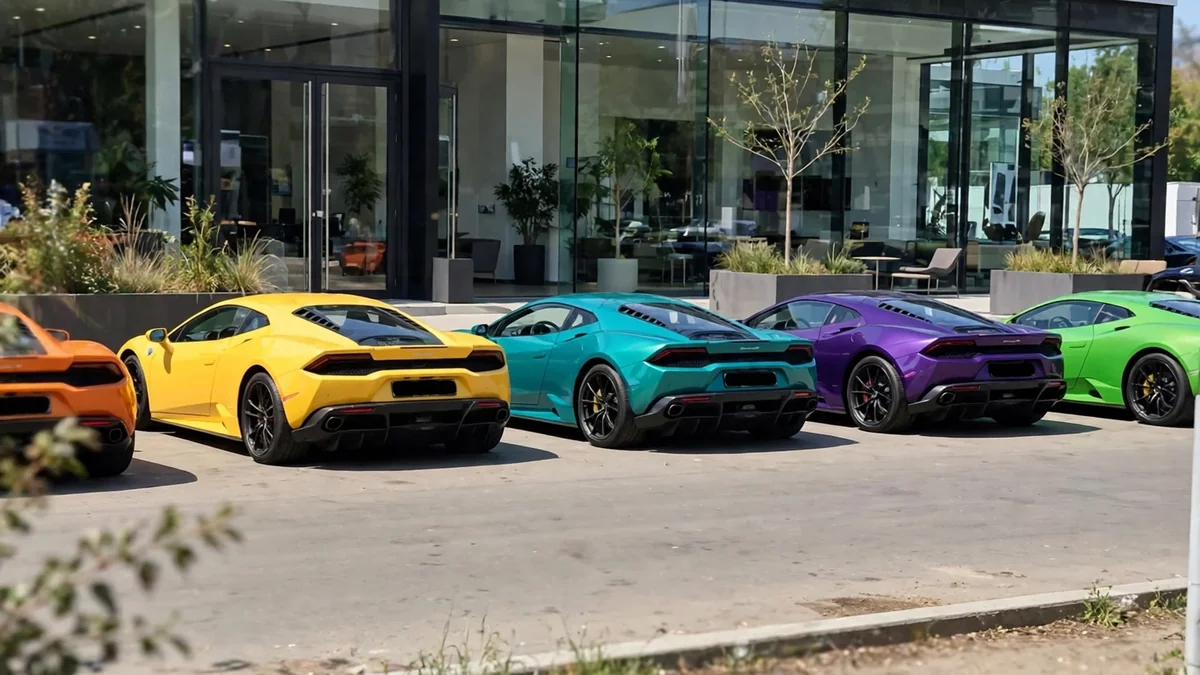
2. Lamborghini — the theatre
Lamborghini is Ferrari’s great rival, and it earns second place by being the opposite of Ferrari in almost every way. Where Ferrari is disciplined and racing-obsessed, Lamborghini is theatrical: scissor doors, outrageous styling and naturally aspirated V12 engines that sound like nothing else on the road. Founded in 1963 by Ferruccio Lamborghini, reportedly after a dispute with Enzo Ferrari, the company built the Miura, the Countach and the Aventador, cars that defined the supercar poster on a generation of bedroom walls.
3. McLaren — the engineers
McLaren is the youngest brand near the top of this list, and the most engineering-led. Born from Bruce McLaren’s Formula 1 team, the company built the F1 in the 1990s, a car that remains one of the greatest ever made, and has since built a full range of supercars around carbon-fibre monocoques and turbocharged V8 engines. McLaren’s cars are lighter and more precise than most rivals, and its racing pedigree is second only to Ferrari’s.
4. Bugatti — the excess
Bugatti occupies a category of its own: the pursuit of excess for its own sake. The modern company, revived under Volkswagen, built the Veyron and the Chiron, cars with quad-turbocharged W16 engines and top speeds that rewrote the record books. The Chiron Super Sport 300+ was the first production car to pass 300 mph, a feat recorded at 304.8 mph in 2019. Bugatti builds very few cars at very high prices, and each one is an engineering statement rather than a commercial product.
5. Koenigsegg — the innovators
Koenigsegg is a tiny Swedish company that has repeatedly embarrassed the giants, and it earns fifth place on innovation alone. Founded by Christian von Koenigsegg in 1994, the company invented the camless Freevalve engine, the direct-drive transmission and the dihedral synchro-helix door, and its cars hold production speed records, including the Agera RS at 277.9 mph. Koenigsegg builds only a handful of cars each year, each one effectively a prototype, and its engineering is years ahead of the industry.

6. Pagani — the artists
Pagani builds the most beautiful cars on this list, and the most handcrafted. Founded by Horacio Pagani in 1992, the company builds only a few dozen cars a year, each one assembled by hand in Modena with exposed carbon fibre, jewel-like details and Mercedes-AMG V12 engines. The Huayra and the Utopia are works of art that happen to be cars, and their owners treat them as such. A Pagani is not bought for speed alone, and that is the point.
7. Aston Martin — the grand tourers
Aston Martin is the oldest brand on this list in spirit, a maker of grand tourers since 1913, and its strength is elegance rather than outright speed. The DB series, the Vantage and the Valkyrie show the range: beautiful grand tourers at one end, a Formula 1-inspired hypercar at the other. The Valkyrie, with its Cosworth V12 revving to 11,000 rpm, is one of the most extreme road cars ever built, and it proves Aston Martin can still shock.
8. Porsche — the everyday supercar
Porsche is the odd one out on this list, because it builds sports cars for everyday use as well as supercars, and that breadth is both its strength and its weakness here. The 911 Turbo S and the GT models are supercar-fast, and the 918 Spyder was one of the great hybrid hypercars, but Porsche’s heart is in cars that can be driven daily, not in poster supercars. That makes it the most successful brand on this list commercially, and the least exclusive. It ranks eighth as a supercar brand, but first as a company, and that distinction matters.
9. Rimac — the electric future
Rimac is the future of this list, and it earns ninth place on achievement rather than promise. Founded by Mate Rimac in 2009, the Croatian company built the Nevera, an electric hypercar with four motors making a combined 1,914 horsepower, which recorded 258 mph in 2022, the fastest electric production car ever measured. Rimac now supplies electric technology to other makers, including Bugatti, which it partly owns. It has no long history and no racing programme, but it has already changed what a hypercar can be, and its influence will only grow.
10. Lotus — the lightweight legend
Lotus closes the list because its philosophy shaped every brand on it. Colin Chapman founded Lotus in 1948 on a simple idea: add lightness, and everything else follows. The Elise, the Exige and the Evija show the range, from a 725 kg sports car to a 2,000-horsepower electric hypercar, and Lotus’s engineering has influenced Formula 1 and supercar design for decades. The company has struggled commercially and changed hands repeatedly, which is why it sits tenth, but its ideas are everywhere. The fastest cars on this list, from the Chiron to the Nevera, all owe something to Chapman’s belief that weight is the enemy, and the full ranking of the quickest is in our list of the top 10 fastest production supercars. The aerodynamics that make those speeds possible are explained in how a hypercar aerodynamic body is made.
The Takeaway
Ferrari leads this ranking because it is the most complete supercar brand: racing success, road-car desirability, commercial power and a history nobody can match. But the list also shows how the supercar world is changing. Rimac proves that electric power belongs at the top, Koenigsegg proves that a tiny company can out-innovate giants, and Lotus proves that an idea can matter more than a balance sheet. The brands that survive the next decade will be the ones that keep their identity while embracing what comes next, and the ten names above are the ones to watch.


