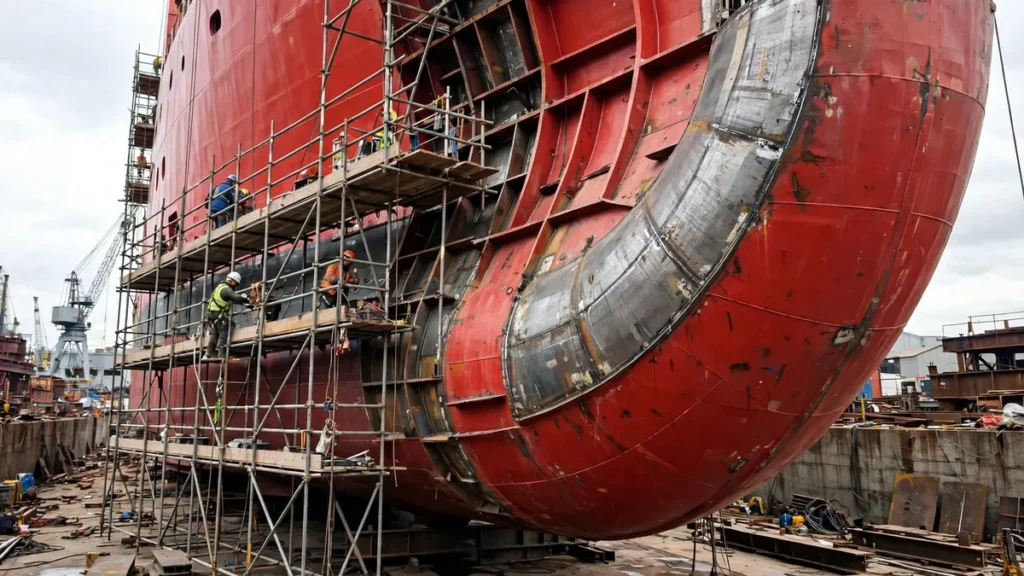
A luxury expedition yacht is a superyacht built to go where other superyachts cannot. It has the comfortable cabins, the dining saloon and the polished service of a large private yacht, but underneath it is a tough, long-range vessel with an ice-strengthened steel hull, huge fuel tanks, and the tenders, helicopters and landing craft needed to explore places with no marina, no harbour and often no chart. It is a yacht for owners who want to see Antarctica, the Northwest Passage or a remote Pacific atoll, and to do it in comfort.
The idea grew out of a simple frustration. Conventional superyachts are built for the Mediterranean and the Caribbean: warm water, short hops between marinas, and calm seas. Their owners wanted to go further, and the shipyards answered by borrowing from commercial expedition ships, icebreakers and offshore supply vessels, then fitting the result out to superyacht standards. The expedition yacht is that hybrid: a working ship’s capability with a private yacht’s comfort.
What makes it an expedition yacht
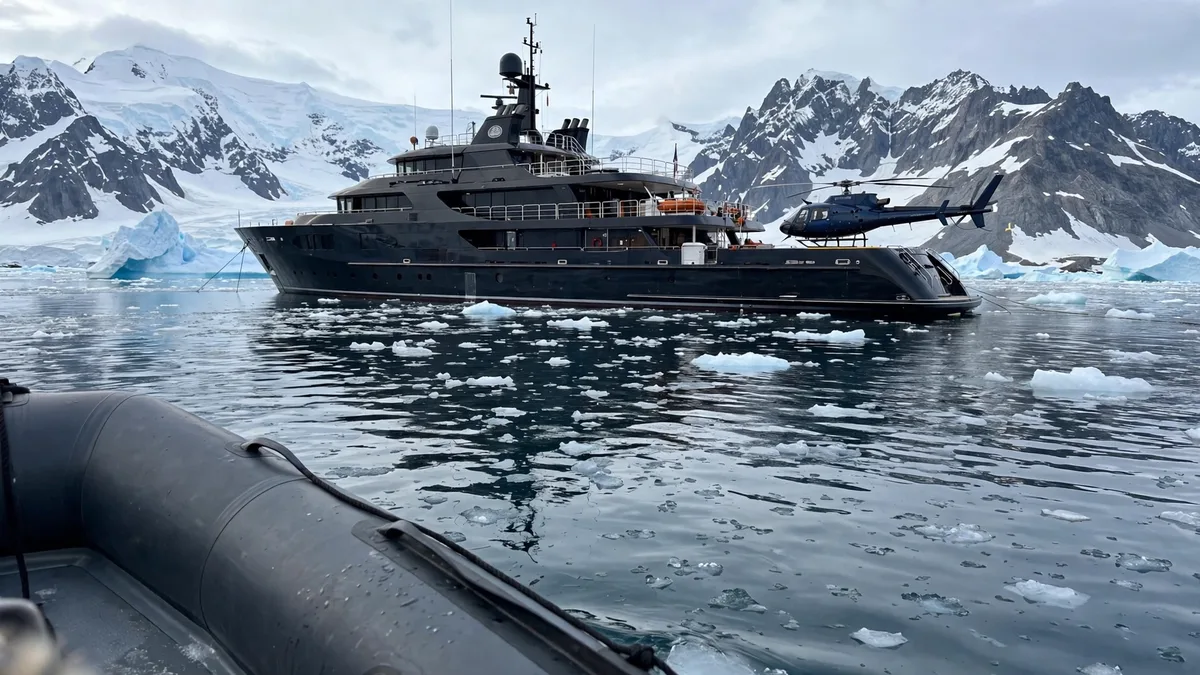
The hull is the starting point. Expedition yachts use a steel displacement hull, often with an ice class notation, which means the plating is thicker around the waterline, the frames are closer together, and the bow is shaped to ride up onto thin ice and break it with its weight. They are slower than a planing superyacht, cruising at 12 to 14 knots rather than 20, but they can take a beating in rough water and keep going when a lighter hull would have to turn back.
Range is the second defining feature. Fuel tanks sized for 8,000 to 10,000 nautical miles let the yacht cross oceans and operate for weeks away from a fuel dock. Water makers, waste treatment, freezers and spare parts are all sized the same way, so the yacht can support a dozen guests and a crew of twenty in a place where the nearest help is days away. Self-sufficiency is not a luxury on an expedition yacht. It is the whole point.
Stabilisers, positioning and staying put
Comfort at sea matters more on an expedition yacht than on a marina yacht, because the guests spend days in open ocean. Most expedition yachts carry large fin stabilisers that extend from the hull and counteract the roll, and many add a gyroscopic stabiliser that works at anchor as well. Together they keep the dining table level and the cabins quiet in conditions that would have a smaller yacht’s guests reaching for the seasickness tablets.
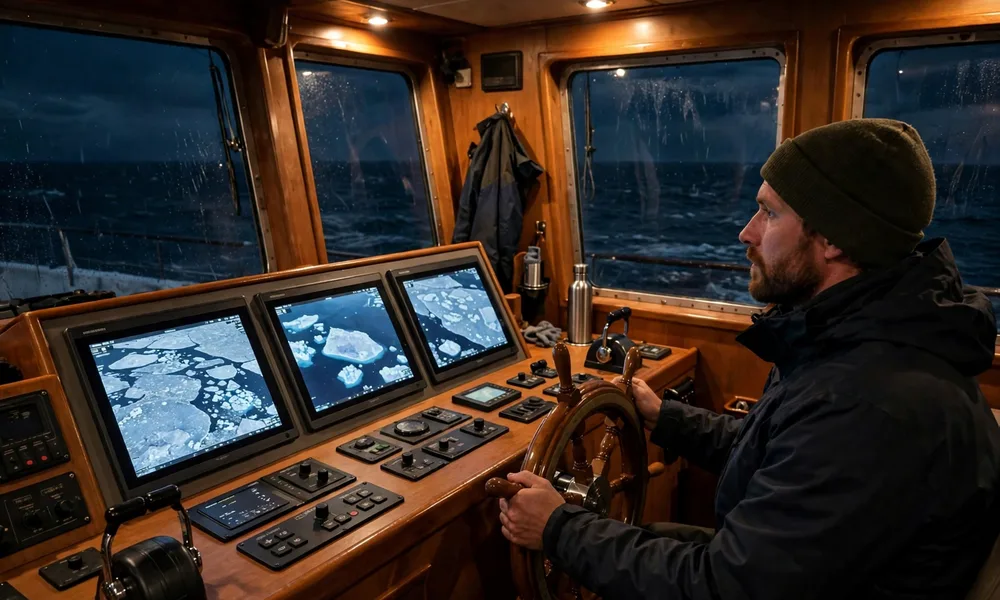
Dynamic positioning is another key system. It uses GPS, thrusters and the main propellers to hold the yacht in one spot without anchoring, which matters in places where the seabed is a coral reef, a marine reserve, or simply too deep to anchor. The yacht can hover over a dive site or a whale-watching spot for hours, moving only with the current. Expedition yacht specs explained covers the hull, the range and the systems that let these vessels operate far from any port.
The toys that make the expedition work
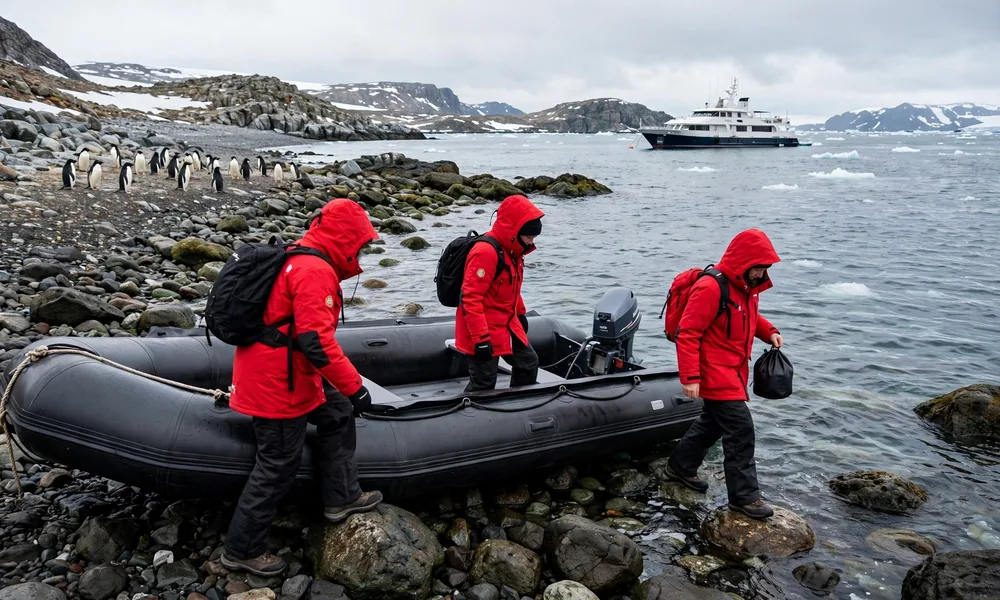
An expedition yacht’s tenders are working boats, not just shuttles to the beach. The typical inventory includes a large landing craft with a bow ramp that can put guests and equipment ashore on a beach with no jetty, a rigid inflatable for diving and wildlife watching, and sometimes a small submarine for looking at what lies below. The tenders are carried in a garage or on deck, launched by crane, and maintained by a crew that knows them as well as the yacht itself.
A helicopter is the signature piece. Many expedition yachts carry a helideck and a hangar, with a helicopter that can scout ahead, drop guests on a glacier, or fly supplies in from the nearest town. The helicopter needs a certified deck, fuel storage, a trained landing officer among the crew, and strict operating limits in wind and ice. It is expensive to run and maintain, but it turns a yacht that can reach a coastline into one that can reach the interior as well. How an icebreaker hull works explains the bow shape and the steelwork that let a ship push through ice, and the same principles, scaled down, sit under every expedition yacht that sails polar water.
Ice, weather and where they can go
Expedition yachts are graded by ice class, and the grade decides where they can sail. The lightest class handles first-year ice up to about 0.4 metres thick, which is enough for the Antarctic Peninsula in summer and the high Arctic in a good year. Heavier classes handle thicker ice and worse conditions, but they cost more, weigh more and sail more slowly. Owners choose the class for the voyages they plan, and most settle on the lightest class that covers their ambitions.
Life aboard: comfort in a wild place
Inside, an expedition yacht looks like any large superyacht. The difference is in the details. Cabins have more storage for expedition clothing, the mudroom by the tender garage is as carefully designed as the main saloon, and the observation lounge has heated windows and binoculars for watching whales. The spa, the cinema and the gym are all there, because after a day in a Zodiac in polar water, guests want warmth and comfort more than ever.
The crew is larger and more varied than on a conventional yacht. Alongside the captain, engineers, deckhands and stewards, an expedition yacht carries a dive team, a helicopter crew, a doctor or medic, and expedition guides who know the wildlife and the terrain. The chef plans for remote supply: menus built around what was loaded in the last port, with frozen and preserved food filling the gaps. The best luxury yacht interiors ranked shows what the guest spaces can look like when the budget is generous, and expedition yachts are increasingly designed to the same standard.
Science, conservation and the guest experience
Many expedition yacht owners invite scientists aboard. The yacht’s range and equipment make it a useful platform for wildlife surveys, ocean sampling and climate research, and the guests get a voyage with a purpose. Some yachts carry a small laboratory and a remotely operated vehicle for exactly this reason. The line between an expedition yacht and a research yacht is thin, and some vessels genuinely do both, carrying guests to Antarctica in one season and scientists to a coral reef in the next.
Costs and the practical reality
Expedition yachts are expensive to buy and to run. A new 70-metre expedition yacht typically costs well over 100 million euros, and the annual running cost, including a large crew, helicopter operations and polar insurance, can run to several million. Fuel is a major line: a long-range hull burns steadily for weeks at a time.
Who it is for
A luxury expedition yacht is for an owner who has already done the Mediterranean and the Caribbean and wants the next thing. It suits families who travel with children and want the adventure of a polar landing, scientists and conservationists who need a platform, and charter guests who want a voyage they will remember for the rest of their lives. It does not suit an owner who wants speed, or one who wants to be seen in the marina. Expedition yachts are built to disappear over the horizon, and they are happiest when they do.