Electric cars have a simple problem with a complicated solution. The battery is the most expensive part of the car, and a bigger battery means more range, but also more weight, more cost, and a longer charging time. Carmakers have spent years trying to balance those trade-offs, and most of them have settled on the same answer: fit the biggest battery the buyer will pay for and hope the charging network keeps up.
A few carmakers took a different path. Instead of fitting a bigger battery, they fitted a small petrol engine whose only job is to make electricity. It never drives the wheels. It never even connects to them. It simply runs a generator, topping up the battery while the car drives on, like carrying a small power station in the boot. That engine is called a range extender, and it is one of the most misunderstood ideas in modern motoring.
What a Range Extender Actually Is
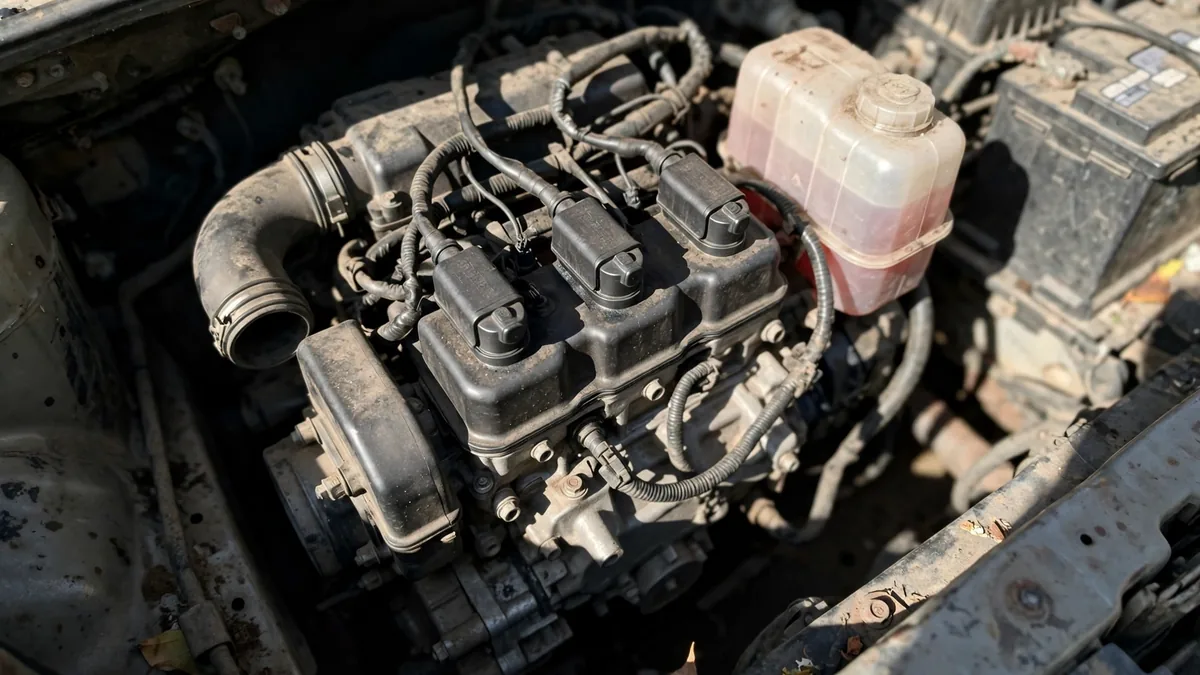
A range extender is a small internal combustion engine fitted to an electric car, used only to generate electricity. The car itself is an electric car in every way that matters: an electric motor drives the wheels, a battery stores the energy, and the driver charges it from the mains like any other electric car. The range extender is an extra, a backup generator that starts up when the battery runs low.
The key distinction is that the engine has no mechanical connection to the wheels. In a plug-in hybrid, the petrol engine can drive the wheels directly, either on its own or together with the electric motor. In a range-extender car, it cannot. The chain is always the same: petrol engine turns a generator, the generator makes electricity, the electricity charges the battery or powers the motor.
That job is to run at its most efficient speed. A normal car engine has to cope with everything from idling in traffic to accelerating onto a motorway, which means it spends much of its life running inefficiently. A range extender only ever runs at the speed where it is most efficient, because it is not connected to the road.
How It Works on the Road
On a typical day, a range-extender car behaves exactly like a pure electric car. The driver charges it overnight, drives to work and back on battery power, and the engine never starts. The range extender only wakes up on a longer journey, when the battery charge falls below a set level. The driver may hear it start, a quiet hum from under the bonnet, and the car carries on exactly as before, still driven by its electric motor.
While the engine runs, it feeds electricity into the battery faster than the motor uses it, or at least fast enough to slow the battery’s decline. That extends the car’s range considerably, often adding as much again to the battery-only distance. When the driver stops for fuel, the small petrol tank is refilled in minutes, like any petrol car, and the journey continues.
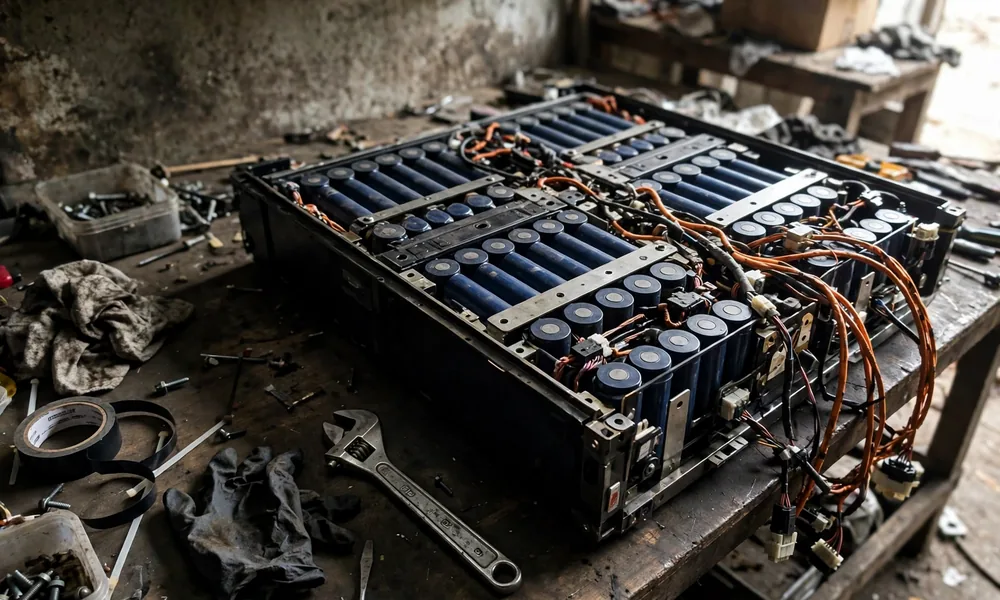
The battery is the part that does most of the work, and it has to be good enough to cover everyday driving on its own. Our guide to how an EV battery pack works explains how those packs deliver their power, and the same principles apply here: the pack must be big enough for daily use, durable enough for years of charging, and clever enough to manage its own temperature and charge level.
Why Carmakers Bothered With It
The range extender was born from a real anxiety. Early electric cars had modest ranges, often under a hundred miles, and the charging network was thin. Buyers liked the idea of electric driving but feared being stranded, and that fear, range anxiety, kept many of them from buying at all. The range extender was a bridge: it let a buyer enjoy electric driving every day while knowing that a long journey was still possible.
The idea works best when the engine is genuinely small and efficient. The most famous example, the BMW i3 with its optional range extender, used a tiny two-cylinder motorcycle-derived engine tucked into the back of the car. It added a useful amount of range for a modest weight penalty, and it turned a city car with a limited range into a car that could plausibly attempt a longer journey. The battery technology that made that possible is covered in our look at how a solid-state battery is made, which shows where battery design is heading next.
The Variations, and the Confusion
The range extender idea has caused confusion because the phrase is used loosely. Some manufacturers call a plug-in hybrid’s engine a range extender, even though that engine can drive the wheels. Others use the term for the small generator in a genuinely series-hybrid car, where the engine truly never drives the wheels. The distinction matters, because the two designs behave differently and have different strengths, but marketing has blurred the line.
There are also different sizes of range extender. Some are tiny, barely bigger than a motorcycle engine, and add only a modest amount of range. Others are larger, closer to a normal car engine, and can sustain motorway driving almost indefinitely. The larger the engine, the more it costs and weighs, and the more the car starts to resemble a conventional hybrid, which defeats the purpose of the design. The sweet spot is a small engine that covers the occasional long trip without turning the car into something else entirely.
It is worth noting that the idea is not limited to cars. The same principle appears in some delivery vans and commercial vehicles, where a small generator extends the range of an electric drivetrain without the cost of a huge battery. The cells that store the energy in all of these vehicles share the same fundamentals, and EV battery cell specs explained is a good place to learn what those numbers mean.
Where You Find It, and Where It Is Going
Range extenders are rare in new cars today. As batteries have become cheaper, bigger and faster to charge, the need for a backup engine has shrunk, and most manufacturers have chosen to fit larger batteries instead. The BMW i3’s range extender was discontinued, and few mainstream carmakers have replaced it with anything similar. For now, the idea lives on mainly in a handful of models, often from Chinese manufacturers, and in commercial vehicles where the economics still favour it.
The Simple Version
A range extender is a small petrol engine in an electric car that never drives the wheels. Its only job is to run a generator, making electricity to top up the battery when it runs low on a long journey. The car drives like an electric car every day, and the engine is simply a backup that removes the fear of running out of charge far from home.
It is a clever compromise that has largely been overtaken by bigger, cheaper batteries, but it deserves to be understood on its own terms. It was never meant to be the future of the car; it was meant to be a bridge to it, and for the drivers who used it, it worked. The next time you hear the phrase, remember the distinction: a range extender makes electricity, and the electric motor does all of the driving.


