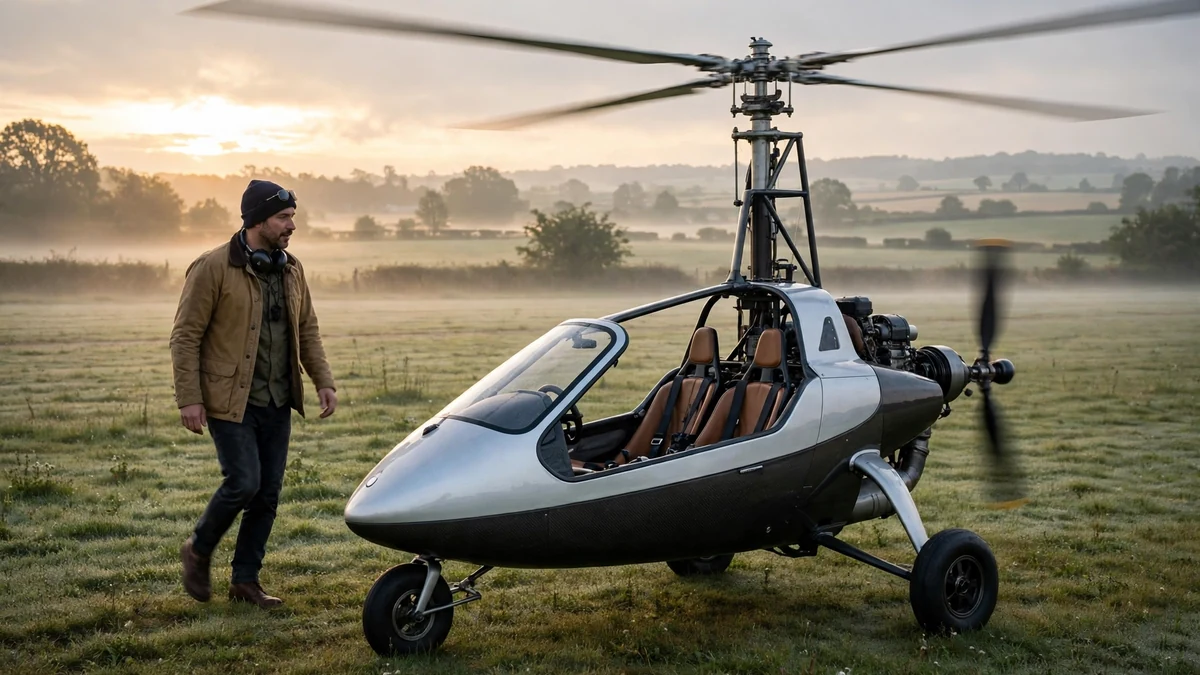
From the ground, it looks like a small aeroplane that lost a bet. The rotor above it spins in the wind, unpowered, while a propeller at the back pushes the little machine forward. Then the pilot pulls the stick, the rotor tilts, and the gyrocopter lifts off the grass and climbs away at an angle no fixed-wing aeroplane would dare, slow, steady, and utterly unbothered by the crosswind that would ground a light aircraft. It is the strangest flying machine you will ever see, and once you have flown in one, it is the most addictive.
A luxury gyrocopter is a tiny aircraft with a price tag that makes people blink: an estimate of $100,000 to $250,000 for a machine that weighs less than a small car and carries two people. It is not expensive because it is big. It is expensive because it is small, rare, and built almost entirely by hand — and because the engineering that keeps it in the air is far more subtle than it looks.
This is where the money goes, and why a machine this small costs this much.
Where the money goes
A new luxury gyrocopter costs an estimate of $100,000 to $250,000, depending on the engine, the rotor system and the level of finish. Here is how that figure breaks down.
| Cost area | Share of the price |
|---|---|
| Airframe and rotor system | 30–35% |
| Engine and propeller | 25–30% |
| Avionics and instruments | 10–12% |
| Cabin and finish | 10–12% |
| Certification and testing | 10–12% |
| Assembly and labour | 8–10% |
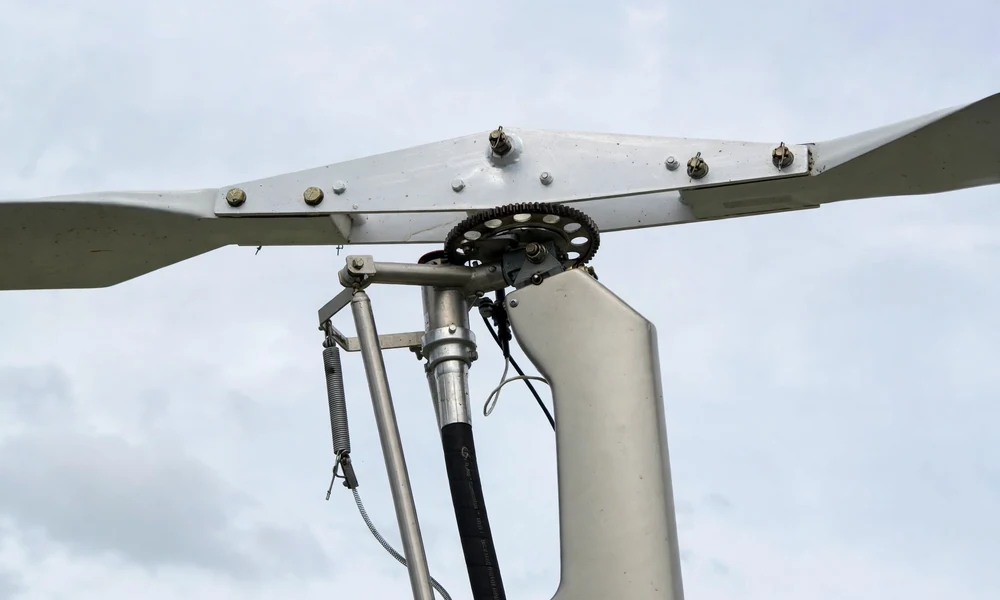
The rotor system is the biggest single line, and it earns it. A gyrocopter’s rotor is not powered by the engine at all. It spins freely, driven by the air rushing up through it as the machine moves forward — a principle called autorotation. The rotor head, the mast, the blades and the pre-rotator that spins the rotor up before takeoff are machined to tolerances a watchmaker would respect, because a rotor that is out of balance by a fraction of a gram shakes the whole aircraft. The way a luxury gyrocopter is made shows the workshop where those parts come together, and the price shows what a day of that labour costs.
The engine: small, light, and very expensive
The engine in a luxury gyrocopter is usually a Rotax, a compact four-cylinder producing 100 to 140 horsepower, and it costs an estimate of $20,000 to $35,000. That is a lot of money for a small engine, but it is a certified aircraft engine, and certification is the reason: every part is traceable, every batch is tested, and the engine must keep running in conditions that would kill a car engine. It is also cooled by air and oil, not water, because a gyrocopter has no room for a radiator and no weight to spare for one.
The propeller is a cost of its own. A three-blade composite propeller, tuned to the engine and the airframe, costs an estimate of $3,000 to $6,000, and it is balanced to a standard that makes a car wheel look crude. The whole powerplant weighs less than 100 kilograms, and it must lift the aircraft, the pilot, the passenger, and the fuel — and do it on a hot day, at altitude, when the thin air takes a tenth of the power away.
Certification: the cost nobody sees
The line on the table that surprises people most is certification. A gyrocopter must be proven safe to a national aviation authority, and the testing is brutal: structural tests, flight tests, and a paper trail for every part. The process costs an estimate of hundreds of thousands of dollars, and it is spread across a production run measured in dozens, not thousands. A single model of gyrocopter might sell fifty aircraft in a good year. Spread a million dollars of certification across fifty machines and the cost per aircraft is $20,000 before a single part is bought.
That low volume shapes everything else. There is no assembly line. Each gyrocopter is built by a small team, over weeks, in a workshop the size of a large garage. The airframe is welded by hand, the cabin is fitted by hand, and the wiring is loomed by hand. The machine is, in a real sense, a prototype that happens to have a certificate.
The cabin: a cockpit with a view
Inside, a luxury gyrocopter is a cockpit with a view no other aircraft can match. The pilot and passenger sit side by side in an open or enclosed cabin, with a panoramic windscreen and a view straight down through the floor in some models. The instruments are modern glass panels — the same kind of screens found in a business jet — showing airspeed, altitude, rotor speed, and engine data on a single display. The cabin is heated, the seats are trimmed in leather, and the whole interior is built to be used with gloves on, because the pilot’s hands are busy.
The view is the product. A gyrocopter flies low and slow — 60 to 100 miles per hour, a few hundred feet above the ground — and the world passes below in a way no aeroplane and no helicopter can match. A glider offers the same slow flight, and why a luxury glider is so expensive shows a machine that trades the engine for silence and the same kind of hand-built cost. An airship offers the same view at walking pace, and the specs of a luxury airship show a very different answer to the same question: how to fly slowly, and see everything.
Price: the full picture
Add it up and a new luxury gyrocopter costs an estimate of $100,000 to $250,000, with annual running costs of an estimate of $8,000 to $15,000 — fuel, insurance, the annual inspection, and the rotor and engine servicing. Fuel burn is modest, around 5 to 7 gallons an hour, and the machine can land on a strip of grass shorter than a football field. The real cost is not the flying. It is the buying: a machine built in the dozens, certified at enormous expense, and finished by hand.
A rare fact
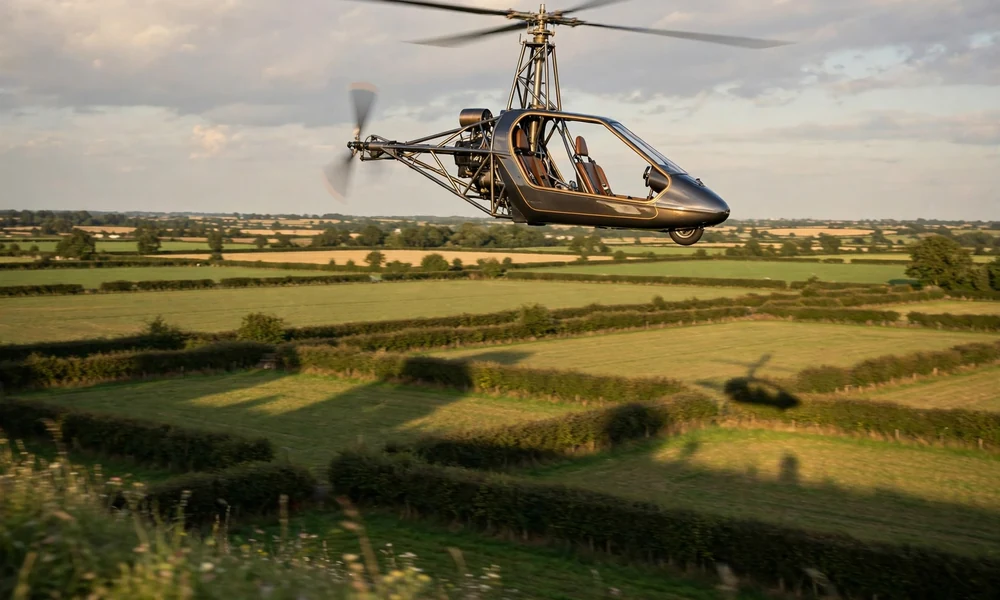
Here is the detail the spec sheet hides in plain sight: a gyrocopter cannot stall. In a fixed-wing aeroplane, a stall is the moment the wing stops producing lift and the aircraft falls. In a gyrocopter, the rotor is always in autorotation, always spinning, always producing lift, as long as the machine is moving forward. If the engine stops, the gyrocopter does not fall out of the sky. It descends, gently, at a controlled rate, and the pilot can land it on a road, a field, or a beach. It is the only powered aircraft that is safer with its engine off than a conventional aeroplane is with its engine on — and that safety is built into the rotor, not added on top of it.
That is the gyrocopter in one image: a machine that looks like a joke, flies like a dream, and costs like a luxury car because it is built by hand, certified at enormous expense, and sold in numbers so small that every aircraft carries the cost of the whole programme. The price is not a markup. It is the bill for building an aircraft that cannot fall out of the sky.


