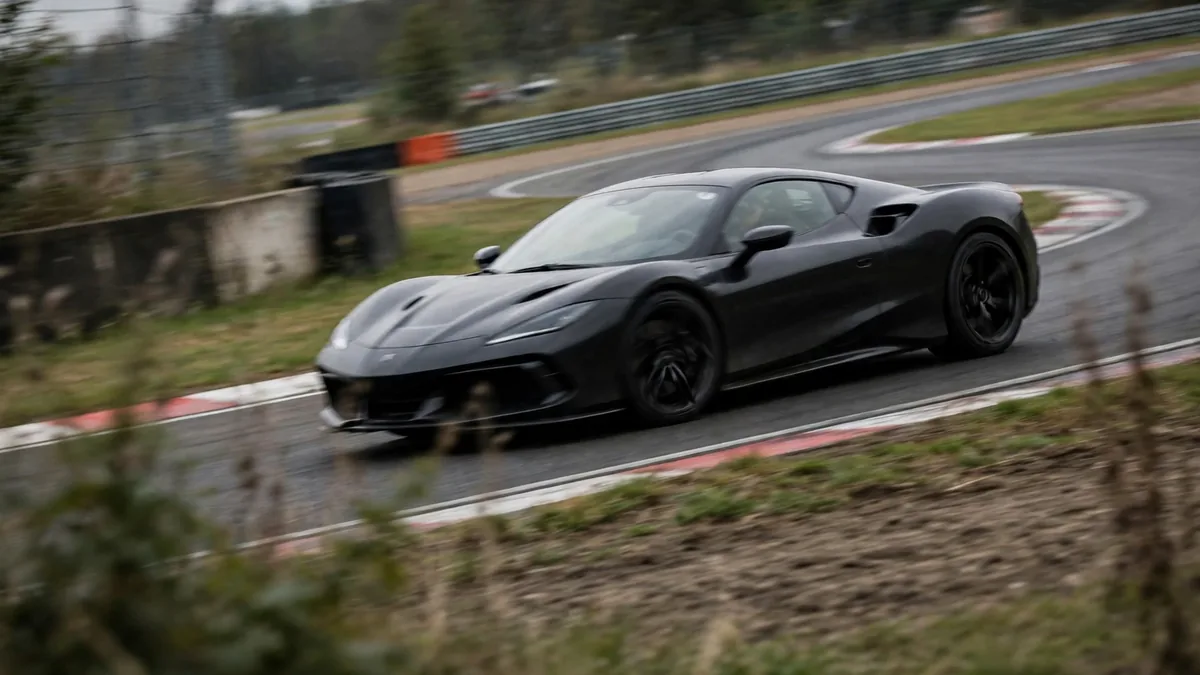
Watch a fast car take a corner and you will see something odd if you look closely. The car does not just steer through the bend; it seems to pivot around it, the nose tucked in and the tail following obediently, with none of the pushing wide or nervous sliding you might expect. Part of that is the tyres and part of it is the suspension, but a growing share of it is invisible software and hardware working on the power itself. The car is deciding, wheel by wheel, how much push each tyre should get.
That decision-making is torque vectoring. It is one of those ideas that sounds like engineering jargon until you feel it working, and then it becomes simple: instead of sending the same amount of driving force to both wheels on an axle, the car sends more to the wheel that can use it and less to the one that cannot. The result is a car that turns more eagerly, grips better in bad weather, and stays calmer when a driver asks too much of it.
What Torque Vectoring Actually Is
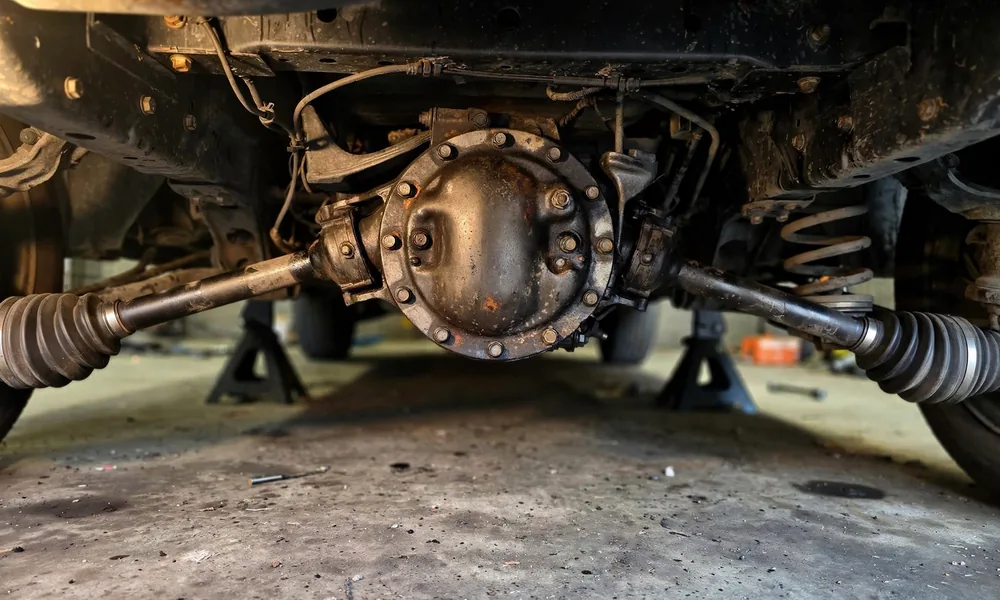
Torque is the twisting force an engine or electric motor produces, and it is what actually pushes a car forward. In an ordinary car, an open differential splits that torque roughly evenly between the two wheels on a driven axle. That is fine on a straight, dry road, where both wheels have the same grip. It becomes a problem the moment they do not, because an open differential will happily send power to the wheel with the least grip, which is the one that just spins uselessly while the other does nothing.
Torque vectoring fixes that by treating the two wheels as individuals. Using sensors that watch wheel speed, steering angle, throttle position and how much the car is rotating, a computer works out which wheel needs more torque and which needs less, and then makes it happen many times a second. On a bend, that usually means more torque to the outside wheel, which helps rotate the car into the corner. On a slippery surface, it means starving the spinning wheel and feeding the one that still has grip.
How the Car Decides, Wheel by Wheel
Everything starts with measurement. Wheel-speed sensors report each wheel’s rotation, a yaw sensor reports how fast the car is turning, and the steering and throttle tell the computer what the driver intends. If the car is turning less sharply than the steering suggests, it is understeering, pushing wide; if it is turning more sharply, it is oversteering. The computer compares intention with reality and adjusts torque to close the gap.
How it makes the adjustment depends on the system. The simplest and cheapest method is brake-based: the car gently brakes the inside wheel, which forces the differential to send more torque to the outside wheel. It works well and needs no exotic hardware, but it wastes a little energy as heat in the brakes. Our guide to how a hypercar suspension works explains the other half of this partnership, because torque vectoring can only do its job if the suspension keeps the tyres pressed into the road in the first place.
More advanced systems use clutches or planetary gears inside the differential itself, physically redirecting torque from one side to the other without touching the brakes. The most advanced of all skip the differential entirely: an electric car with a motor on each wheel can simply command one motor to push harder and the other to ease off. That is the fastest and most precise version, because an electric motor can change its torque in milliseconds, far quicker than any clutch or brake.
Why It Matters Beyond the Racetrack
On a track, torque vectoring is worth lap time. A car that rotates willingly into corners can carry more speed through them, brake later, and get back on the power sooner. That is why the technology first appeared in high-performance cars, where every tenth of a second is chased with expensive hardware. But its most important job may be the one ordinary drivers never notice.
In rain, snow or on a loose gravel road, grip varies from wheel to wheel all the time. Torque vectoring keeps the car moving in the direction the driver points it, quietly correcting slides before they become scary. For a family car, that means a safer, calmer drive in bad weather, delivered by the same idea that makes a supercar faster.
The Different Ways Cars Do It
Brake-based vectoring is the most common, because it uses hardware the car already has. The brakes, the sensors and the stability-control computer are all present, so the manufacturer only has to add software. It is effective, cheap and reliable, which is why it appears on everything from hot hatchbacks to family crossovers. Its only real weakness is that it cannot add torque to a wheel, only take it away from the other one by braking.
Mechanical vectoring, using clutch packs in the rear differential, can genuinely move torque across the axle. These systems can send almost all of the axle’s torque to one wheel if needed, and they do it without heating the brakes. They cost more and add weight, so they tend to appear in performance cars. They work closely with the gearbox, and our look at how a dual-clutch gearbox works shows how quickly modern drivetrains can shuffle power around in the first place.
Electric vectoring is the newest and most flexible approach. With one motor per wheel, or one motor per axle plus clever software, there is no mechanical link to fight against. The car can even use negative torque, regenerating energy from one wheel while driving the other, to rotate the car with remarkable precision. As electric cars become more common, this version is likely to become the standard, because it is simply software running on hardware the car already needs.
Where You Find It Today
Torque vectoring started in rally cars and supercars, but it has spread quickly. You will find brake-based systems in many ordinary hatchbacks and SUVs, mechanical systems in performance saloons and sports cars, and electric vectoring in high-end electric cars with two or more motors. Some cars even combine methods, using brake vectoring at the front axle and a clutch differential at the rear.
It is worth checking the details before assuming a car has the full system, because manufacturers use the same phrase for very different hardware. The gearbox matters here too, and how a hypercar gearbox works is a useful companion read, because the gearbox, the differential and the vectoring system all have to agree on where the power is going.

The Simple Version
Torque vectoring is the car thinking about grip the way a good driver does, one wheel at a time. Instead of hoping both wheels on an axle have the same grip, it measures what is happening, sends power to the wheel that can use it, and takes it away from the one that cannot. The driver feels it as a car that turns in willingly, stays planted in the rain, and never seems surprised by a corner.


