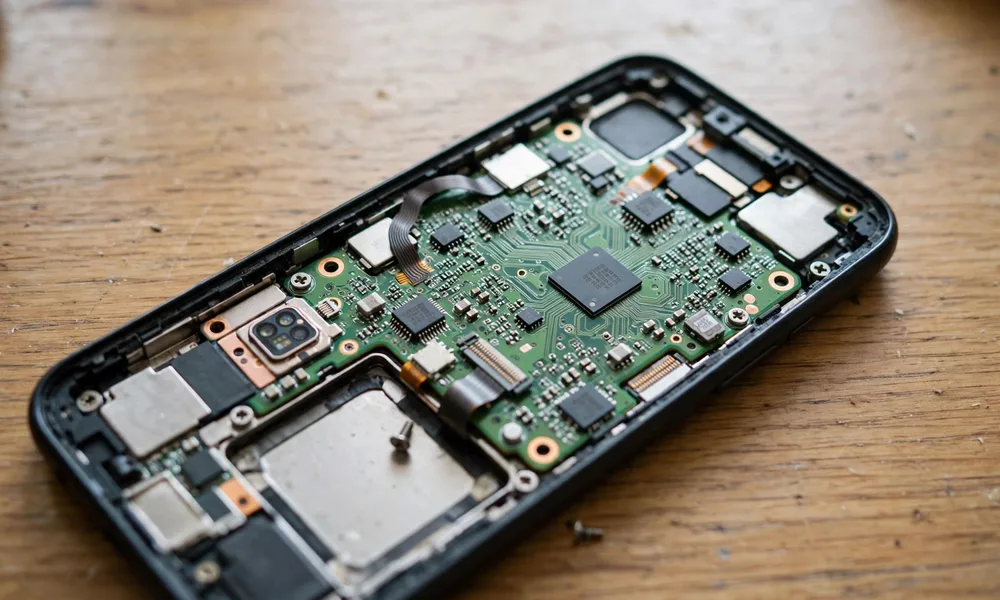
Hold a modern phone in your hand and you are holding a small miracle of radio engineering. Somewhere inside that slim slab of glass and metal, a chip no bigger than a fingernail is doing something extraordinary: it is listening to invisible waves, decoding billions of signals a second, and holding a conversation with a mast that might be a kilometre away, all while sipping power from a battery that also has to run the screen, the camera, and everything else. That chip is the 5G modem, and for all its size, it is one of the most expensive single components in the phone. A flagship phone’s modem can cost its maker tens of dollars per unit (estimate), and the bill for developing it runs into the billions (estimate). The price is not a markup trick. It is the honest cost of building something this hard.
The surprise is how much has to fit into so little space. A 5G modem must speak several generations of mobile technology at once, from the old 2G networks still used for calls in remote places to the newest millimetre-wave 5G that can move data faster than most home broadband. It must do this in a package that generates almost no heat, draws almost no power, and survives being dropped, heated, and frozen. Together, those demands explain its price.
Why the 5G Modem Chip Costs So Much
1. It is built on the most advanced silicon available
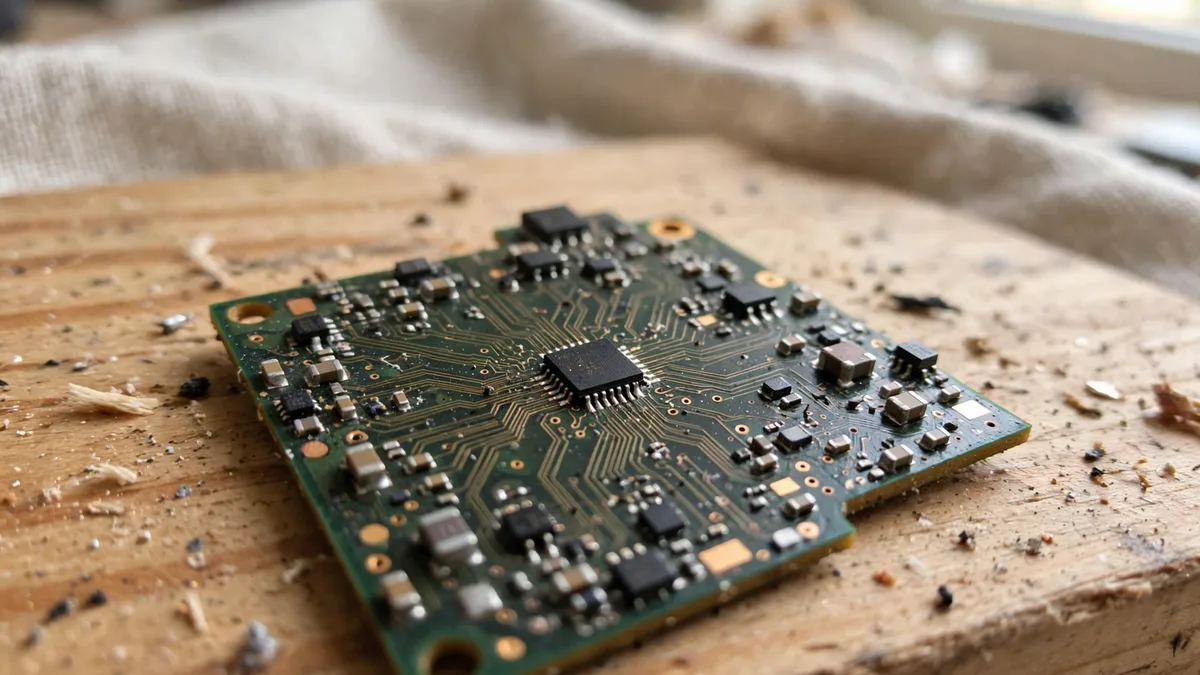
A 5G modem is made on a cutting-edge process node, the same class of manufacturing used for the fastest processors in the world. At these scales, the transistors are measured in single-digit nanometres, and the factories that can build them cost tens of billions of dollars (estimate) to construct. The modem maker pays for a share of that factory with every wafer it buys. Worse, modem chips are large and complex, so fewer good chips fit on each wafer, and any speck of dust can ruin one. The materials and engineering behind the 5G modem chip start with silicon this pure and this precise, and there is no cheaper way to get it.
2. It must speak every network ever built
A phone sold in one country must work in almost every other, so a 5G modem cannot just do 5G. It must handle 4G, 3G, and 2G, dozens of frequency bands, and the different ways carriers around the world have sliced up the airwaves. Each band needs its own radio circuitry, filters, and amplifiers, and each must be tuned and tested. Supporting this many standards in one chip is like building a translator who is fluent in twenty languages and can switch between them mid-sentence. The engineering hours alone are enormous.
3. Millimetre-wave radio is brutally hard
The fastest 5G uses millimetre-wave frequencies, where the signal behaves almost like light: it bounces off walls, is blocked by a hand, and fades within a few hundred metres. To use it, the modem must steer beams of radio energy with arrays of tiny antennas, tracking the mast as the user moves. Every millimetre-wave phone carries this extra hardware, and it is a large part of why the modem costs what it does.
4. It is tested more than almost any other chip
Before a modem can ship, it must be tested against real networks in dozens of countries, with every carrier, in every combination of bands and conditions. A single failed certification can delay a phone by months, so modem makers run vast test programmes with racks of equipment that simulate masts, weather, movement, and interference. All of this testing is baked into the price of each working chip, and it is one of the reasons only a handful of companies in the world can afford to build a 5G modem at all.

5. Patents and licensing add a hidden layer of cost
Mobile technology is built on thousands of patents, and the companies that invented the core techniques charge royalties for their use. A modem maker either pays those royalties or spends years developing workarounds, and either way the cost lands on the chip. In some cases the licensing alone can add several dollars to the price of a single modem (estimate). This is also why the modem market is so concentrated: a new entrant would need to license or invent its way through a thicket of patents before selling a single chip, and very few have managed it.
6. Power efficiency is a design problem of its own
A modem that drained the battery in an hour would be useless, so modem designers spend enormous effort on power. The chip must wake in microseconds to check for messages, sleep between bursts of data, and switch its radio off the instant it is not needed. This power management is built into the silicon itself. The engineering inside a gaming graphics chip faces a similar trade-off between performance and heat, but a modem must solve it while running on a battery a fraction of the size.
7. So few companies can build one
There are only a few firms in the world with the radio expertise, the patent licences, and the factory relationships to build a flagship 5G modem. That scarcity is itself a reason for the price: with so little competition, there is no race to the bottom, and the companies that can do it charge for the rarity of the skill. It also means that when one of them stumbles, the whole phone industry feels it. The modem is a bottleneck technology, and bottlenecks are expensive.
5G Modem Chip at a Glance
| Specification | Detail |
|---|---|
| Size | Roughly the size of a fingernail, under a centimetre across |
| Process node | Advanced 4 to 5 nanometre class silicon (estimate) |
| Networks supported | 5G, 4G, 3G, and 2G, across dozens of frequency bands |
| Millimetre-wave | Beamforming antenna arrays for the fastest 5G bands |
| Key materials | Ultra-pure silicon, copper interconnects, gallium arsenide radio parts |
| Power draw | Milliwatts at idle, a few watts at full speed (estimate) |
| Testing | Certified against networks in dozens of countries |
| Makers | Only a handful of companies worldwide build flagship modems |
What Does It Cost?
A single flagship 5G modem chip costs a phone maker roughly twenty to forty dollars (estimate) in volume, and the millimetre-wave antenna modules add more on top (estimate). That is a large slice of a phone’s bill of materials for a part most owners will never see. The development cost behind it is far larger: a new generation of modem can cost well over a billion dollars (estimate) to design, test, and certify, and that investment must be recovered across the chips that ship. The foldable display in a modern phone carries a similar story of expensive engineering hidden behind glass.
A Rare Fact
The first mobile phones had modems the size of a shoebox that could carry a single voice call. Today a modem smaller than a postage stamp can download a full-length film in seconds, switch between four generations of network without dropping the call, and do it all while using less power than a night light. It has shrunk by a factor of thousands while becoming millions of times more capable, yet it remains one of the hardest things in the phone to build. Small, in this case, is not cheap.