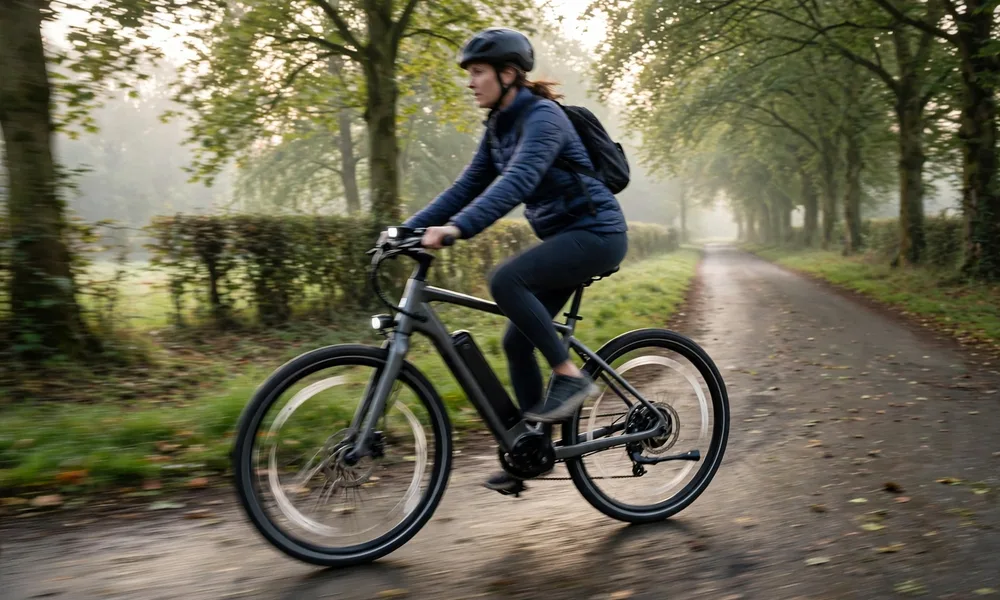
Ride a cheap e-bike and the motor feels like a switch: on or off, with little in between. Ride a good one and the motor feels like an extension of your legs, adding exactly as much help as you are giving, no more and no less. The difference between those two experiences is a component most riders have never heard of, and it is one of the most expensive small parts on the bike: the torque sensor. It is a device the size of a coin that measures, hundreds of times a second, how hard you are pressing on the pedals, and tells the motor how much help to give. A good torque sensor costs its maker tens of dollars (estimate), and the system around it costs more still.
The surprise is how much has to happen inside that tiny device. It must measure a twisting force on a spinning shaft, in rain and mud, while the bike is being ridden hard, and it must do it accurately enough that the motor’s response feels natural rather than jerky. Read a fraction too high and the motor surges; too low and the rider feels nothing. Getting that measurement right, in a part that must survive years of abuse and cost little enough to fit in a bike, is a serious engineering problem.

Why the E-Bike Torque Sensor Costs So Much
1. It measures a twisting force on a spinning shaft
A torque sensor does not measure speed or position. It measures twist: the tiny deformation of a metal shaft as the rider pushes on the pedals. That deformation is measured in microns, thousandths of a millimetre, and it must be read while the shaft is spinning at up to a hundred revolutions a minute. The most common method uses strain gauges, tiny electrical resistors bonded to the shaft that change resistance as the metal flexes. Bonding them precisely and reading a signal that small in an electrically noisy environment is delicate work. The materials inside an e-bike torque sensor are chosen for exactly this sensitivity.
2. It must be accurate to a fraction of a percent
A rider can feel a motor that responds a fraction of a second late, or that adds a little too much power on a gentle pedal stroke. For the ride to feel natural, the sensor must be accurate and fast, sampling the rider’s effort hundreds of times a second and reporting it with almost no delay. That accuracy needs careful factory calibration, where each sensor is tested against known forces. Cheaper sensors skip this step and accept a rougher ride; a good sensor is calibrated individually, and the labour is part of the price.
3. It lives in the worst place on the bike
The torque sensor sits at the bottom bracket, the lowest point of the bike, where it is sprayed with water, mud, and grit on every ride. It must be sealed against all of it, survive being pressure-washed, and keep working through winter salt and summer dust. The seals and coatings that make this possible are not cheap. A sensor that fails after one wet winter is worse than no sensor at all, so makers over-engineer the protection, and the cost follows.
4. It must survive the forces of a rider standing on the pedals
A strong rider standing on the pedals can put hundreds of watts through the bottom bracket, and the sensor must measure that force without breaking or drifting out of calibration. The shaft it measures is a structural part of the bike, and the sensor must be tough enough to live inside it for years. That means high-grade steel, precise machining, and isolation from shocks and vibration. The mid-drive motor the sensor feeds is built to the same standard, because a motor that powerful needs a sensor it can trust.
5. The electronics must be tiny, sealed, and silent
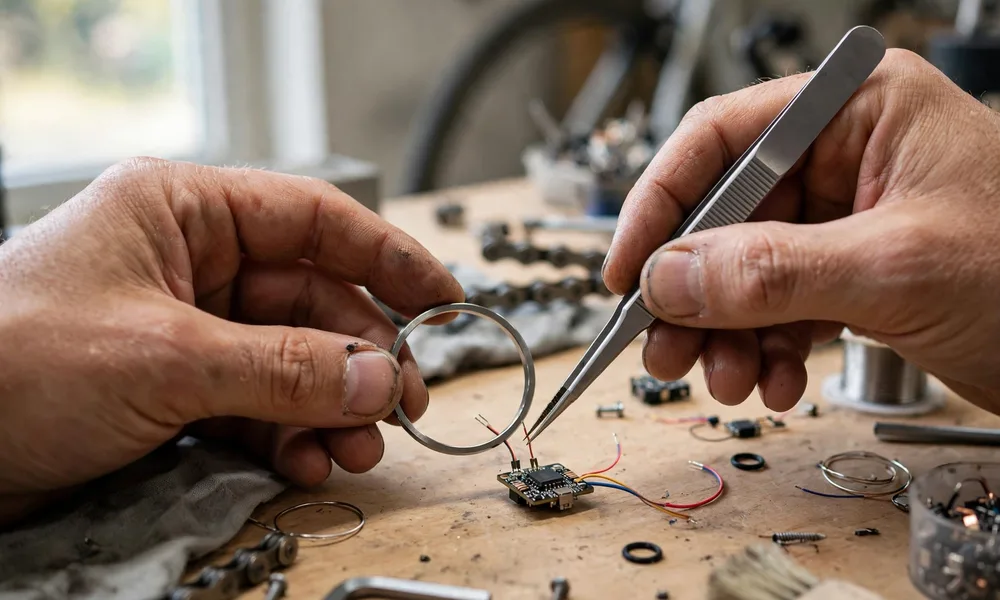
The signal from a strain gauge is minuscule, so it must be amplified and digitised right next to the sensor, inside a package that fits in the bottom bracket. The electronics must be sealed against water, shielded from the electromagnetic noise of the motor, and efficient enough to run on the bike’s battery without noticeable drain. Building electronics this small and this well-protected is expensive, and it is done by specialist suppliers who serve a market far smaller than the phone industry. There is no mass-market chip for this job; each sensor maker designs its own.
6. It is the heart of the ride feel, so makers will not compromise
For a premium e-bike maker, the torque sensor is the difference between a bike that feels alive and one that feels like a moped. It is the component the rider notices most, even without knowing it exists, and it is the first thing a reviewer will criticise if it is wrong. Makers therefore buy the best sensor they can afford, and that willingness to pay keeps the price of good sensors high.
7. The market is small and fragmented
Unlike phone components, which are made by the billion, torque sensors are made in the hundreds of thousands, across dozens of different designs for different bikes. There is no single standard: bottom brackets come in different sizes, motors in different shapes, and each combination needs its own sensor. Small volumes and many variants mean no economies of scale. The battery in the same bike faces a similar problem, though its larger size gives makers more room to save money.
E-Bike Torque Sensor at a Glance
| Specification | Detail |
|---|---|
| What it measures | Twisting force on the pedal shaft, in newton-metres |
| How it measures | Strain gauges bonded to the shaft |
| Sampling rate | Hundreds of readings per second |
| Size | About the size of a coin, fitted in the bottom bracket |
| Sealing | Water and dust resistant, built for rain and mud |
| Calibration | Individual factory calibration against known forces |
| Location | Bottom bracket, the lowest point of the bike |
| Main benefit | Motor assistance that matches the rider’s effort exactly |
What Does It Cost?
A good torque sensor costs a bike maker roughly twenty to fifty dollars (estimate) per unit, and the motor controller and software built around it add more (estimate). On a premium e-bike that sells for several thousand dollars, that is a small share of the price, but it is a large share for a part the size of a coin. Cheaper e-bikes use cadence sensors instead, which only measure whether the pedals are turning, not how hard. The torque sensor is what separates a bike that helps you ride from a bike that merely pushes you along, and riders who have tried both rarely go back.
A Rare Fact
The best torque sensors are so sensitive that they can detect the difference between a rider’s left and right leg. Most people push slightly harder with one leg than the other, and the sensor reads that imbalance hundreds of times a second. Some high-end controllers use that information to smooth the assistance, giving a little more help on the weaker side. A device the size of a coin, hidden in the darkest corner of a bicycle, knows your legs better than you do, and it uses that knowledge to make the bike feel like it is reading your mind.