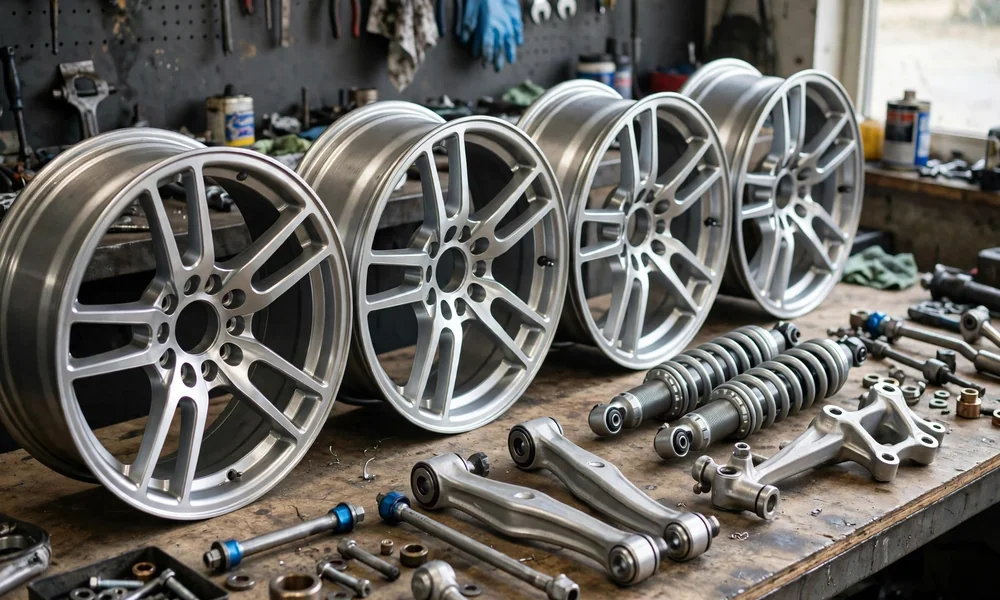
Pick up a forged aluminium wheel, a suspension upright or a landing-gear fitting, and the first thing you notice is how light it feels for its size. The second thing you notice, if you know what it cost, is how little sense that lightness makes at the price. The money is not in the aluminium. It is in what the forging press does to it, and in everything that has to happen before and after the press comes down.
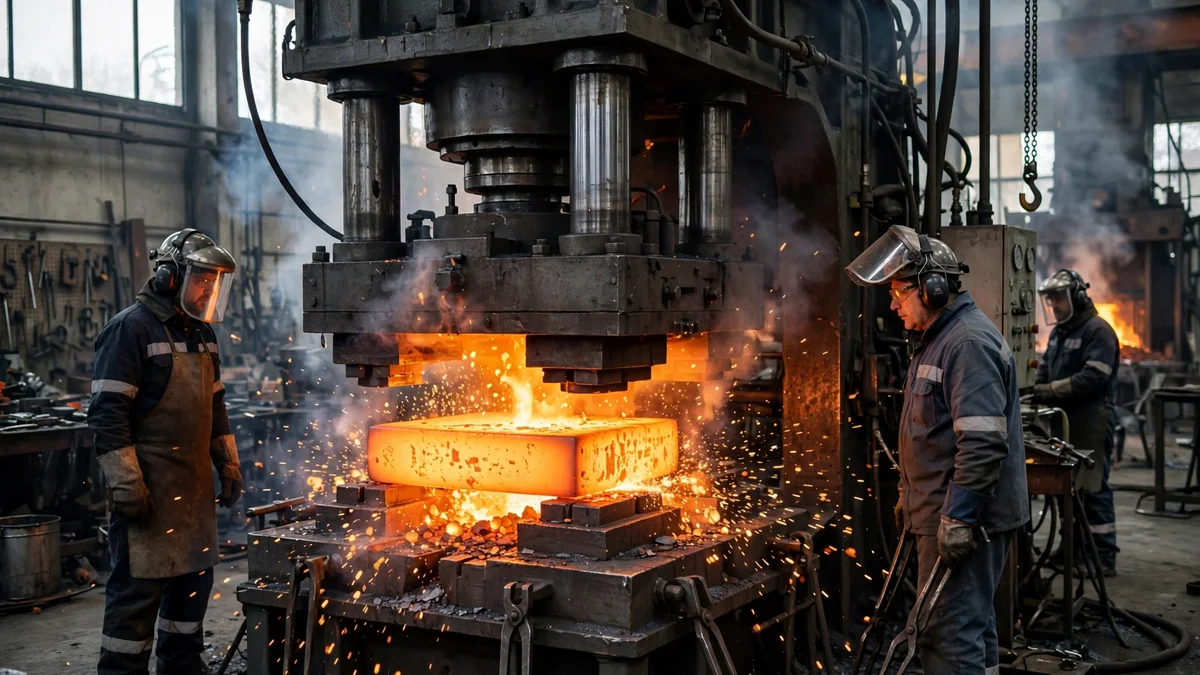
Forging is the oldest way of shaping metal, and still the most demanding. A billet of aluminium is heated until it is soft, placed in a die, and squeezed by a press that can deliver thousands of tonnes of force in a single blow. The metal flows, its grain aligns with the shape, and the finished part is stronger, tougher and lighter than any casting of the same weight. The die, the heat, the inspection and the scrap all cost money, and they cost it on every single part.
Why It Costs So Much
The price of an aluminium forging is the price of precision at scale, paid one part at a time. A casting can be poured into a mould and left to cool. A forging has to be squeezed into shape while it is hot, trimmed, heat-treated and machined, and every step has to be right or the part is scrap. Six things drive the cost, and they stack up on even the smallest component.
1. The die costs more than the parts it makes
Every forged part needs a die, a pair of steel blocks machined into the exact negative of the part, and a good die can cost tens of thousands of dollars before a single part is made. The die has to survive thousands of blows at high temperature without cracking or wearing out of tolerance, so it is made from expensive tool steel, heat-treated, polished and sometimes coated. The materials behind aluminium forging explain why the die steel matters as much as the aluminium, and why a worn die is retired rather than repaired into a second life.
2. The press is a building, not a machine
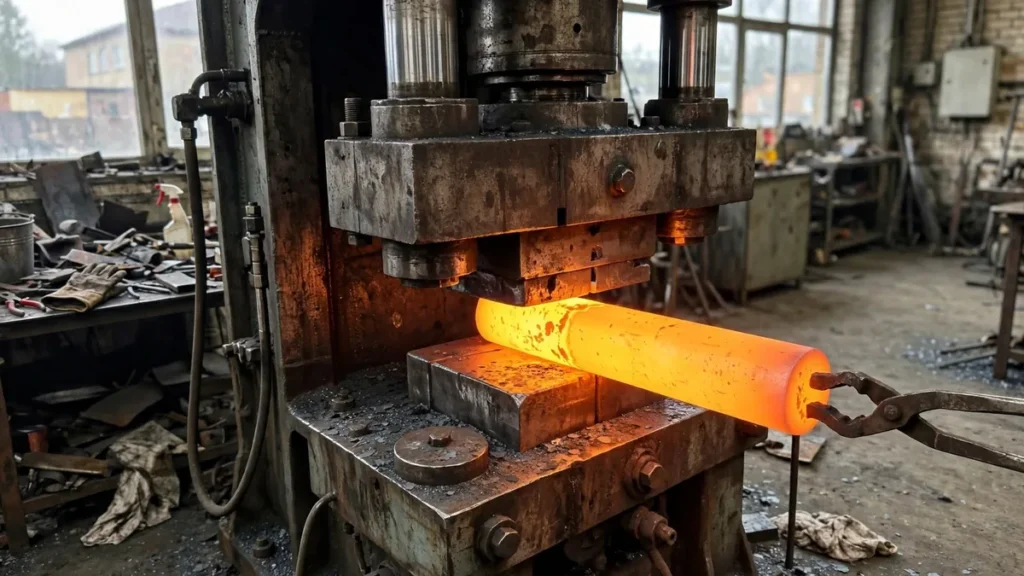
A forging press big enough to shape a structural aluminium part is a machine the size of a house, founded on concrete that goes metres into the ground. It needs hydraulic power, cooling, lubrication and a crew to run it, and it costs millions to buy and a fortune to maintain.
3. Heat, timed to the second
Aluminium has a narrow forging window. Too cold and it cracks instead of flowing. Too hot and the grain grows coarse and the part is weak. The billet is heated in a furnace to a precise temperature, moved to the press in seconds, and struck before it cools. The timing is rehearsed like a pit stop, and the temperature is checked on every billet.
4. Grain flow is the product
What forging buys is grain flow: the internal structure of the metal aligned to follow the shape of the part, like the grain in a piece of wood following a bent chair leg. That alignment is what makes a forged part resist fatigue and cracking far better than a casting. But it only happens if the die is designed correctly, the metal flows evenly, and the part is not overworked. Die design is a specialist skill, refined over decades and guarded by the forging houses that own it.
5. Heat treatment and the risk of warping
After forging, the part is solution heat-treated and aged to reach its full strength, a process that takes hours in a furnace followed by a quench that can warp the part if it is not done carefully. Forgings are then straightened, sometimes by hand, and checked against their drawings. A part that warps out of tolerance is reworked or scrapped, and the heat treatment cannot be skipped, because an unaged forging is barely stronger than the billet it started as.
6. Inspection that rejects good-looking parts
A forged part bound for an aircraft, a race car or a satellite is inspected as if its life depended on it, because someone else’s might. Dye penetrant, ultrasound and X-ray are used to find cracks and laps hidden under the surface, and dimensional checks confirm every feature to a fraction of a millimetre. How aluminium forging is made follows a part from billet to final inspection, and the inspection stage is where a surprising number of parts end their journey.

What the Numbers Say
| Specification | Aluminium forging |
|---|---|
| Common alloys | 6061, 7075 and 2219, chosen for strength and fatigue life |
| Forging temperature | About 400 to 500°C, depending on the alloy |
| Press force | Thousands of tonnes for large structural parts |
| Typical die life | Thousands to tens of thousands of parts |
| Strength gain | Up to twice the fatigue strength of a casting |
| Production time | Minutes to forge, hours to heat-treat and inspect |
| Typical uses | Wheels, suspension parts, aircraft fittings, landing gear |
What It Costs, and Why
A single forged aluminium part typically costs an estimated $50 to $500 for a small component, and an estimated $1,000 to $10,000 or more for a large structural forging, depending on size, complexity and volume. The figures are estimates because the price depends heavily on the die: a part made in a run of ten thousand spreads the die cost thinly, while a part made in a run of fifty carries almost the whole die on its own.
The comparison that matters is not forging against nothing, but forging against casting and machining from solid. Machining from solid wastes most of the billet as chips. Forging sits between the two: more expensive to start, but lighter and stronger in service, which is worth money in anything that flies, races or carries people. Titanium forging follows the same logic at a higher price, and titanium forging shows what happens when the metal is harder to heat, harder to flow, and harder to machine.
Why the Price Stays High
The price stays high because the fixed costs never go away. The die has to be made, the press has to be bought, and the furnace has to be heated, whether the order is for ten parts or ten thousand. Forging is also a craft that resists automation: the die design, the temperature judgement and the inspection all depend on people who have spent years learning what a good forging looks and feels like.
There is also the matter of what failure costs. A forged suspension upright that cracks at speed, or an aircraft fitting that fails in flight, is a disaster worth far more than the part. Customers pay for the testing, the traceability and the rejection of imperfect parts because the alternative is unthinkable. It is insurance, bought one forging at a time, and it is why the cheapest way to make a part is rarely the way anyone chooses for the parts that matter.
A Rare Fact
A forged aluminium wheel can be lighter than the casting it replaces and still be stronger, because the forging press aligns the metal’s grain to flow around the spokes instead of cutting across them. It is one of the few manufacturing processes where making a part lighter also makes it tougher, which is why forged wheels are the first upgrade on almost every serious race car.