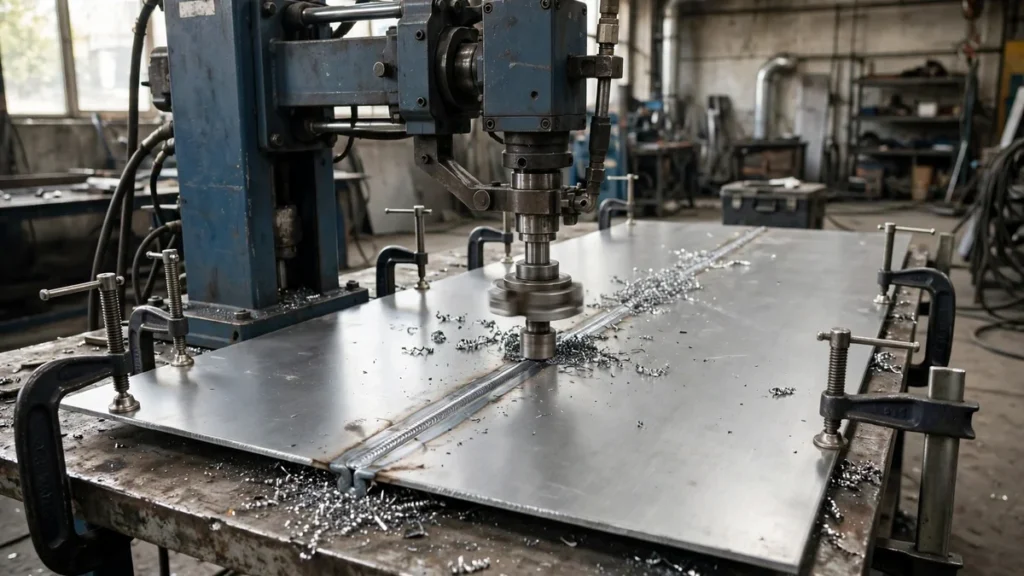
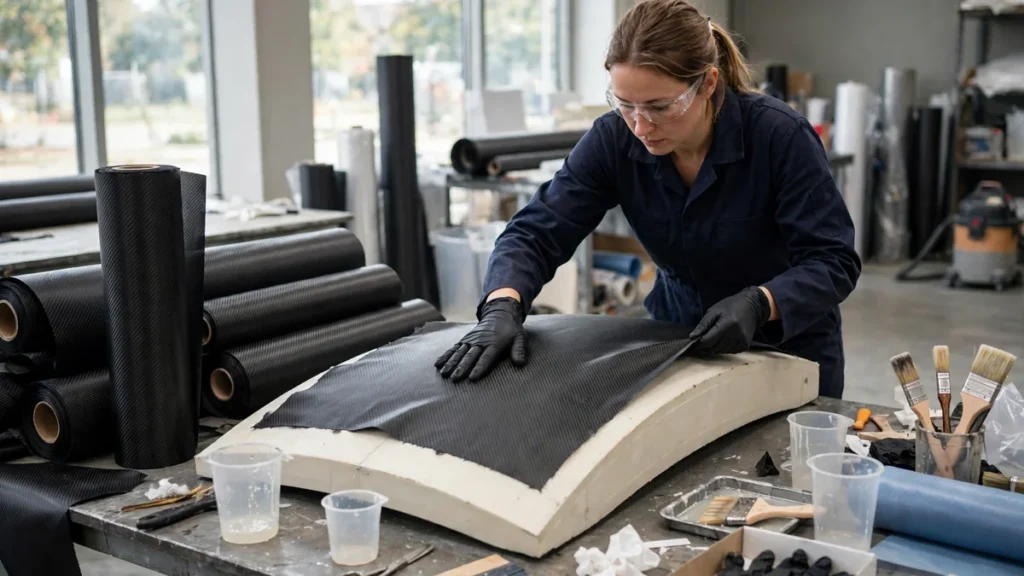
The quote lands on the desk, and the room goes quiet. A carmaker wants a single aluminium subframe — one curved piece, no welds, no joints — and the price per part is more than a whole pressed-steel assembly. The buyer asks the question every hydroforming shop hears sooner or later: why does shaping a metal tube with water cost so much?
From the outside it looks almost like plumbing. A plain steel tube goes into a steel mould, water is pumped in, and the tube swells outwards until it fills the shape. There is no flame, no hammering, no shower of sparks. Yet behind that quiet process sits one of the most expensive machines in any metal workshop — a press the size of a small house, holding back enormous pressure while a die machined to a hair’s width decides whether the part lives or dies.
This guide looks at why hydroforming costs so much: the rare materials in the tube, the tooling that takes months to build, and the economics that keep the price high even when the parts roll off the line one after another.
How Hydroforming Works
Step 1: Starting with the right tube
The cost starts before any water flows. A hydroforming tube is not ordinary pipe: it is a seamless tube, drawn to an exact wall thickness and made from a specific alloy — high-strength steel, aluminium, or stainless — that can stretch a long way without splitting. The wall must be uniform to a fraction of a millimetre, because a thin spot will burst under pressure and a thick spot will refuse to move. Such tubes come from only a handful of mills, and every length is checked for seams, dents, and ovality before it is allowed near the press, as our guide to how hydroforming is made explains.
Step 2: Building the die
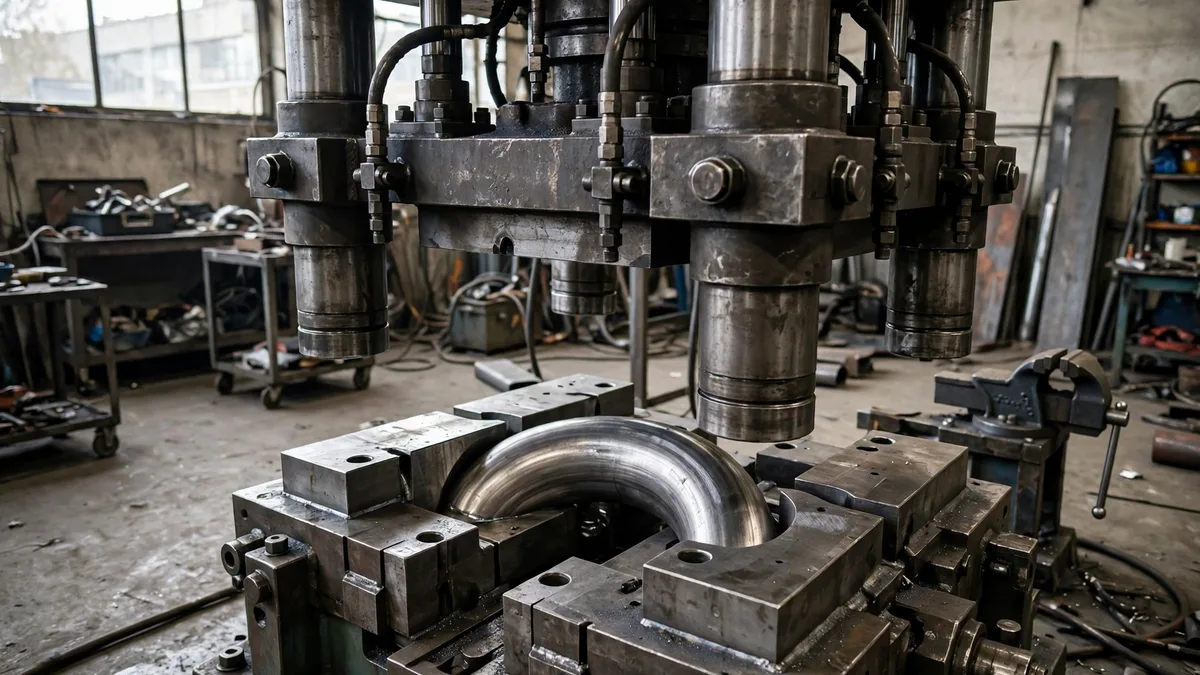
Next comes the die — two enormous blocks of tool steel, machined into the exact negative of the finished part. A car subframe die can weigh several tonnes and take weeks of machining, followed by hand polishing, because any scratch on the die becomes a mark on every part it makes. The two halves must meet perfectly along their parting line, and they must survive tens of thousands of press cycles without wearing out of shape. A single die set is estimated to cost tens of thousands of dollars to build, and it can only ever make one part: change the design, and the die is scrap.
Step 3: Sealing the ends and raising the pressure
With the tube laid in the lower die and the press closed, hydraulic rams push sealing punches into each end of the tube. Water — sometimes oil — is then pumped inside at pressures that climb into the thousands of bar. The internal pressure pushes the tube wall outwards into every corner of the die, while the end punches feed extra metal inwards so the wall does not thin to breaking point. The balance is delicate: too little pressure and the corners stay unfilled; too much and the tube bursts, shutting the line down for cleaning.

Step 4: Holding the press shut
All that internal pressure tries to blow the die apart, and only the press stops it. A hydroforming press must hold the two die halves together with thousands of tonnes of force while the water does its work — a force greater than the weight of a loaded freight train. The press frame is a massive welded and machined structure, bolted to deep foundations, and its hydraulic system must deliver that force smoothly, without a shudder that would mark the part. The machine is set out in our guide to hydroforming specs, where the tonnage decides which parts the press can make.
Step 5: Trimming, heat treatment, and finishing
The part that comes out of the die is not finished. Its ends must be trimmed, holes cut, and brackets added — often by laser, because the curved surfaces defeat ordinary cutting tools. Many parts are then heat-treated to restore strength lost during forming, and some are straightened by hand to hold tolerances a customer can measure with a gauge. Each step needs its own fixture, program, and inspection, and each adds labour to a part that already carries the cost of the press and the die. A part that fails inspection here wastes everything spent on it so far.
Step 6: Testing every part, and paying for the failures
Finally, the part is tested. Hydroformed components often carry structural loads — a subframe holds the engine, a bicycle frame holds the rider — so samples are pressure-tested, measured, and sometimes cut open to check wall thickness at the tightest bend. A burst tube, a wrinkled corner, or a die worn a fraction out of shape can scrap a whole run, and the cost of the scrap is folded into the price of the good parts. That is why the pressure is simple but controlling it is not, as our guide to how hydroforming works shows.
Hydroforming at a Glance
| Specification | Detail |
|---|---|
| Forming medium | Water or hydraulic oil, pumped inside the tube |
| Typical pressure | Several thousand bar, depending on material and shape |
| Common materials | High-strength steel, aluminium, stainless steel, copper |
| Press force | Thousands of tonnes to hold the die shut |
| Wall thickness | Usually 1 to 3 millimetres in the finished part |
| Forming tolerance | About 0.1 millimetres on key dimensions |
| Typical parts | Subframes, exhaust manifolds, bicycle frames, roof rails |
What Does It Cost?
The press dominates everything. A hydroforming press is estimated at roughly $500,000 to $2 million, and a large automotive line with handling and trimming is estimated at several million more, before the building and foundations are counted. A single die set is estimated at roughly $50,000 to $250,000, depending on size and complexity, and it makes only one part. Running costs pile on top: high-pressure pumps and seals that wear out, hydraulic oil, electricity, and the skilled labour to set up each job. A finished part is estimated at roughly $20 to $200 for a typical automotive component, and far more for a low-volume piece, because the tooling cost is spread over fewer parts. All prices are estimates only.
A Rare Fact
Hydroforming can do something no press or hammer can: it can expand a tube into a shape with a wider middle than either end, a form that would trap any solid tool inside the part. The water reaches everywhere at once, pressing the metal into corners so tight that a stamped part would need half a dozen separate pieces welded together to match it. That is why a single hydroformed subframe can replace ten or more stampings and welds — and why it costs so much. The pressure inside the tube can reach around 10,000 bar, roughly ten times the pressure at the bottom of the deepest ocean trench, yet the whole event is silent, hidden inside a closed die, and over in seconds.

Hydroforming is expensive because almost nothing in the process is ordinary: a seamless tube from a handful of mills, a die that takes weeks to machine and makes only one part, a press that holds back thousands of tonnes, and an operator who knows the sound of a good forming cycle from a bad one. Each piece is costly on its own, and together they explain the quote. The water looks free — everything that contains it, aims it, and survives it is not.