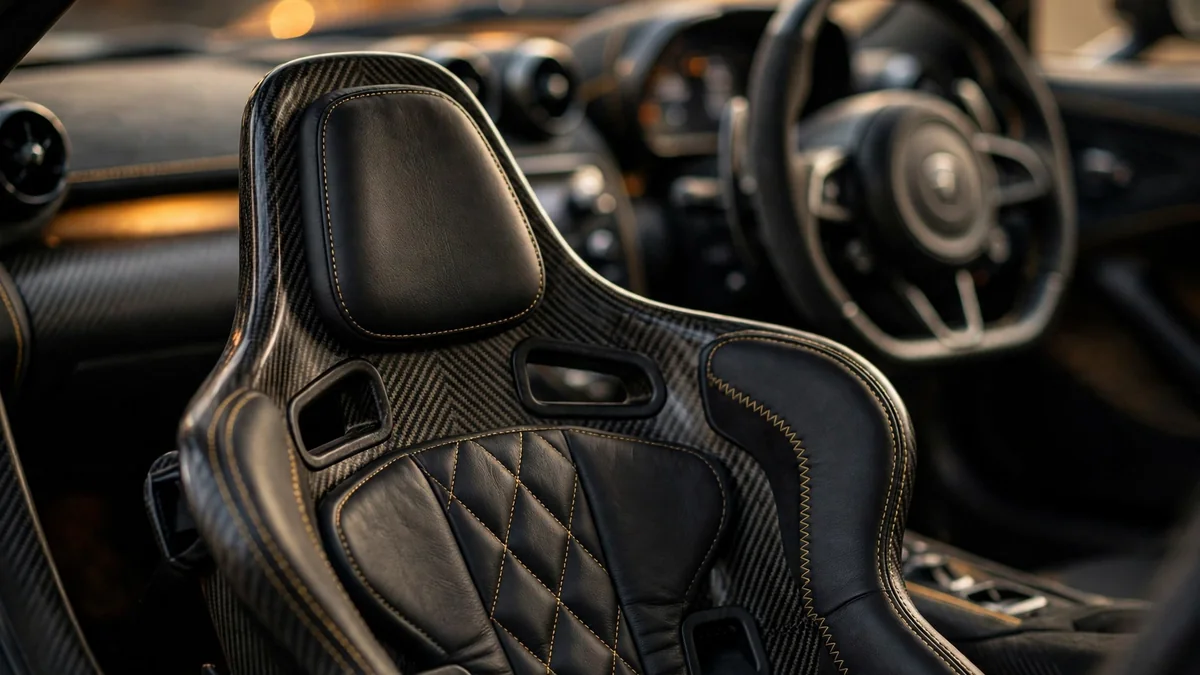
Open the door of a hypercar and the first thing you see is not the engine or the dashboard. It is the seat: a sculpted shell of carbon fibre and leather, shaped like a racing seat but trimmed like a piece of furniture, bolted straight to the floor with almost no adjustment at all. Sit in it and it fits like a tailored suit, holding you in place through corners that would throw you across a normal car. That seat can cost more than a whole family car, and the reason is that it is not really a seat. It is a piece of the car’s structure, a safety device and a handmade object, all at once.
A hypercar seat has a harder job than any other seat in the world. It must hold a driver perfectly still at more than 200 miles per hour, protect them in a crash at racing speeds, weigh almost nothing, and still feel comfortable enough for a three-hour drive. Each one is designed for a single car, built by hand from carbon fibre and leather, and fitted to the buyer like a suit.
Why It Costs So Much
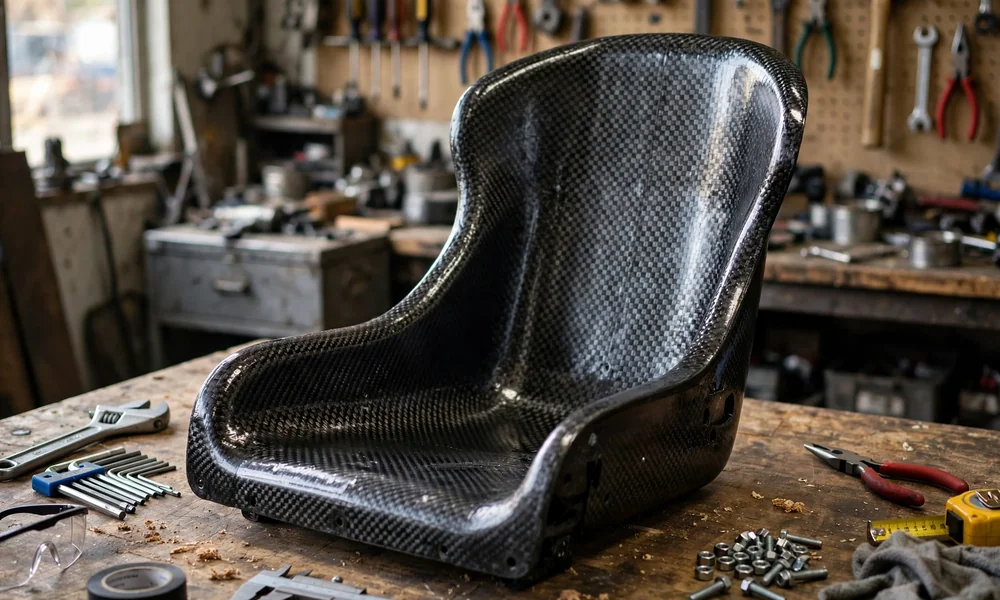
A hypercar seat looks like a racing bucket with nicer leather. Under the leather is a single piece of carbon fibre, moulded into a shape that has to be rigid enough to be part of the car’s crash structure, light enough to save kilograms, and comfortable enough to sit in for hours. The cost comes from the carbon, the handwork, the safety engineering and the fact that almost no two seats are alike.
Reason 1: The shell is a single piece of carbon fibre
The heart of the seat is its shell, laid up by hand from layers of carbon fibre cloth, vacuum-bagged and cured in an autoclave at high temperature and pressure. A single shell can take days to lay up, because each layer must be placed in exactly the right direction to give the shell strength where it needs it and flexibility where it does not. The result weighs only a few kilograms, yet it is strong enough to be a structural part of the car. The same carbon craft shapes the car around the seat, where carbon fibre weave specs show how much engineering hides in a sheet of cloth.
Reason 2: It is part of the crash structure
In many hypercars the seat is bolted directly to the carbon monocoque, the car’s central structure, with no sliding rails at all. That makes the seat part of the crash safety system: in an impact it must hold the driver in exactly the right position while the rest of the car absorbs the energy. Designing a seat that is both a comfortable chair and a crash structure takes months of engineering, and the testing alone costs a fortune.
Reason 3: The leather is hand-stitched for hours
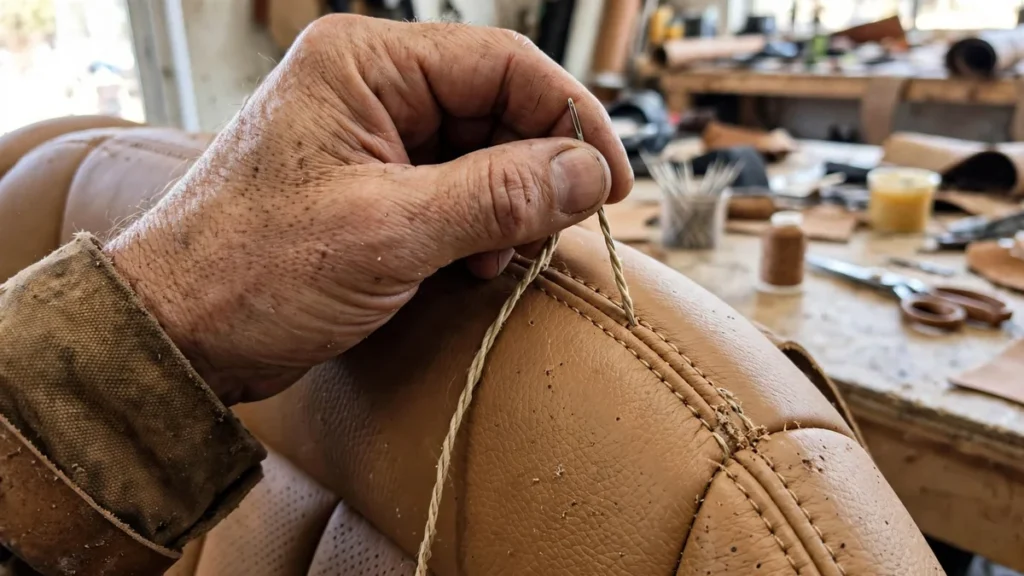
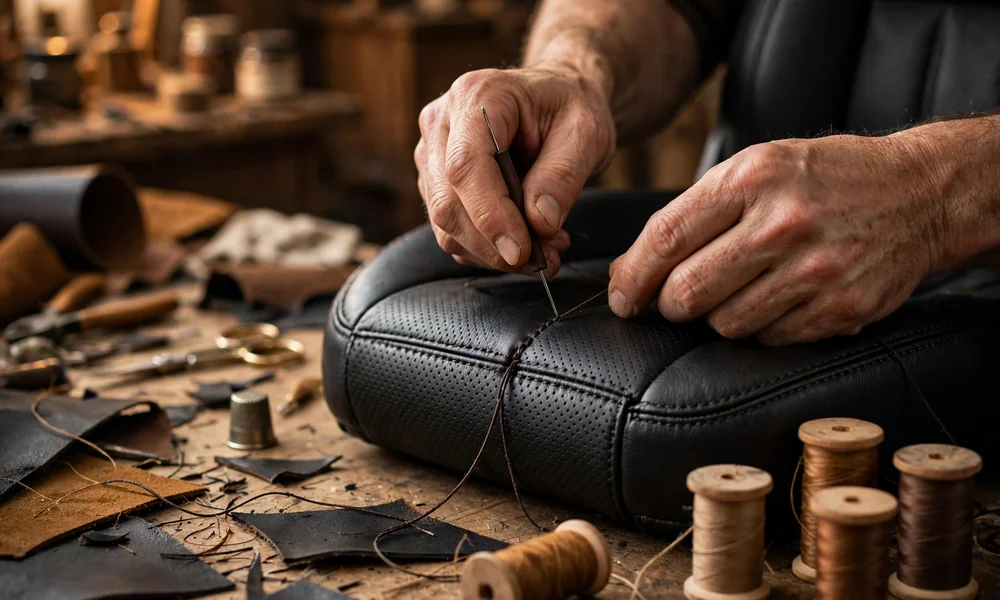
The leather on a hypercar seat is not stuck on by a machine. It is cut, shaped and stitched by hand, often by a single craftsperson who works on the seat for hours or even days. The hides are chosen from the finest leather, inspected for any mark, and cut so that the grain matches across the seat. The stitching is done with waxed thread, often in a contrasting colour, and every stitch must be even, because a single crooked line is visible every time the door opens.
Reason 4: It is fitted to the buyer like a suit
Many hypercar makers invite the buyer to the factory to be measured for their seat, just as a tailor measures a suit. The seat’s padding is shaped to the buyer’s body, the shell is chosen from several sizes, and the driving position is set once, permanently. Some cars offer no adjustment at all: the pedals and steering wheel move, but the seat does not. Each one is made for one person, in one car. The same bespoke thinking shapes the car itself, where the Pagani Huayra monocoque is built around its driver in the same hand-made way.
Reason 5: It must be light, and lightness is expensive
Every kilogram saved in a hypercar is worth chasing, and the seat is one of the heaviest parts of the interior, so engineers attack it ruthlessly. The shell is carbon, the padding is minimal, the brackets are titanium, and even the stitching thread is chosen for weight. The pursuit of lightness runs through the whole car, and hypercar chassis production shows the same obsession at a much larger scale.
Reason 6: It carries heating, cooling and safety systems
A hypercar seat is not just a shell and some leather. Many carry heating and ventilation, multi-point harnesses, side airbags and sensors that talk to the car’s safety systems. The harness slots must be placed to within millimetres, the airbags must deploy through the leather in exactly the right way, and the seat must work with the car’s electronics without adding weight or bulk.
Reason 7: It is built in tiny numbers by specialists
Hypercar production runs are measured in hundreds of cars, and the seats are often made by specialist suppliers or by the carmaker’s own trim shop, a small team of craftspeople who build every seat by hand. Each seat carries the cost of the tooling for its moulds, the training of its makers, and the hours of handwork, spread across only a few hundred cars.
Specifications
| Specification | Detail |
|---|---|
| Shell material | Carbon fibre, hand laid up and autoclave cured |
| Shell weight | A few kilograms for the bare shell |
| Complete seat weight | Often under 10 kilograms |
| Upholstery | Hand-cut and hand-stitched leather, often bespoke |
| Adjustment | Often fixed, bolted to the monocoque; pedals and wheel move |
| Safety | Part of the crash structure, harness slots, side airbags |
| Features | Heating, ventilation and sensors in some models |
| Production | Hand-built in tiny numbers, fitted to the buyer |
Price
A hypercar seat is one of the most expensive parts of the interior. A replacement seat for a flagship hypercar can cost from around $10,000 to more than $30,000 (estimate), depending on the model and the trim, and a pair of bespoke seats with matching leather and embroidery can cost far more (estimate). The carbon fibre and leather are not cheap, but the price is mostly in the hand lay-up, the crash testing, the hours of stitching and the bespoke fitting, spread across only a few hundred cars.
Rare Fact
In some hypercars the seat is so tightly fitted to the driver that the buyer is measured for it at the factory, and the car is built around that measurement. One famous hypercar maker fits the seat so precisely that the driver sits lower than in almost any other road car, with their hips only a few centimetres above the ground.
That is the quiet extravagance of a part most owners sit on without a second thought: a carbon shell laid up by hand, stitched for hours, crash-tested like a racing seat and fitted like a suit. It costs so much because it is not furniture. It is structure, safety and craftsmanship, shaped into something you sit in.