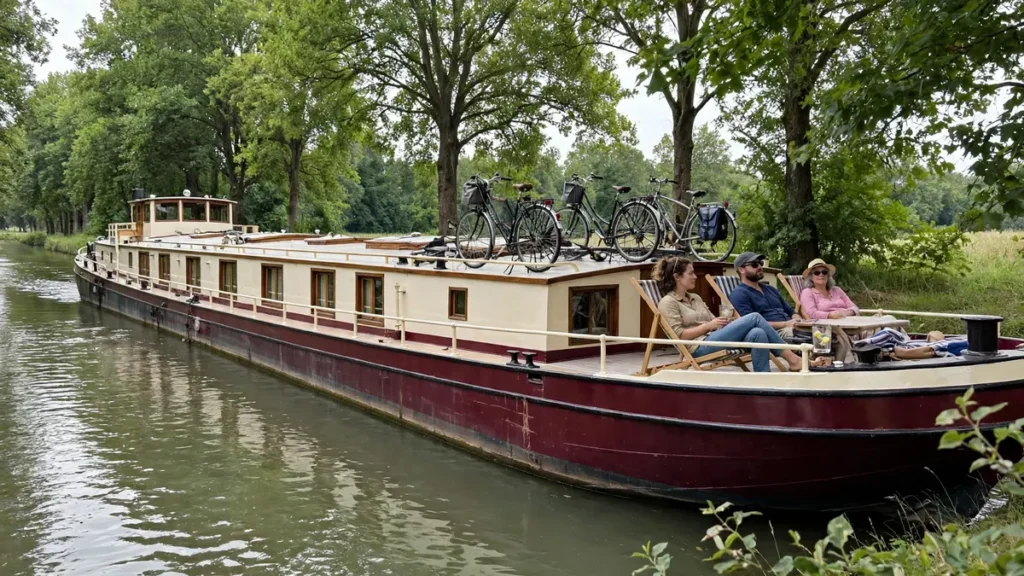
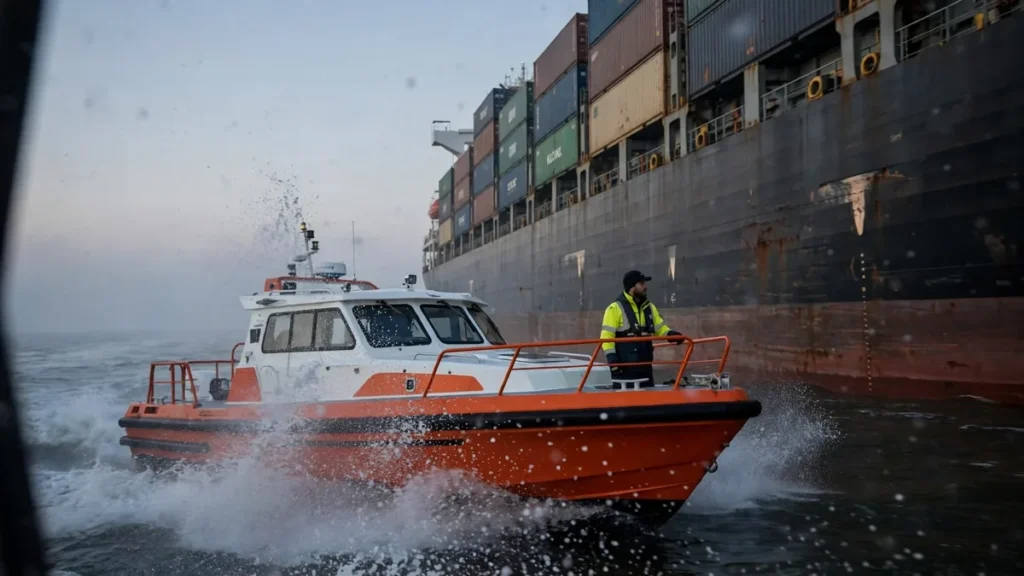
On a quiet river at sunset, a long flat barge glides past with a load that would fill a dozen lorries, almost silently, burning a fraction of the fuel a road convoy would need. It is the oldest form of freight transport still in daily use, and at the top end it is also one of the most surprising. A luxury barge is not a rusting steel box but a purpose-built vessel with a reinforced hull, a sophisticated ballast system and, on the finest examples, a beautifully fitted interior that turns a working boat into a floating home, hotel or restaurant.
The expense is hidden in the details. A barge has no speed or glamour to sell, so every pound goes into structure, systems and finish. The hull must carry heavy, uneven loads and sit on a riverbed at low tide without damage, the accommodation must be comfortable for weeks aboard, and on a luxury barge the interior finish is not an afterthought but the point of the vessel.

How a luxury barge is built
A barge is built around its load. The cargo decides the shape of the hold, the hold decides the shape of the hull, and the hull decides almost everything else. Here is how that chain works, from first steel to first voyage.
Step 1: A flat-bottomed hull is laid down
The hull is flat-bottomed, so the barge can navigate shallow rivers and canals and, on tidal rivers, sit safely on the bottom at low water. The steel is thick, the bottom is reinforced with extra framing, and the bow and stern are shaped to push water aside rather than cut through it. A flat bottom is inefficient at speed, but a barge is not built for speed, and the ability to work in a metre of water is worth far more than a few extra knots.
Step 2: The hold and ballast tanks are divided
Inside the hull, the cargo hold is divided into sections, and around it sit ballast tanks that are pumped in and out to keep the barge level as cargo is loaded and discharged. Getting the trim wrong on a barge is not a minor inconvenience: an uneven load can ground the vessel, damage the hull or make it impossible to pass under a low bridge. The ballast system, with its pumps, pipes and controls, is one of the most important and most expensive systems on the boat.
Step 3: The wheelhouse and propulsion go in
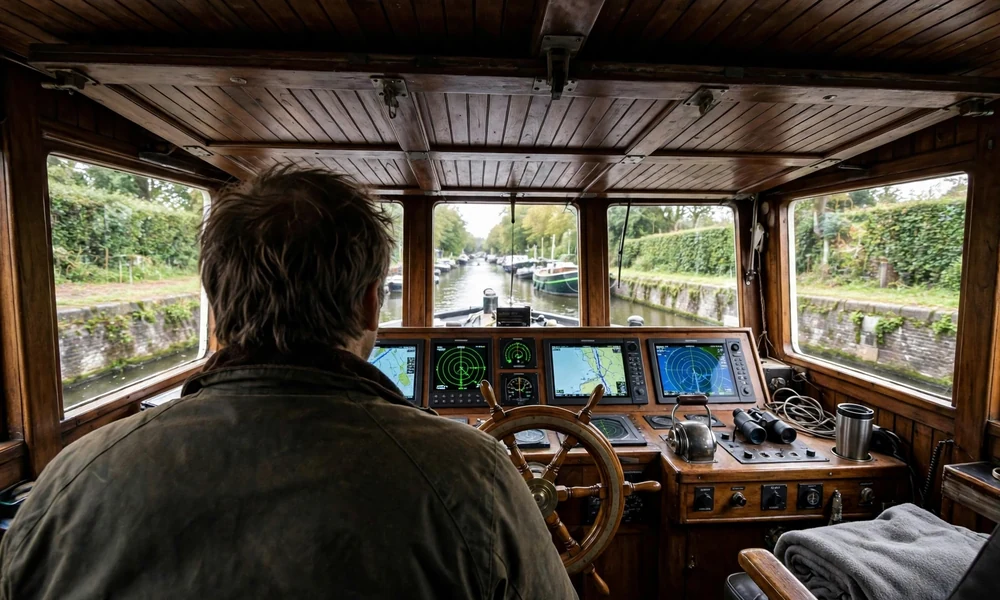
Most luxury barges are self-propelled, with a single diesel engine, often a modest unit of a few hundred kilowatts, driving one propeller through a gearbox. The wheelhouse is small and, on the best barges, hydraulically lowerable, so the vessel can pass under low bridges by dropping its highest point. Bow thrusters, fitted at the front, let the barge manoeuvre in narrow canals and turn in its own length, which matters when the nearest turning point is miles away.
Step 4: The cargo gear is fitted
Working barges carry their own loading gear: cranes, ramps, hatches and, on some, a hydraulic system that can lift and move heavy loads within the hold. The gear has to be powerful enough to handle the cargo, compact enough to fit on a flat deck, and simple enough to be maintained by a small crew. On a luxury barge that carries passengers or is fitted as a hotel, the cargo gear is replaced by something more valuable: a large open deck, a proper galley and storage for the equipment that keeps guests comfortable.
Step 5: Accommodation and the interior are finished
This is where a luxury barge earns its name. Specialist joiners fit solid wood, stone worktops, insulation and soundproofing, with heating, cooling, hot water and waste systems that work without a mains connection. Cabins are small but finished to hotel standard, and the galley is built to cook proper meals for weeks. The work is slow, skilled and expensive.
The spec sheet, decoded
The table below uses a typical large luxury hotel barge, the class that carries guests along European rivers and canals, because working cargo barges vary too widely to summarise in one set of figures.
| Specification | Typical figure | What it tells you |
|---|---|---|
| Length overall | 30 to 40 metres | Long, narrow and flat-bottomed |
| Beam | 5 to 6 metres | Built to fit locks and canals |
| Draught | 1.2 to 1.8 metres | Works in very shallow water |
| Service speed | 6 to 8 knots | Slow, quiet and fuel efficient |
| Engine power | 200 to 400 kW | One modest diesel engine |
| Guests | 6 to 12 people | Hotel standard, not a cruise ship |
| Crew | 3 to 5 people | Captain, chef and host |
| Hull material | Steel, thickened and reinforced | Built to sit on a riverbed |
| Fuel capacity | 3,000 to 5,000 litres | Weeks of cruising without refuelling |
| Endurance | 30 days or more | Self-sufficient on the river |
Draught defines a barge, because it decides which rivers and canals the vessel can use at all, and length and beam matter because the barge is built to the size of the locks it will pass through. The houseboat world shares the same idea of a floating home on a flat hull, and how a luxury houseboat is made shows how such a vessel is fitted out, while how a research vessel is made shows how a hull built for a single demanding job is fitted with the systems it needs.

Where the money goes
A new luxury hotel barge is estimated at roughly 2 to 5 million dollars to build, and a large custom example is estimated at 7 million dollars or more. The hull is estimated at roughly a third of the total, the interior fit-out at roughly another third, and the engine, ballast system and navigation equipment at a further fifth. Running costs are estimated at roughly 200,000 to 400,000 dollars a year, because the barge is crewed and maintained year-round.
The cost drivers are the hull, the interior and the small scale: a barge that can sit on a riverbed and pass under low bridges needs far more steel and engineering than its simple shape suggests, fitting a hotel into a space barely five metres wide is some of the most skilled joinery in the marine world, and every barge is built one at a time, by specialists, with almost nothing off the shelf.
A rare fact worth knowing
Barges are the most fuel-efficient form of freight transport in common use, moving a tonne further on a litre than a lorry, a train or an aeroplane, and a single barge can carry the load of dozens of lorries. The Romans moved stone by barge, the industrial revolution was built on canals full of them, and today’s river vessels are the same idea: a flat hull, a modest engine and a load that would be impossibly expensive to move any other way. The luxury version is new. The idea is two thousand years old.
The verdict
A luxury barge is expensive because it is a small ship built to do a difficult job in a difficult space, along rivers and canals built centuries ago. It will never be fast or glamorous in the way a yacht is, but it moves slowly, quietly and efficiently through beautiful waterways, carrying guests or cargo with a minimum of fuss. The sailing world shares the same idea of a vessel built around its own waters, and how a luxury sailboat is made shows how a different hull is fitted out for a different voyage. A barge is the slow, flat, honest cousin of the yacht world, and judged on its own terms, it is worth every penny.