At five in the morning the galley was already loud, hot and bright, with chefs in white calling orders across stainless steel counters while trolleys of bread, fish and fruit rolled in from the cold rooms. Upstairs, three thousand guests were still asleep, and by noon every one of them would expect lunch, served on time, in a dining room that looked calm.
A luxury cruise ship galley is the enormous kitchen below the dining rooms that feeds thousands of people at every meal, in a space that never closes and can never run out of food. It is one of the most expensive rooms on a ship to build and to run, not because of any single oven, but because of scale, safety and the sheer speed at which it must work. Here is where that money goes.

1. Scale: a restaurant that serves a small town, three times a day
The first cost driver is scale. A large cruise galley may prepare more than ten thousand meals a day, across a main dining room, several smaller restaurants, a buffet and room service, all from one kitchen complex. That is the output of a small town’s worth of restaurants, fitted into a space that must also store the food, wash the dishes and feed the crew.
Scale means duplication. Where a land restaurant has one oven, a ship galley has a row of them, and where a hotel has one cold room, a ship has a dozen, separated by temperature, because meat, fish, dairy and vegetables cannot share the same store.
2. Marine equipment: steel, fire and a kitchen that moves
The second cost driver is that every piece of equipment is built for a ship. The cookers are heavy stainless steel, bolted to the deck, with guard rails and pot holders that stop pans sliding when the ship rolls. The ovens are sealed against steam, the fryers have automatic fire suppression, and the floors are non-slip even when wet with oil and water. The ship’s other great kitchen is described in why a luxury ship galley is so expensive.
That marine standard adds a large premium over ordinary restaurant equipment, and the galley also needs its own ventilation, grease extraction and fire systems, which are inspected as strictly as the engine room.
3. Cold storage and supply: a warehouse that must never run out
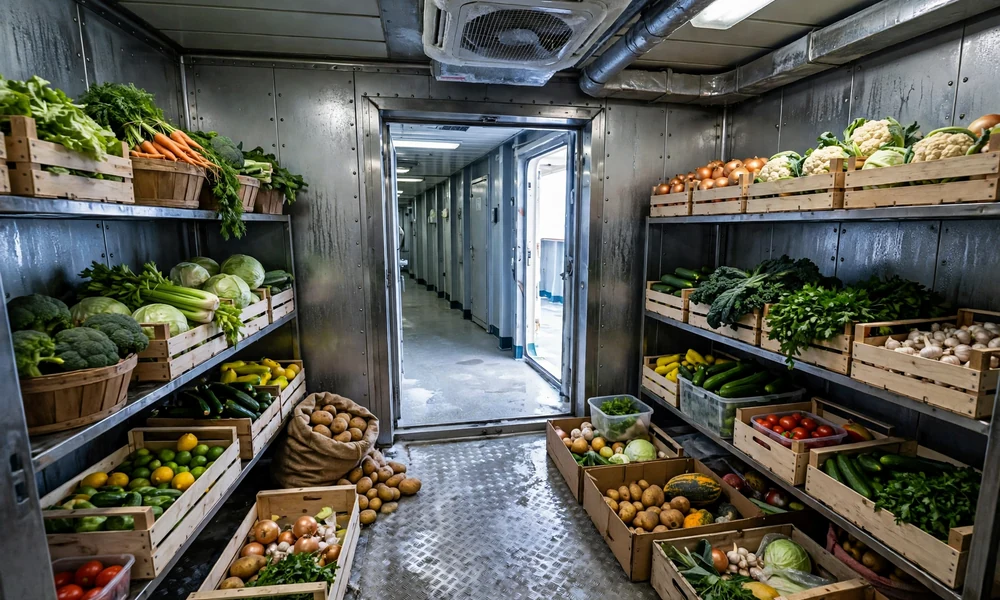
The third cost driver is storage. A cruise ship cannot stop at a supermarket, so it loads a week or more of food at once, and the cold rooms that hold it are among the largest refrigerated spaces afloat.
Supply is a cost too, because fresh food must be ordered, checked, loaded and stored in a few hours in port, often in the middle of the night, by a team that works against the sailing time. The galley carries a buffer of everything, because running out of a dish halfway through dinner is not an option when the next port is two days away. How a working galley is organised day to day is covered in how a luxury ship galley works.
4. People: a hundred cooks working in shifts that never end
The fourth cost driver is people. A large galley employs a hundred or more cooks, bakers, butchers and dishwashers, working in shifts around the clock, and they must be housed, fed and paid while the ship is at sea. The head chef runs the room like a factory manager, planning menus weeks ahead and adjusting them to what the stores actually hold.
Training adds to the bill, because a galley cook must learn marine safety, hygiene rules and the ship’s own systems, and must be able to work in a hot, moving kitchen without panic. Turnover is high, and the ship must constantly train replacements, which means the galley always carries the cost of people learning as well as people working.
5. Hygiene, safety and waste: the rules that never relax
The fifth cost driver is the rulebook. A ship galley is inspected for food hygiene more strictly than most land kitchens, because an outbreak of illness at sea can affect thousands of people with no hospital nearby. Temperatures are logged, surfaces are tested, and food is traced from the supplier to the plate, which needs systems, staff and paperwork.
Waste is part of the same bill, because a galley produces tonnes of food waste, packaging and used oil every day, and it must be sorted, stored and processed on board under strict environmental rules. The crew mess, where the staff who run this machine eat their own meals, is described in how a luxury ship crew mess works.
How it works: a meal’s journey through the galley
- The day starts with the menu plan, and the stores team pulls the ingredients for the day from the cold rooms, checking temperatures and dates as they go.
- Prep cooks wash, peel and cut the vegetables, butchers portion the meat and fish, and bakers start the bread and pastries that must be ready hours before service.
- Each section of the galley cooks its own dishes, with the hot line, the cold larder and the pastry section working side by side on the same order tickets.
- Plates are assembled on a pass, checked by the head chef, and loaded onto heated trolleys that keep the food hot on its way up to the dining rooms.
- Waiters collect the plates from service stations, and the galley keeps cooking, because a dining room of a thousand guests does not order all at once.
- Used plates return downstairs to a dishwashing line that washes thousands of pieces an hour, while the galley is cleaned, restocked and prepared for the next service.
The numbers at a glance, the price, and the rare fact
| Cost driver | Share of the bill | Why it costs |
|---|---|---|
| Scale of service | Largest share | Ten thousand meals a day, every day |
| Marine equipment | Large share | Bolted, sealed and fire-proofed for sea |
| Cold storage | Large share | A week of food, kept cold, never failing |
| People and shifts | Moderate share | A hundred cooks, around the clock |
| Hygiene and waste | Ongoing share | Testing, tracing and processing daily |
As a typical and indicative range, building and fitting out the galley complex of a large cruise ship usually costs roughly 10,000,000 to 25,000,000 dollars, depending on size and the number of restaurants it serves, and running it costs millions more each year in food, fuel and wages. That is the price of a kitchen that feeds a small town, at sea, with no shops and no second chances.
The rare fact is that a cruise ship galley can serve a full dinner to more than a thousand guests in under an hour, with every plate leaving the pass at the same temperature, because the kitchen is timed like a production line, not like a restaurant. The secret is the heated trolley, which holds food at serving temperature while it travels, so the last table is served as hot as the first. A galley is expensive because it is a factory that must behave like a fine restaurant, three times a day, for as long as the voyage lasts.


