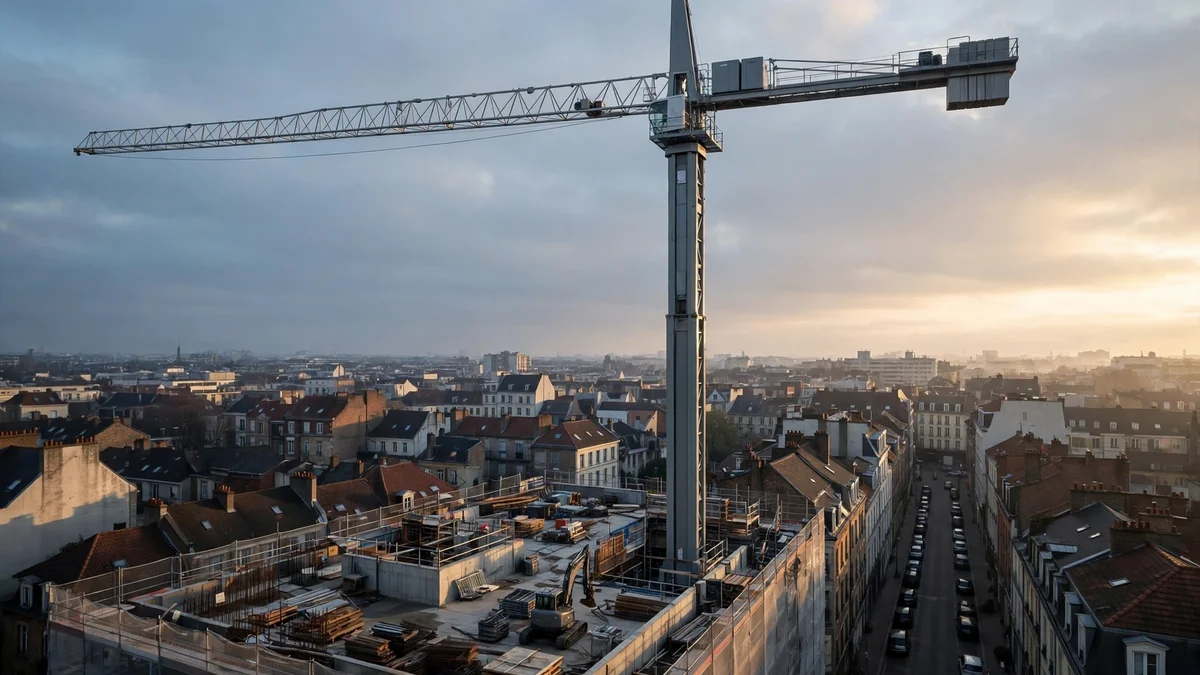
On a building site at first light, a crane stands taller than everything around it, its long arm reaching over the rooftops while the streets below are still quiet. Then, without the roar of a diesel engine, the arm begins to swing, and a load of steel rises smoothly into the sky. It is a luxury electric crane, and the people working under it can talk in normal voices while it lifts.
That silence is expensive. A luxury electric crane can cost several million dollars, more than the building it is helping to put up in some cases, and the price surprises everyone who has only ever priced an ordinary diesel crane. The machine looks simple from the ground, a tower, a jib, and a hook, but nearly every part of it is built to a standard that a normal crane never has to meet.
This article explains where the money goes on a luxury electric crane, from the batteries in its base to the engineering in its arm, and why a cheaper crane is a false economy on a site where a dropped load or a day of downtime costs more than the crane itself.
1. The batteries: a power station in the base
The biggest single cost on a luxury electric crane is the battery system, and it is a cost that a diesel crane never has. A large electric tower crane carries a battery pack of several hundred kilowatt-hours, enough to lift heavy loads all day and to recharge overnight from a normal site supply, and the pack alone is commonly estimated at $200,000 to $500,000.
The batteries are not ordinary cells: industrial lithium packs built to survive dust, vibration, heat, and cold, with cooling, fire protection, and a management system watching every cell. They deliver huge bursts of power on each lift, take power back on each lowering, and do it thousands of times a year. The build is set out in the guide to how a luxury electric crane is made, where the battery bay is fitted before the tower rises.
2. The steel: a tower that must never bend
The tower and the jib are built from high-strength structural steel, and the steelwork is commonly estimated at $300,000 to $800,000 on a large crane. The tower is made of sections that bolt together, each machined so the finished mast stands straight to within millimetres over fifty metres or more, because a tower that leans loads every joint above it.
The jib is the harder part: a long truss light enough to slew quickly and strong enough to hold a full load at its tip, tens of metres from the tower. Every member is sized, welded, and inspected, and the whole structure is proof-tested with loads heavier than it will ever carry. A weld failure here is not a repair bill, it is a disaster.
3. The motors and the cab: silence is a precision job
A luxury electric crane replaces the diesel engine and the hydraulic pumps of a normal crane with electric motors and variable-speed drives, commonly estimated at $250,000 to $600,000 for the full set. There is a hoist motor, a slewing motor that turns the whole top of the crane, and a trolley motor that moves the hook along the jib, and each one must be smooth, silent, and exact.
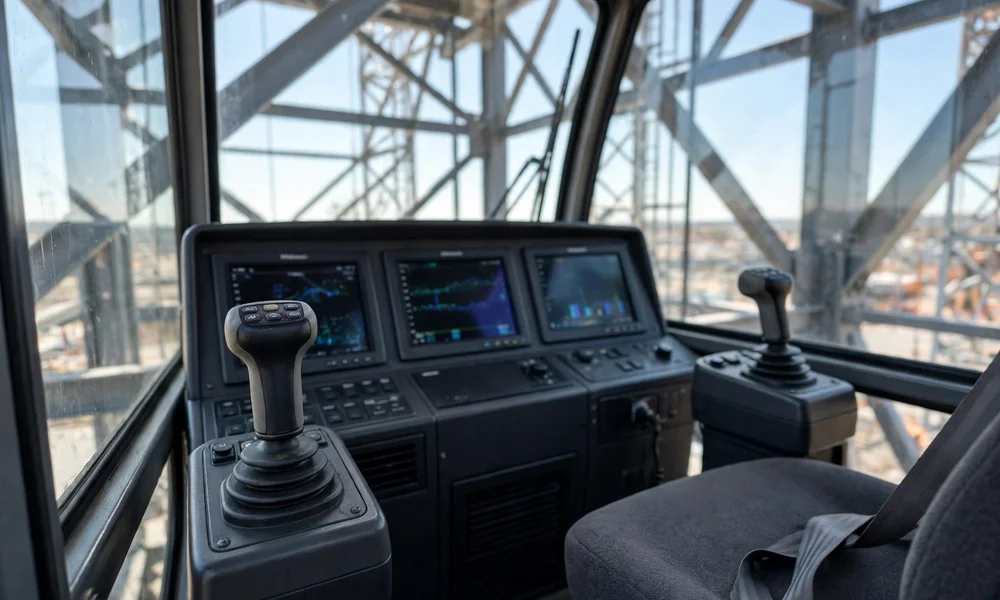
Smoothness is the luxury: a load of glass panels cannot be jerked or swung, so the drives ramp up and down so gently that the load barely sways, and the operator can place it within centimetres from fifty metres up. The numbers behind that precision are set out in the luxury electric crane specs explained guide. The cab itself is a small office in the sky, air-conditioned and soundproofed, with panoramic glass and screens showing load, radius, and wind, commonly estimated at $80,000 to $200,000.
4. Engineering and certification: proving it will not fall
Before a luxury electric crane lifts its first load, it is engineered and certified to a standard that costs real money, estimated at $150,000 to $400,000 for design, testing, and approval. Engineers model the tower, jib, and base under wind and load, then the crane is proof-tested on site and signed off by an independent inspector.
Certification never stops: the crane is inspected regularly, the ropes checked and replaced on schedule, and the batteries and drives tested and logged. A crane with a complete inspection history is worth far more second-hand than one without it.
5. Rarity: a small market with few builders
The last reason a luxury electric crane costs so much is the simplest: very few are built. The market for a silent, battery-powered tower crane is a fraction of the market for ordinary diesel cranes, and only a handful of manufacturers build them. There is no mass production to spread the design cost, and no army of mechanics who already know the machine.
Each crane is built almost to order, configured for one site’s height, reach, and load. That rarity is also a kind of insurance: the buyer is paying for a machine that works quietly in a city centre, next to homes and hospitals, where a diesel crane would be banned. Other electric machines carry the same premium, as shown by why a luxury electric bulldozer is so expensive, where batteries, silence, and a small market push the price far above diesel.
Luxury Electric Crane Costs
| Specification | Typical range |
|---|---|
| Battery pack | Several hundred kilowatt-hours |
| Maximum lifting capacity | About 10 to 25 tonnes |
| Maximum jib reach | About 50 to 80 metres |
| Tower height | About 40 to 70 metres |
| Hoist motors | Electric, variable-speed drives |
| Operating noise | Far quieter than a diesel crane |
| Service life | About 20 to 25 years with maintenance |
| Total crane cost | Estimated $1.5 million to $4 million |
What Does a Luxury Electric Crane Cost?
A complete luxury electric tower crane is estimated to cost roughly $1.5 million to $4 million, depending on height, reach, and capacity. The battery system is estimated at roughly $200,000 to $500,000, the steel tower and jib at roughly $300,000 to $800,000, the motors and drives at roughly $250,000 to $600,000, the cab and controls at roughly $80,000 to $200,000, and engineering and certification at roughly $150,000 to $400,000, with transport and erection adding the rest.
Running costs tell the other half: electricity is far cheaper than diesel, maintenance is simpler, and the crane can work longer hours in cities with noise limits, so the premium is often earned back over the life of the machine.
A Rare Fact
Some luxury electric cranes can lower a load and put power back into their own batteries as they do it, a trick called regenerative lowering. A heavy load descending spins the hoist motor like a generator, and the energy is stored for the next lift instead of being wasted as heat. It is a feature no diesel crane can ever offer.
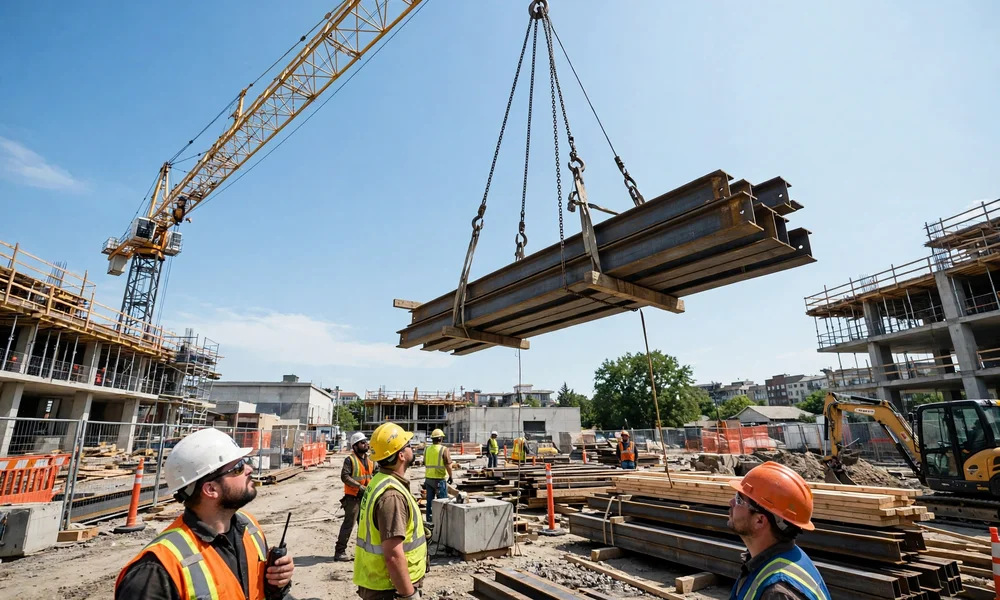
A luxury electric crane is expensive because it is doing three jobs at once: lifting like a crane, running like a battery, and working quietly enough for a city. But on a site where noise, fumes, and downtime all carry a price, the expensive crane is often the cheapest way to build, and it earns its money one silent lift at a time.


