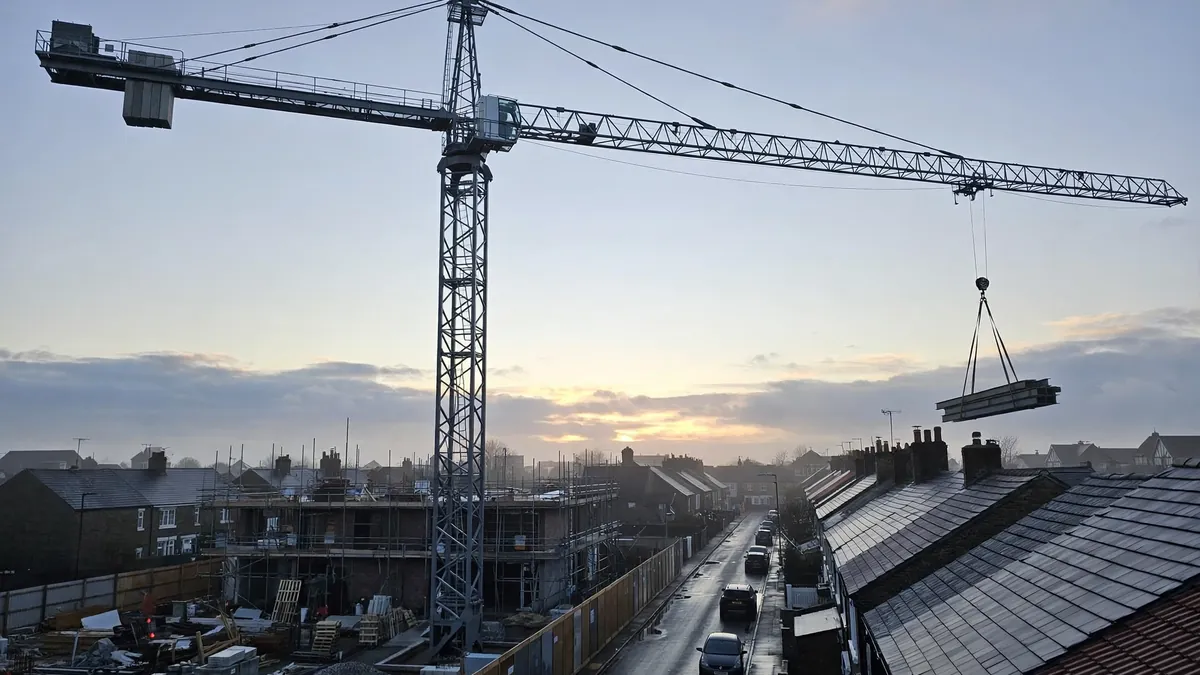
On a building site at first light, a crane stands taller than everything around it, its long arm reaching over the rooftops while the streets below are still quiet. Then, without the roar of a diesel engine, the arm begins to swing, and a load of steel rises smoothly into the sky. It is a luxury electric crane, and the people working under it can talk to each other in normal voices while it lifts.
A luxury electric crane is a lifting machine powered by batteries and electric motors, built to place heavy loads with great precision on construction sites, in ports and on private estates. There is no engine, no exhaust and almost no noise, yet it can lift tonnes and set them down within a few centimetres. This is how a luxury electric crane works, from the battery pack to the hook.
How It Works
The battery pack: quiet power on demand
Everything starts with the battery, a large pack of lithium cells sealed in a steel case at the base of the crane. It is charged overnight from the mains, and on a full charge it can power a whole day of lifting. The pack feeds power to every motor on the machine through thick cables and a set of inverters, which turn the battery’s direct current into the alternating current the motors need.
When the crane lowers a load, the motors act as generators and feed power back into the battery, a trick called regenerative braking that stretches the working day. The machine itself is built around this quiet power source, and the way a luxury electric crane is made shows how the steel frame and the battery are joined into one machine.
The slew ring: turning the whole top
On top of the base sits the slew ring, a giant ball bearing as wide as a dining table that lets the whole upper part of the crane turn in a full circle while the base stays still. An electric motor drives a small gear against the teeth of the ring, and the operator turns the crane by pushing a joystick left or right. The movement is smooth and precise, because the motor can creep the crane around by a few centimetres at a time.
A crane that cannot slew smoothly cannot place a load, so the ring is one of the most carefully maintained parts of the whole machine.

The hoist: lifting the load
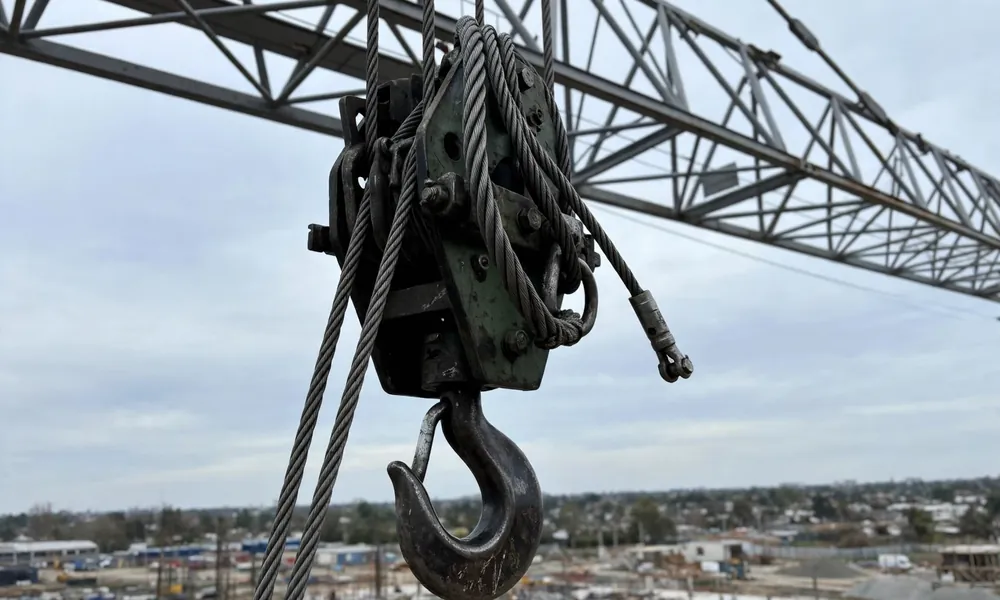
The hoist is the motor and drum that winds the steel rope and raises the hook. The drum sits in the machinery deck, and the rope runs from it up the mast, along the jib and down through the hook block. When the operator pulls the hoist lever, the motor turns the drum, the rope winds on in neat layers, and the load rises. When the lever is pushed the other way, the drum unwinds and the load lowers, with the motor braking the descent so the load never runs away.
The load figures the hoist is rated for are the ones that decide every lift, and the way electric crane specs are explained shows how reach, weight and power trade off against each other.
The trolley and the jib: reaching out
The jib is the long horizontal arm of the crane, and the trolley is a small wheeled carriage that runs along it, carrying the hook out to the load. A second motor pulls the trolley along the jib on a rope, so the operator can move the hook in and out without moving the crane itself.
The jib is held up by steel tie bars running to the top of the mast, and the counterweights on the far end of the jib balance the load. The computer watches the balance constantly, working out the moment, the turning force, of the load against the counterweight, and it will stop the trolley moving further out if the load would tip the balance.
The operator cab: hands on the load
The operator sits in a glass cab at the top of the mast, with a view down the jib and across the whole site. Two joysticks control the crane: one slews and trolleys, the other hoists and lowers, and the operator’s hands learn the feel of a load swinging on the end of a long rope. The screens in front of them show the weight on the hook, the radius, the wind speed and the battery level, all in plain numbers.
The cab is heated, air-conditioned and soundproofed, and the seat is mounted on dampers so the operator is not shaken by the wind.
The safety systems: stopping a lift gone wrong
Every movement on the crane is watched by the safety system. An anemometer on top of the mast measures the wind, and the computer stops the crane from lifting if the wind is strong enough to blow a load off line. A load cell on the hook measures the weight, and the crane refuses to lift anything over its rated capacity, sounding an alarm and locking the hoist. Limit switches stop the hook, the trolley and the slew at the ends of their travel, so no part of the crane can run into itself.
If the power fails, the brakes on every motor clamp on at once, freezing the crane with its load hanging safely in the air. The operator can then lower the load slowly by hand, using a manual release on the hoist brake. The price of all this quiet, careful engineering is easy to guess at, and the way a luxury electric crane earns its price explains why a machine with no engine at all can cost as much as a house.
| Specification | Typical crane |
|---|---|
| Power source | Lithium battery pack charged overnight, liquid cooled |
| Hoist motor | Electric motor winding steel rope on a grooved drum |
| Slew ring | Giant ball bearing letting the top turn a full circle |
| Jib and trolley | Long jib with a wheeled trolley carrying the hook out |
| Maximum lift | Several tonnes close in, less at full reach |
| Working height | About 40 to 60 metres on a typical tower crane |
| Operator cab | Glass cab with joysticks, load screens and radio link |
| Safety systems | Wind sensor, load cell, limit switches and auto brakes |
A luxury electric crane is an estimate of $250,000 to $900,000, depending on its height, its reach and the size of its battery. The price covers the crane, the battery and charging equipment, the transport and assembly on site, and the training for the operator who will work with it every day.
Here is a rare fact worth knowing. The very first cranes were not machines at all but men hauling on ropes over a wooden frame, and the first tower cranes of the 1900s were powered by steam, with a fireman shovelling coal all day just to keep the hook moving. A modern electric crane does the same work in near silence, lifts its load with a touch of a joystick, and even puts power back into its own battery every time it lowers something down, while the only sound on site is the soft whir of its motors and the wind in the jib.


