Walk into any warehouse and you will see forklifts everywhere, lifting pallets, stacking boxes and beeping as they reverse. They look like ordinary workhorses, painted in bright colours and covered in dust, and nothing about them suggests luxury. Yet a luxury electric forklift can cost more than a new family car, and the warehouse managers who buy them never blink at the price.
That is because a forklift is not a vehicle that carries people; it is a machine that carries money. Every pallet it lifts is worth something, every hour it stands broken is an hour the warehouse stops, and every accident costs far more than the machine itself. A forklift that never breaks, never drops a load and never tires its driver is worth a fortune.
How It’s Made
Step 1: The chassis is built to take punishment
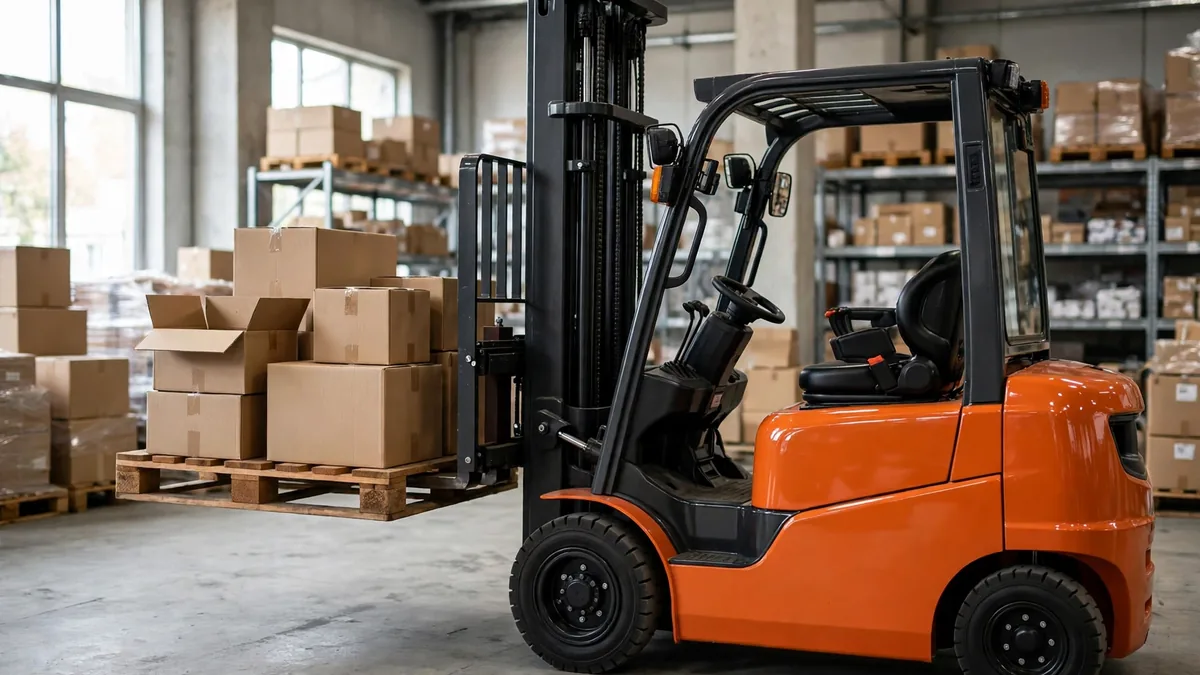
A forklift chassis is a heavy steel frame, built to carry tonnes on its forks while the machine itself weighs several tonnes. It is welded thick, with no thought given to lightness, because the weight is what stops the forklift tipping forward when it lifts a heavy load high into the air.
The counterweight at the rear is a solid block of cast iron, shaped to fit the body and painted to match. It looks like part of the design, but it is really ballast, and without it the forklift would topple the first time it lifted a full pallet to the top shelf.
Step 2: The battery is the size of a wardrobe
The battery in a luxury electric forklift is enormous, a lithium pack the size of a wardrobe that slides out of the side of the machine on rollers. It stores enough energy to run the forklift for a full shift, and it can be swapped for a fresh one in minutes, so the machine never waits for a charge.

Step 3: The mast lifts the load
The mast is the tall frame at the front that carries the forks up and down. It is made of steel channels that slide inside each other, driven by hydraulic cylinders, and it must lift several tonnes to the height of a three-storey building without bending or swaying. A luxury mast uses hardened steel and precise rollers, so the load rises smoothly instead of jerking.
The forks themselves are forged steel, tapered at the tips so they slide under a pallet easily, and they are tested by lifting far more than they will ever carry in service. A fork that bends or cracks under load is a disaster, and the makers treat them with the same care a crane maker gives to a hook.
Step 4: The hydraulics do the heavy work
Hydraulics move everything on a forklift: the mast, the tilt of the forks and the steering. An electric pump pushes oil through valves at high pressure, and the driver controls it all with small levers that need only a fingertip of force. The system must be smooth, because a jerky lift can topple a tall stack of boxes.
The hoses and seals are checked constantly, since a leak means lost power and a mess on the warehouse floor. Luxury machines use hoses rated far above the pressure they will ever see, and the oil is filtered again and again, because clean oil is what keeps the whole system alive for decades.
Step 5: The cab protects the driver
The driver sits inside a steel cage called an overhead guard, which protects them if a load falls from above. The seat is sprung and adjustable, the steering wheel is small and light, and every control falls easily to hand, because a driver who works an eight-hour shift must finish the day as fresh as they started it.
Good visibility matters more than comfort. The mast is designed with slim channels so the driver can see the forks, and mirrors and cameras cover the blind spots behind. A driver who can see clearly makes fewer mistakes, and fewer mistakes mean fewer damaged goods and fewer injuries.
Step 6: The electronics keep it safe
A luxury forklift carries sensors that watch the weight on the forks, the height of the mast and the speed of the machine. If the load is too heavy for the height, the system slows the lift and warns the driver. If the forklift corners too fast, it slows itself down, because a tipping forklift is the most common serious accident in any warehouse.
Some machines even talk to the warehouse itself, reporting their location, their battery level and their workload to a central system. Managers can see which forklifts are busy and which are idle, and the machines are serviced before they break rather than after, which keeps the whole warehouse moving.
| Spec | Detail |
|---|---|
| Battery | Large lithium pack, swappable in minutes, runs a full shift |
| Lift capacity | Usually 2 to 5 tonnes, depending on the model |
| Lift height | Up to 7 metres or more on a tall mast |
| Top speed | Around 10 to 12 miles per hour, limited for safety |
| Mast | Hardened steel channels with hydraulic lift and tilt |
| Safety | Load and speed sensors, overhead guard, cameras and mirrors |
| Weight | Around 4 to 7 tonnes, most of it counterweight and battery |
The price also reflects how long the machine must last. A car is expected to run for a decade or so, but a forklift in a busy warehouse works three shifts a day, six days a week, for twenty years or more. Every part is built thicker, stronger and easier to service than a car part, because the machine earns its keep every hour it runs, and every hour it stands still costs money.
What One Costs
A luxury electric forklift typically costs an estimated 40,000 to 90,000 dollars, set mostly by the battery size, the lift capacity, the height of the mast and the safety electronics inside. A small warehouse forklift sits near the bottom, while a tall-mast machine with a swappable battery and full sensors costs far more. The same working-machine logic prices other electric vehicles, and the way a luxury electric commuter bike is so expensive explains a small machine built for daily use, while the way a luxury electric fat bike is made shows how a tough machine is built to survive rough ground.
A Rare Fact
Forklift driving is a sport as well as a job. There are competitions where drivers race through obstacle courses, stacking boxes and threading their forks through narrow gaps against the clock, and the best drivers can place a pallet on a shelf with the precision of a surgeon, without ever touching the rack. Crowds gather to watch, and the winners are treated like athletes.

A luxury electric forklift costs more than a car because it is not a car: it is a crane, a truck and a computer in one heavy steel body, built to lift tonnes all day, every day, for twenty years, without dropping a load or tipping over. The battery, the mast, the hydraulics and the safety systems all cost money, and the warehouse that buys one is paying for every hour it will never stand still. The same hard-working engineering shows up in smaller electric machines, and the way a luxury electric snow bike’s specs are explained covers a machine built to work in conditions no ordinary vehicle would survive.