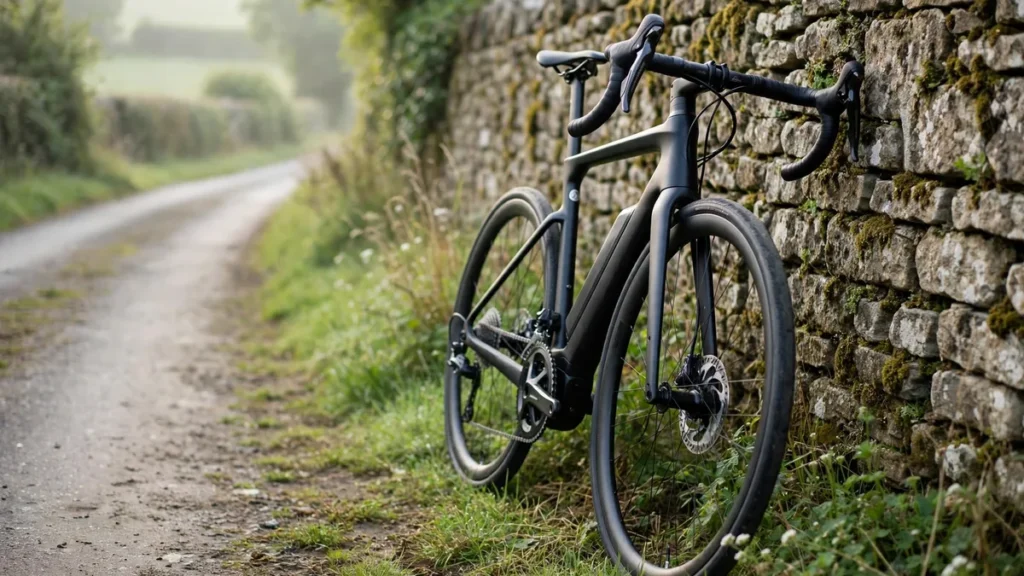
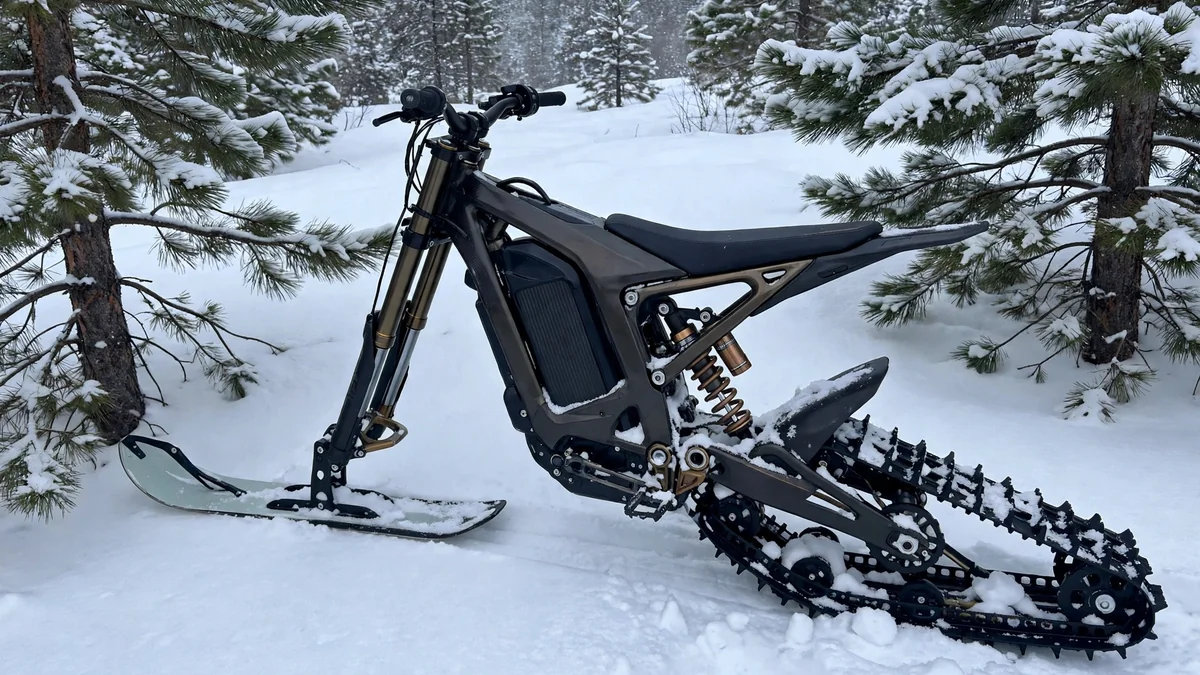
A snow bike looks like a motorcycle that has been rebuilt for a world without roads. The front wheel is gone, replaced by a ski that steers across the snow. The rear wheel is gone too, replaced by a long rubber track that grips the powder and pushes the machine forward. Stand beside one in a snowy car park and it seems improbable, a machine balanced on a blade and a belt, waiting for a rider brave enough to trust it on a mountain.
Ride one, and the improbable becomes obvious. The ski floats, the track bites, and the bike climbs through deep snow where a snowmobile would wallow and a skier would sink. The luxury electric version adds silence to that picture: no two-stroke scream echoing across the valley, no exhaust smoke in the cold air, just the soft crunch of the track and the wind. Here is where the money goes.
How It Works
Step 1: The conversion replaces both wheels
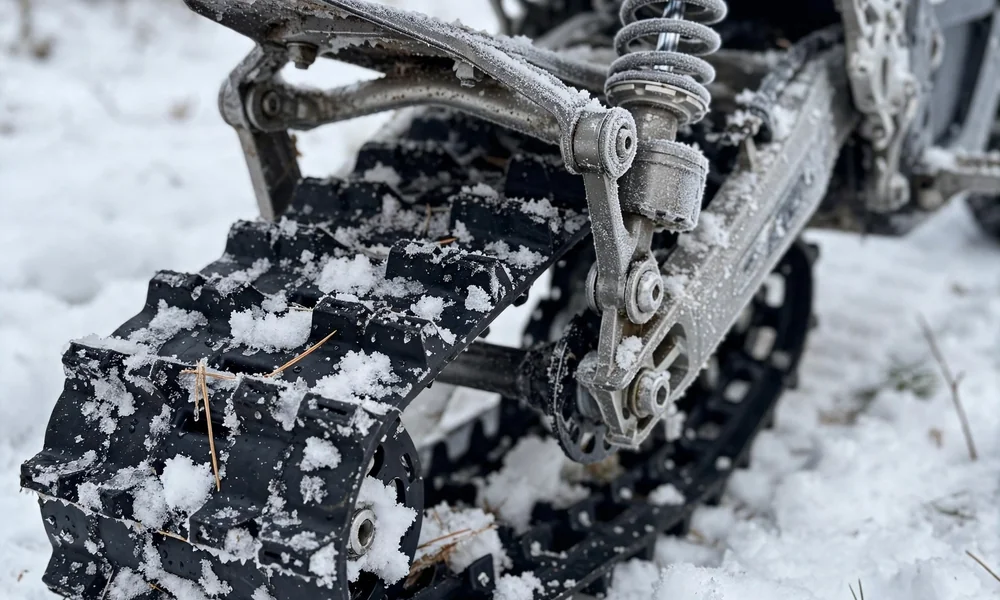
A snow bike starts life as a motorcycle or a purpose-built frame, and then both wheels are removed. In their place, a conversion kit fits a front ski and a rear track system, and that kit is the first major cost. The track is a long rubber belt with moulded lugs, running around a set of wheels and a suspension system inside the track housing. The kit must fit the donor bike’s geometry precisely, and because each model of bike is different, the kits are made in short runs, fitted by specialists, and priced like the bespoke engineering they are.
Step 2: The track grips where tyres cannot
The rear track is the heart of the machine. Where a tyre would spin on snow, the track spreads the bike’s weight over a long, wide footprint, so it floats on powder instead of sinking into it. The lugs on the track dig into the snow with every rotation, and the track’s suspension lets it flex over bumps, drifts, and hidden rocks. The track alone can cost as much as a set of premium motorcycle tyres, wheels, and brakes combined, and it wears out faster than any of them.
Step 3: The electric motor suits the snow
An electric motor is a natural fit for a snow bike. It delivers full torque from a standstill, which is exactly what is needed to pull a track out of deep powder, and it does so without the cold-start problems of a petrol engine. The motor is usually a powerful mid-drive unit, sealed against water and snow, and its controller is tuned for the track: gentle power at first, to avoid spinning the track and digging a hole, then strong, steady torque for climbing. The silence matters too, in mountains where sound carries for miles and wildlife is easily disturbed.
Step 4: The battery must survive the cold
Cold is the enemy of every battery, and a snow bike lives in the cold. A luxury electric snow bike carries a large, well-insulated lithium-ion pack, often with its own heating system that keeps the cells warm enough to deliver power and accept a charge. The pack is mounted low and central, where its weight helps the track grip, and it is sealed against snow, slush, and the spray thrown up by the track. The battery must deliver high power for climbing while also lasting for a full day in the mountains, so it is bigger, better protected, and more expensive than a comparable road bike’s pack.
Step 5: The ski steers on a surface that moves
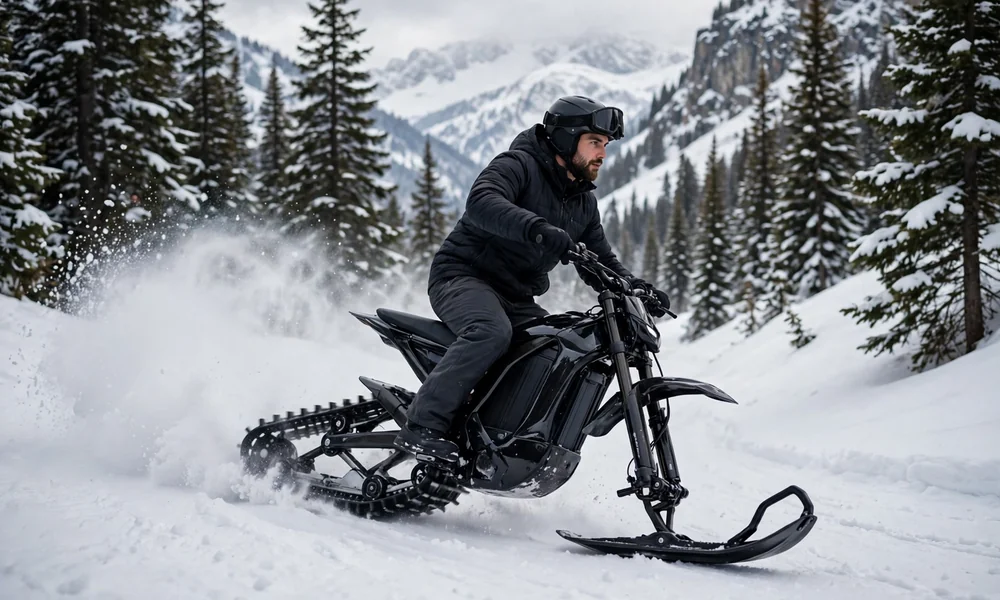
Steering a snow bike is a skill in itself. The front ski does not grip like a tyre; it planes across the snow, and the rider steers with a mix of handlebar input, body weight, and throttle. A luxury ski is shaped to carve in soft snow and stay stable on hardpack, with a keel that gives it direction and a wide tip that keeps it from diving. Getting the ski geometry right takes testing in real snow, in real mountains, and the builders who do it well are few. That testing, and the small production runs it serves, stays in the price.
Step 6: Suspension and chassis take a beating
Everything on a snow bike works harder than on a road bike. The chassis must cope with the twisting forces of a track that grips unevenly, the ski must cope with impacts the rider never sees, and the suspension must work in temperatures where oil thickens and seals stiffen. Luxury builds use long-travel suspension, stronger frames, and sealed bearings throughout, because a failure ten kilometres from the nearest road, in deep snow, is not a minor inconvenience.
Step 7: Hand building for a tiny market
Finally, the snow bike is assembled by hand, in a workshop that may build only a few dozen a year. The conversion kit is fitted, the motor is tuned for the track, the battery is tested in the cold, and the whole machine is ridden in snow before it is delivered. The buyer pays for a machine built by specialists, for a season that lasts a few months, in a place where the nearest help is a long walk through the snow. That rarity, more than any single part, is what sets the price.
Key Specifications
The figures below describe a typical luxury electric snow bike; individual builds vary.
| Specification | Typical figure |
|---|---|
| Motor power | 15 to 30 kilowatts |
| Battery capacity | 3 to 6 kilowatt-hours |
| Range in snow | 40 to 90 kilometres per charge |
| Track length | 120 to 140 centimetres |
| Track lug height | 5 to 7 centimetres |
| Weight | 120 to 160 kilograms |
| Top speed | 60 to 90 kilometres per hour |
| Operating temperature | Down to minus 20 degrees Celsius |
How Much Does It Cost?
A luxury electric snow bike typically costs from around $15,000 to $30,000, depending on the donor bike, the conversion kit, and the battery size. That is an estimate based on current specialist builders, and the top of the range usually buys a purpose-built frame, the longest track, and the largest heated battery pack. To compare with the machine it most resembles, read luxury snowmobile specs explained for the power, tracks and cold-weather craft of a snowmobile. For the four-wheeled side of electric off-road riding, luxury ATV specs explained covers power, grip and price. And EV charging port specs explained explains the plugs and speeds that decide how fast the battery refills after a day in the snow.
A Rare Fact
Here is something few riders know: the first snow bikes were built in home garages, not factories, by riders who cut up old motorcycles and bolted on skis and tracks made from snowmobile parts. The big manufacturers noticed, bought the small builders, and turned a garage experiment into a luxury product. Every expensive snow bike sold today still carries that garage history: a machine invented by riders who wanted to go further into the winter than any factory machine would take them.
A luxury electric snow bike is expensive because it is a motorcycle rebuilt for snow, with a custom ski and track, a sealed electric motor, a heated battery, and a reinforced chassis, all made in tiny numbers by specialists. The money goes into the conversion kit, the cold-weather engineering, and the hand building, not into badges or trim.