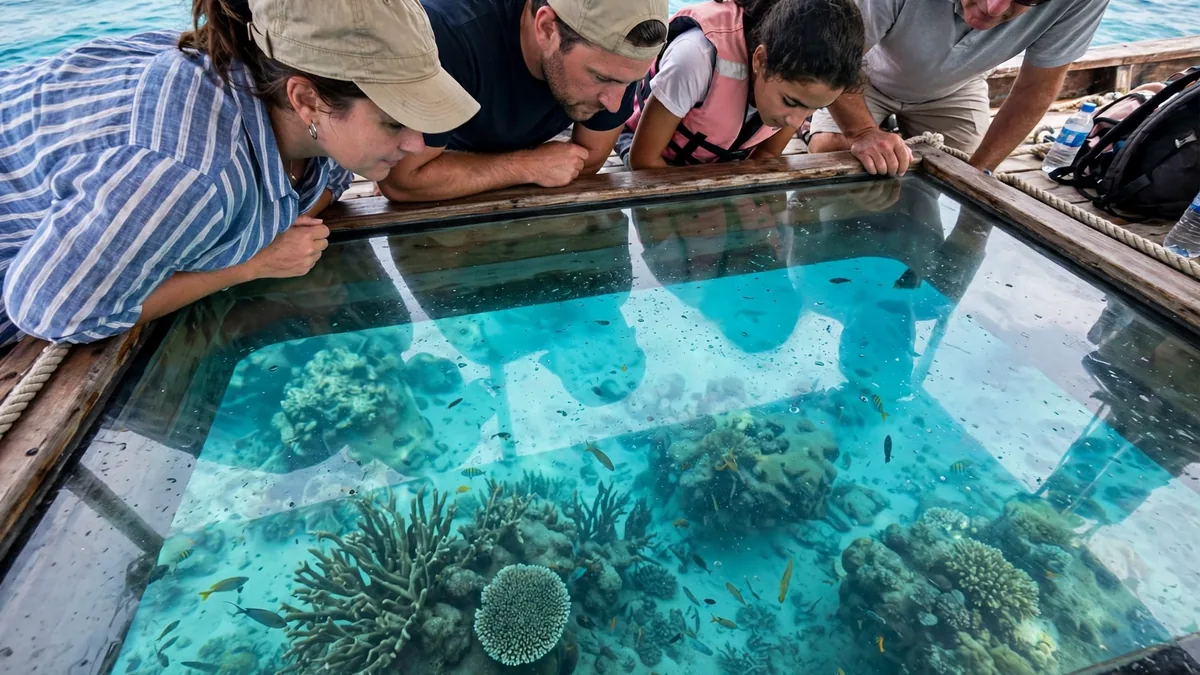
In a clear bay in the tropics, a boat drifts slowly over a coral reef, and on its deck a dozen people lean over the side, looking down through the glass floor at the fish, the coral and the turtles below. The boat is not moving fast, it is not going anywhere, and nobody aboard minds, because the reef is the destination, and the boat is a window onto it. The boat is a glass-bottom boat, and the luxury version of it is built to show the sea to people who will never dive, in comfort, in shade, and in a boat that costs far more than its simple job suggests.
This is why a luxury glass-bottom boat is so expensive, in seven costs, from the glass itself to the hull, the viewing, the comfort, the safety and the market that buys them. Each reason alone sounds reasonable, and it is only when they are added together that the price starts to make sense, because a glass-bottom boat is not a boat with a window, it is a theatre with a stage made of sea.
Reason 1: The glass is the boat, and the glass is expensive
The first cost is the glass, and it is the largest single item in the whole boat. The viewing panels are made from laminated, tempered glass, layers of glass bonded together, thick enough to walk on, to stand on, and to hold the weight of a dozen people leaning over them, and the glass must be perfectly clear, because a cloudy panel shows nothing. The glass is the boat, and the glass is the reason the boat costs what it does.
Reason 2: A hull built around a hole
The second cost is the hull, and it is built around a hole, which is the hardest way to build a boat. The guide to how a luxury dive boat is made shows a different kind of hull, where the openings are for divers, not for viewers, and the strengthening is the same, because a hole is a hole, whatever it is for.
Reason 3: Viewing that works in sun, shade and murk
The third cost is the viewing, and it is harder than it looks, because the sea is not always clear. The viewing is the product, and the boat is built to protect it, because a glass-bottom boat that cannot show the reef is a boat with no reason to exist.
Reason 4: Comfort for people who will never get wet
The fourth cost is the comfort, and a luxury glass-bottom boat is built for people who will never get wet. The comfort is the reason the passengers pay, and the comfort is the reason the boat costs more than a fishing boat of the same size, because a fishing boat carries fish, and a glass-bottom boat carries people who are paying to look.
Reason 5: Safety for a boat full of strangers
The fifth cost is safety, and it is the one the operator thinks about most, because the boat carries strangers. A glass-bottom boat carries life jackets for everyone, and a first aid kit, and a radio, and a crew trained in rescue, because the passengers are not sailors, and they cannot help themselves if something goes wrong. The guide to luxury dive boat specs, explained sets out the numbers for a different kind of safety, where the passengers go into the water, not just look at it, and the lesson is the same: a boat that carries strangers must be safer than a boat that carries friends.
Reason 6: A boat that works only where the water is clear
The sixth cost is the place, and a glass-bottom boat works only where the water is clear, which means the tropics, which means the boat must be built, maintained and operated far from the yards that built it. The boat also works only in good weather, because a rough sea makes the viewing impossible, and the operator must pay the crew, the fuel and the mooring, whether the boat sails or not, and the guide to how a luxury tourist submarine works shows a different answer to the same problem, where the viewing is done from under the water, not above it, and the weather matters less, but the boat costs more.

Reason 7: Few yards, few boats, and a market that pays by the seat
The seventh cost is the simplest: very few glass-bottom boats are ever built, and the people who buy them pay by the seat. A yard that builds a glass-bottom boat is building a one-off, designed around the reef it will work, with glass, hull and viewing chosen for that water, and the design alone costs a fortune before any glass is cut.
The glass-bottom boat at a glance
| Part | Typical luxury figure | What it tells you |
|---|---|---|
| Glass | Laminated, tempered, walkable, perfectly clear | How the boat shows the reef, and what it costs |
| Hull | Strengthened around great openings in the floor | How the boat stays strong with holes in it |
| Viewing | Lights below, canopy above, cleaned constantly | How the reef stays visible, in sun, shade and murk |
| Comfort | Shaded seats, bar, toilet, guides, sound system | How the passengers enjoy the reef without getting wet |
| Safety | Life jackets, first aid, radio, trained crew, licence | How a boat full of strangers is kept safe |
| Place | Tropics only, clear water, good weather | Where the boat can work, and what it costs to keep it there |
| Market | Few yards, bespoke builds, tour operators | Why the boat costs what it costs, and who pays for it |

What it costs
A luxury glass-bottom boat typically costs an estimated $300,000 to $800,000, depending on its size, its glass and its fittings. The estimate covers the boat alone, not the crew, the mooring or the insurance, which are a real part of running a boat that carries tourists, and which the operator pays every year, whether the water is clear or not.
A rare fact
One detail few passengers ever learn is that the glass in the floor of a glass-bottom boat is the same kind of glass used in the windows of aquariums, and it is made in the same way, in layers, bonded together, so that if one layer cracks, the others hold. The first glass-bottom boats were built in California in the nineteen thirties, and they were wooden boats with a single glass panel, carrying tourists over the kelp forests.
Add the seven costs together, the glass, the hull, the viewing, the comfort, the safety, the place and the market, and the price of a luxury glass-bottom boat stops looking like a lot of money for a boat with a window and starts looking like the price of a theatre with a stage made of sea, charged one tourist at a time, one reef at a time, in clear water, under a hot sun.


